8 Best Insoles for Plantar Fasciitis in 2026
Share
Plantar fasciitis has a specific signature: the first step out of bed, the first step after sitting for an hour, a pull under the heel that eases once you get moving and comes back the moment you stop.
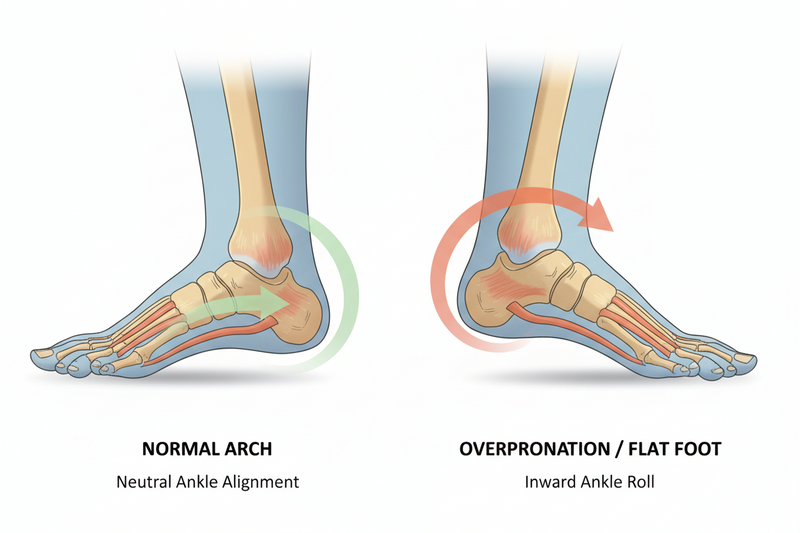
The reason insoles matter here more than almost anywhere else is mechanical. The plantar fascia runs from your heel to the ball of your foot, and it takes load every time your arch flattens under body weight. Support that holds the arch reduces how far it has to stretch — thousands of times a day. Support that quietly disappears does nothing at all.
That second half is the part most buying guides skip, so we built this comparison around it.
How we compared them
Four things, weighted by how much they actually change the outcome:
- Arch contact — does the support reach your arch? An arch support that stops short of your arch is not weak support, it is no support.
- Heel cup depth — a deep cup keeps the fat pad under your heel where it belongs, which is where a lot of the relief comes from.
- Durability under load — most insoles are built from closed-cell foam that permanently compresses. We wrote about why that happens here.
- Price and return window — plantar fasciitis is a trial-and-error problem. A short return window is a real cost.
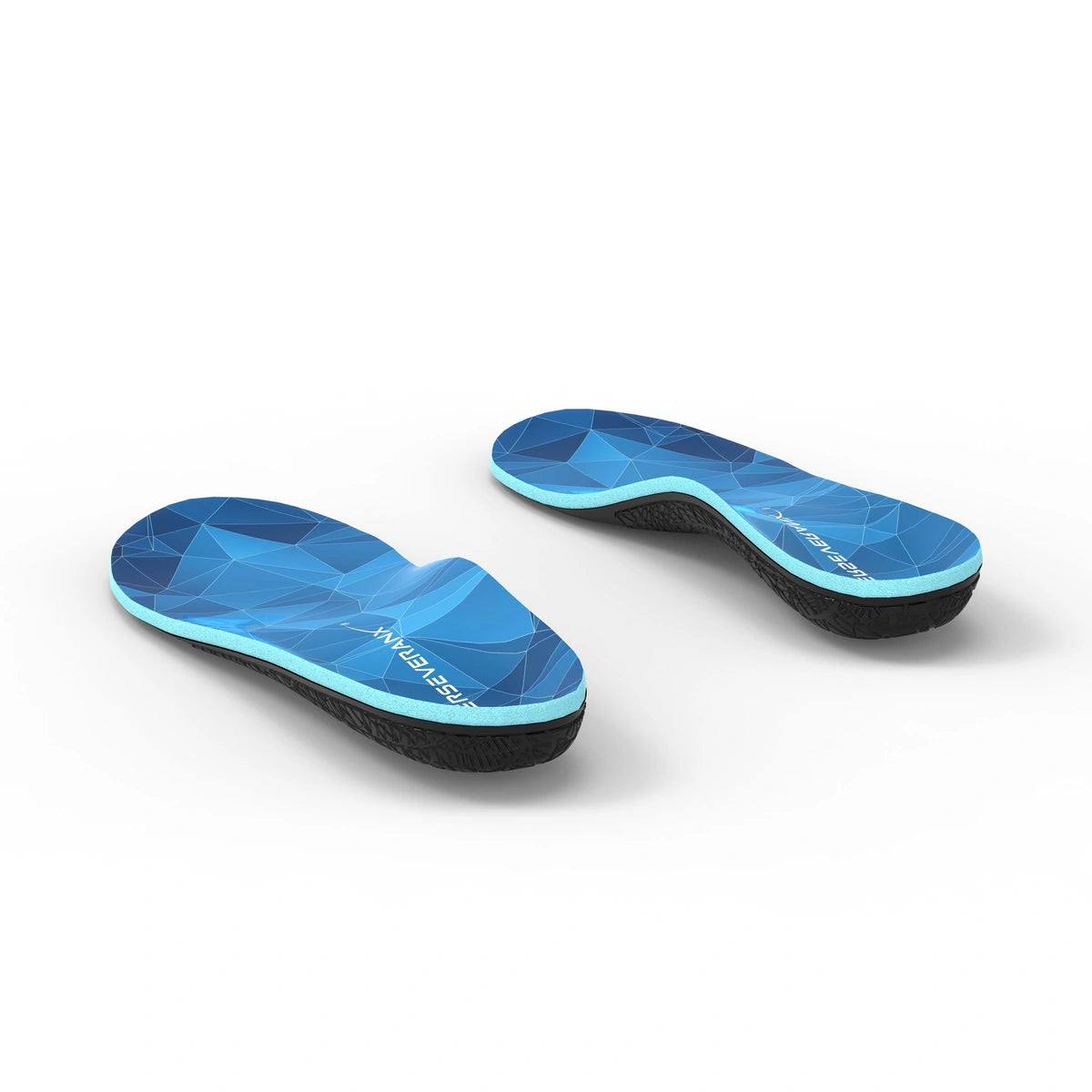
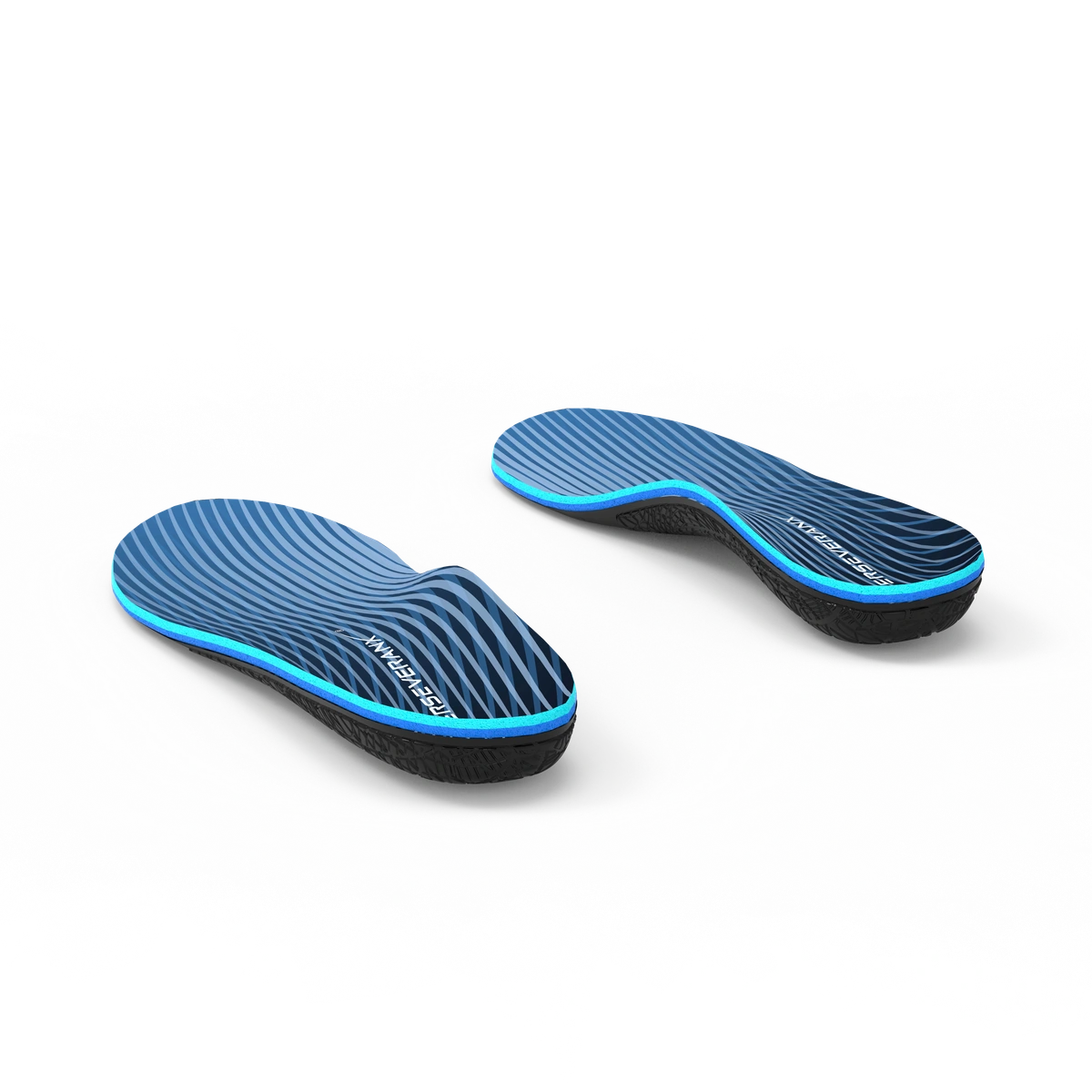
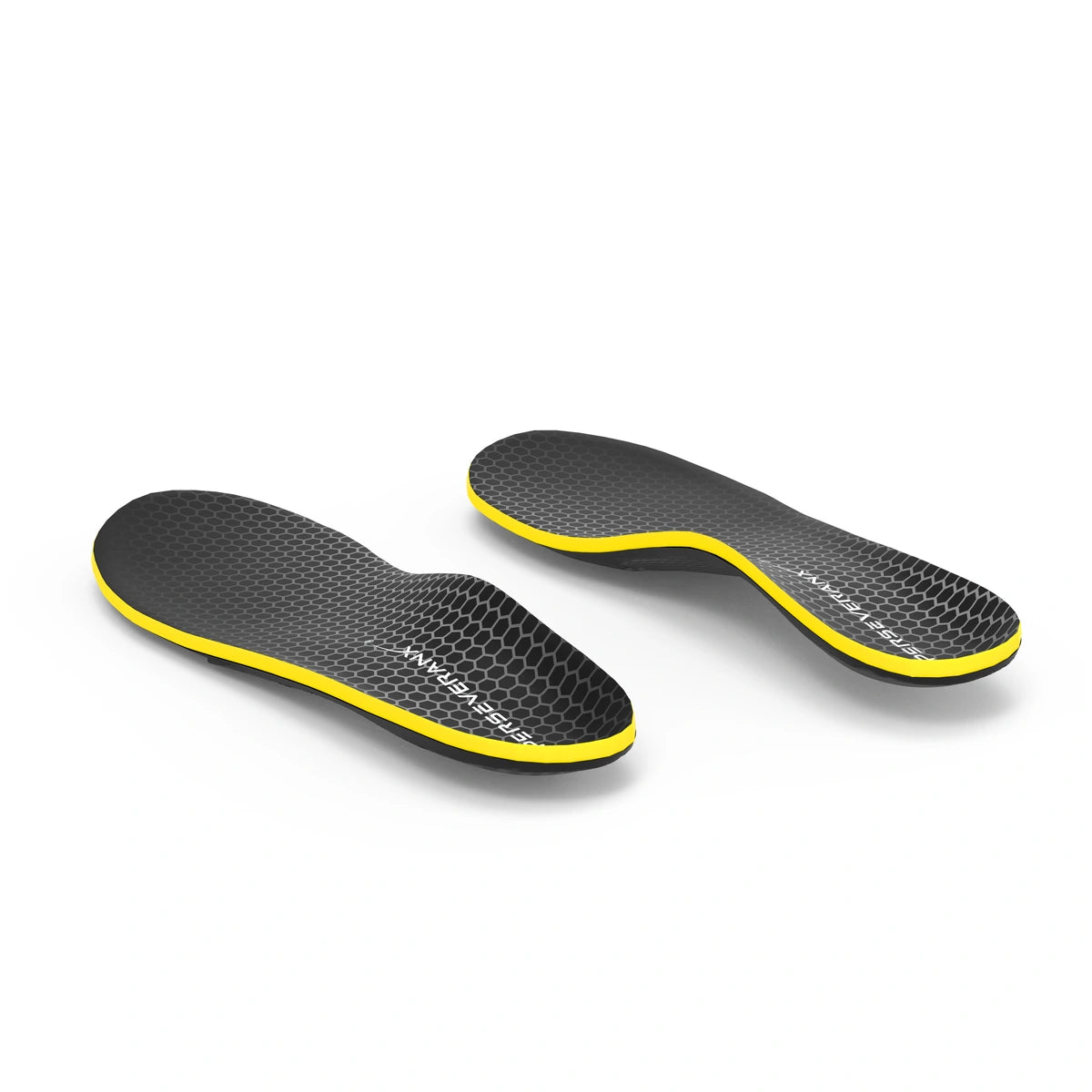
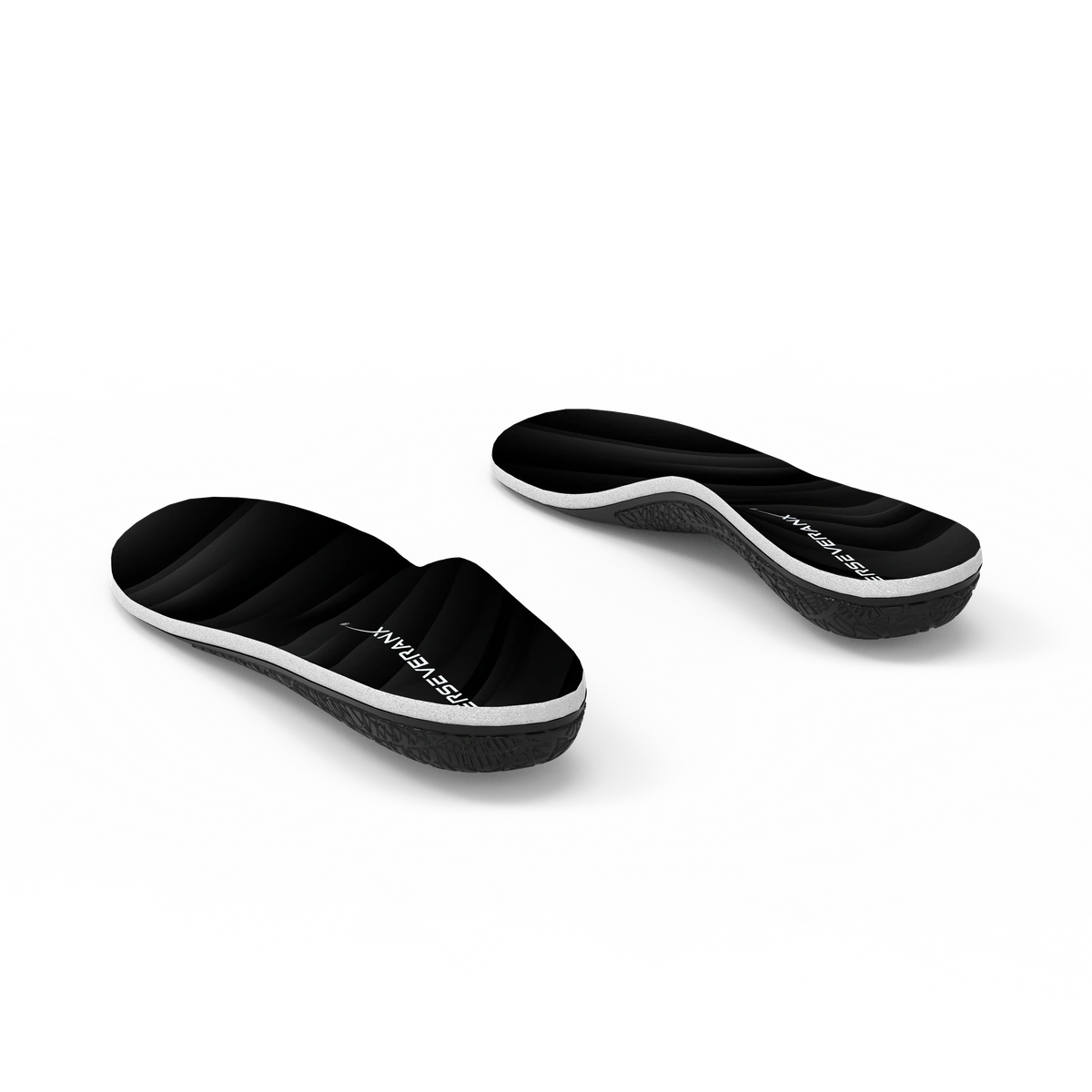
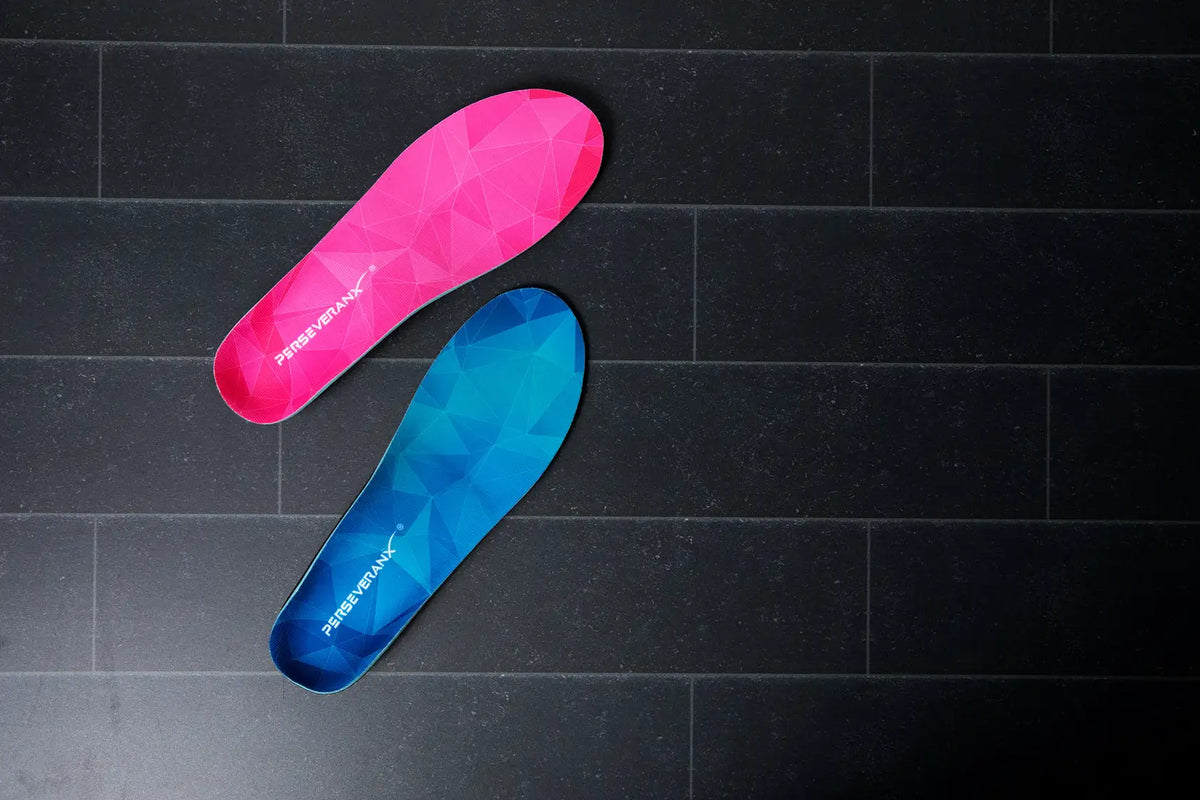
1. PerseveranX Embrace — best for people whose insoles keep going flat
About $59.95
Our own, so weigh this accordingly.
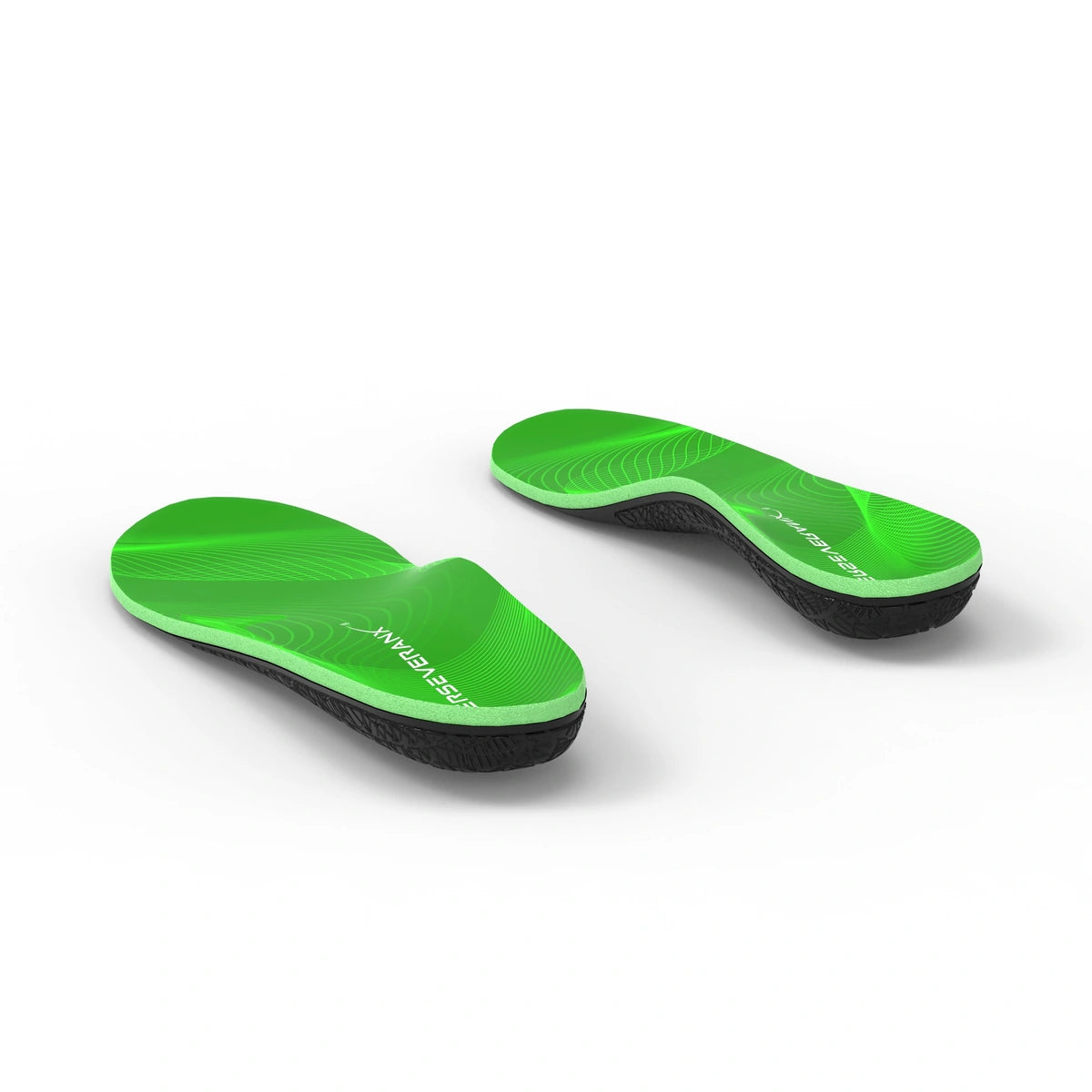
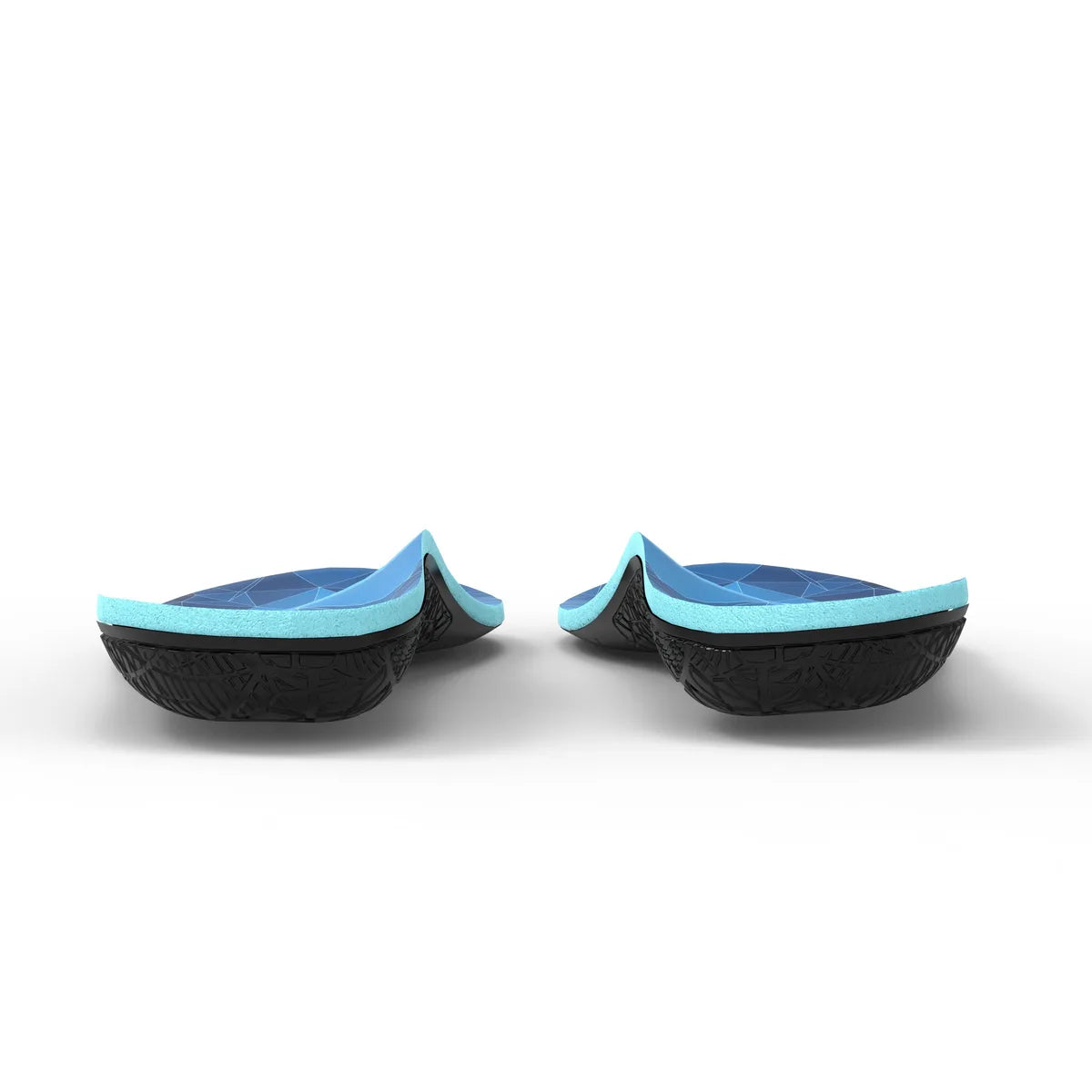
Embrace is the softest foam in our line, which matters when the heel is the place that hurts. The arch is built at the tall end of the range and sits on an open TPU frame rather than a solid plate, so it holds height without behaving like a wedge.
The reason we make it is the durability problem above: it is built from open-cell foam, which recovers between steps instead of permanently compressing. If your pattern has been "great for a month, then nothing," that is the specific thing this is for.
Not for you if you want firm, corrective support — this is the cushioned end. Also worth knowing: it is a tall arch, so if you have tried arch support and found it too much, start with a few hours a day.
2. Superfeet All-Purpose Support High Arch — the long-standing default
About $54.95
Formerly known as Green, and probably the most recommended insole in this category for good reason. The heel cup is the widest and deepest of anything at this price, the arch is genuinely high, and the design has barely changed since 1977 because it works.
The trade-off is the break-in. The rigid stabilizer cap means a lot of people need one to two weeks before it feels normal, and some never get there. It is also thick, so it needs footwear with a removable liner.
Best for: medium-to-high arches, people who want firm and do not mind an adjustment period.
3. PowerStep Pinnacle — the easiest first purchase
About $54.95
Semi-rigid support with a dual-layer cushion on top, which makes it the most forgiving of the firm options. PowerStep also publishes clear arch height tiers across the Pinnacle range — Low, standard, High, Maxx — which takes real guesswork out of buying.
Widely recommended in clinics, and the standard Pinnacle suits more feet than any single model in this list.
Best for: a first supportive insole, or anyone unsure of their arch height.
4. Tread Labs Pace — best if you want the arch height right
About $105 (with replaceable top covers)
Four arch heights, from low to extra high, and a replaceable top cover so the wear part is not the expensive part. If your problem has been that nothing matches your arch, this is the system built for that.
The price is the obvious barrier, though the replaceable cover changes the long-run math.
Best for: people who have already tried three or four pairs and suspect fit is the issue.
5. Protalus M-100 — the different approach
About $64.95
Protalus builds around heel alignment rather than arch height, which is a genuinely different theory of the problem. Plenty of people who did not get on with conventional arch support report good results, and the 90-day guarantee makes trying it low-risk.
The support feel is unusual and takes adjustment. Their own materials lean heavily on lab results that are hard to independently verify.
Best for: people for whom conventional arch support has not worked.
6. Walk Fulton Classic Cork — best moldable option
About $48
Cork base that softens with body heat and molds to your arch over the first few days, so arch height becomes less of a purchasing decision. Good for people who do not know their arch type and do not want to guess.
Cork compresses over time, and once it has molded it has molded — it will not adapt again if your footwear or activity changes.
Best for: unknown arch type, or feet that fall between standard sizes.
7. SOLE Active Thick — best for wide or high-volume footwear
About $59.95
Heat-moldable or wear-moldable, deep heel cup, and enough thickness to fill roomy shoes and boots. The moldable approach solves the same problem cork does, with more cushioning.
Thick enough that it will not fit snug footwear, and the heat-molding step puts some people off.
Best for: hiking boots, work boots, roomy trainers.
8. CURREX RunPro — best for runners specifically
About $54.95
Built around running mechanics with three profile options, and lighter and more flexible than most of this list. If your plantar fasciitis showed up with mileage, a running-specific option is worth considering over a general one.
Less support than the firm options here, and not the right pick for standing all day.
Best for: runners, and people whose symptoms are activity-linked rather than constant.
What to do with this list
If you have never used a supportive insole, start with PowerStep Pinnacle or our Embrace — both are forgiving on day one.
If you already use arch support and it stops working after a month or two, the problem is probably not the shape. It is the material, and that is worth reading about before you buy the same thing again.
And whatever you buy: press the arch hard with your thumb before you pay for it. If the dent stays, that is what it will do under your foot, only faster.
One thing no insole does: fix plantar fasciitis on its own. Calf and fascia stretching, footwear that is not worn through, and gradual return to activity all matter, and a case that has not moved in six weeks is worth showing to a podiatrist or physical therapist.