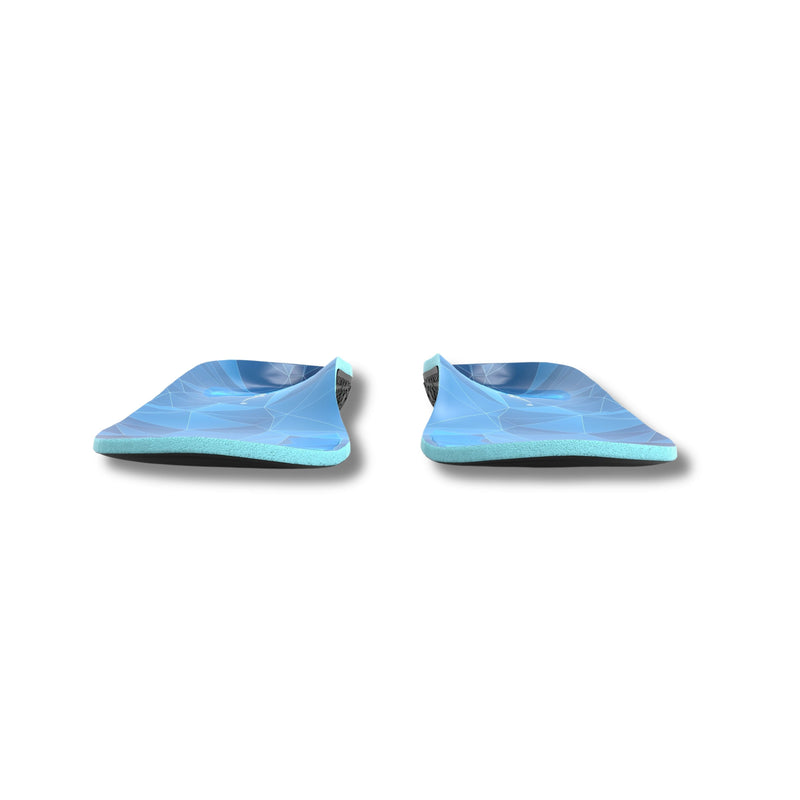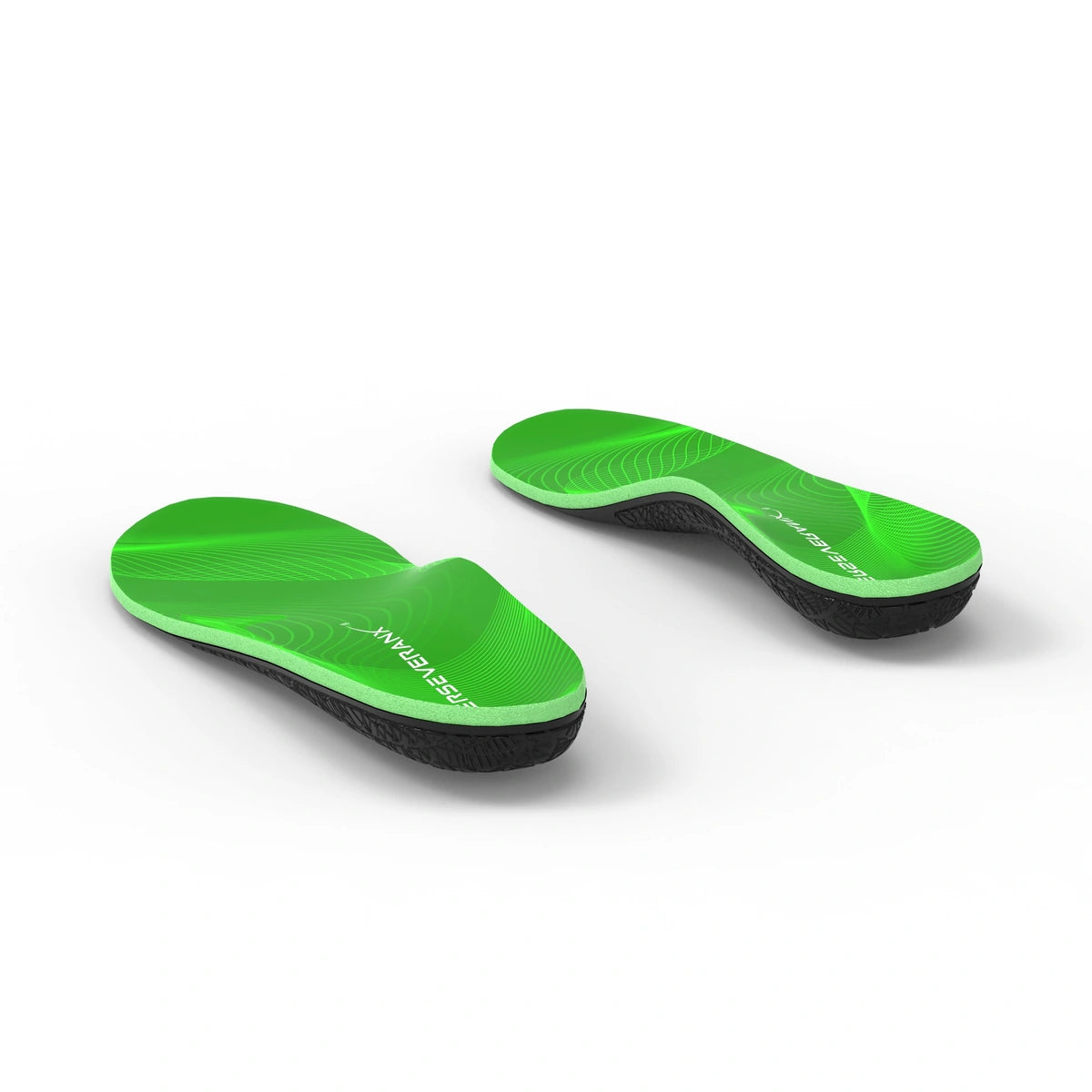
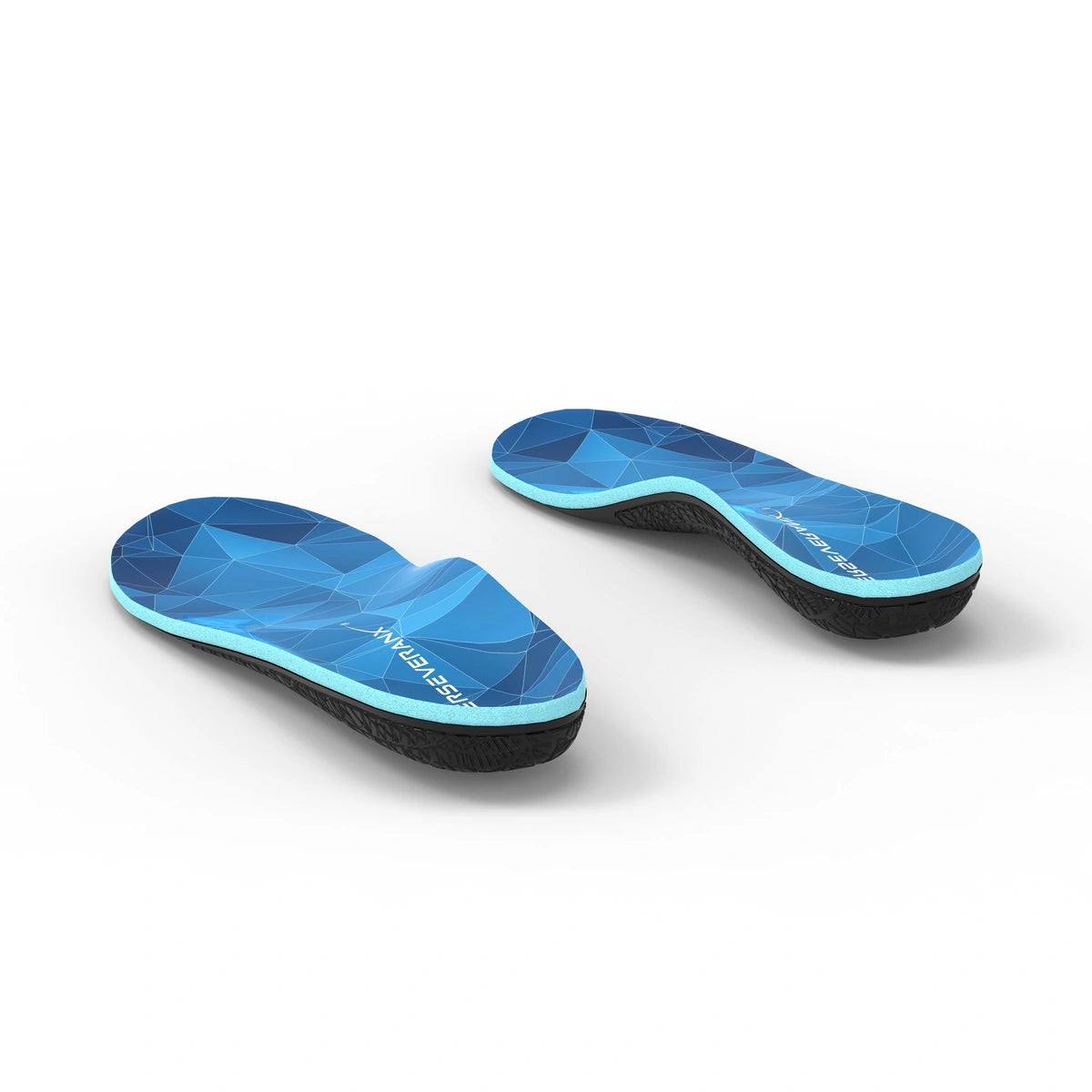
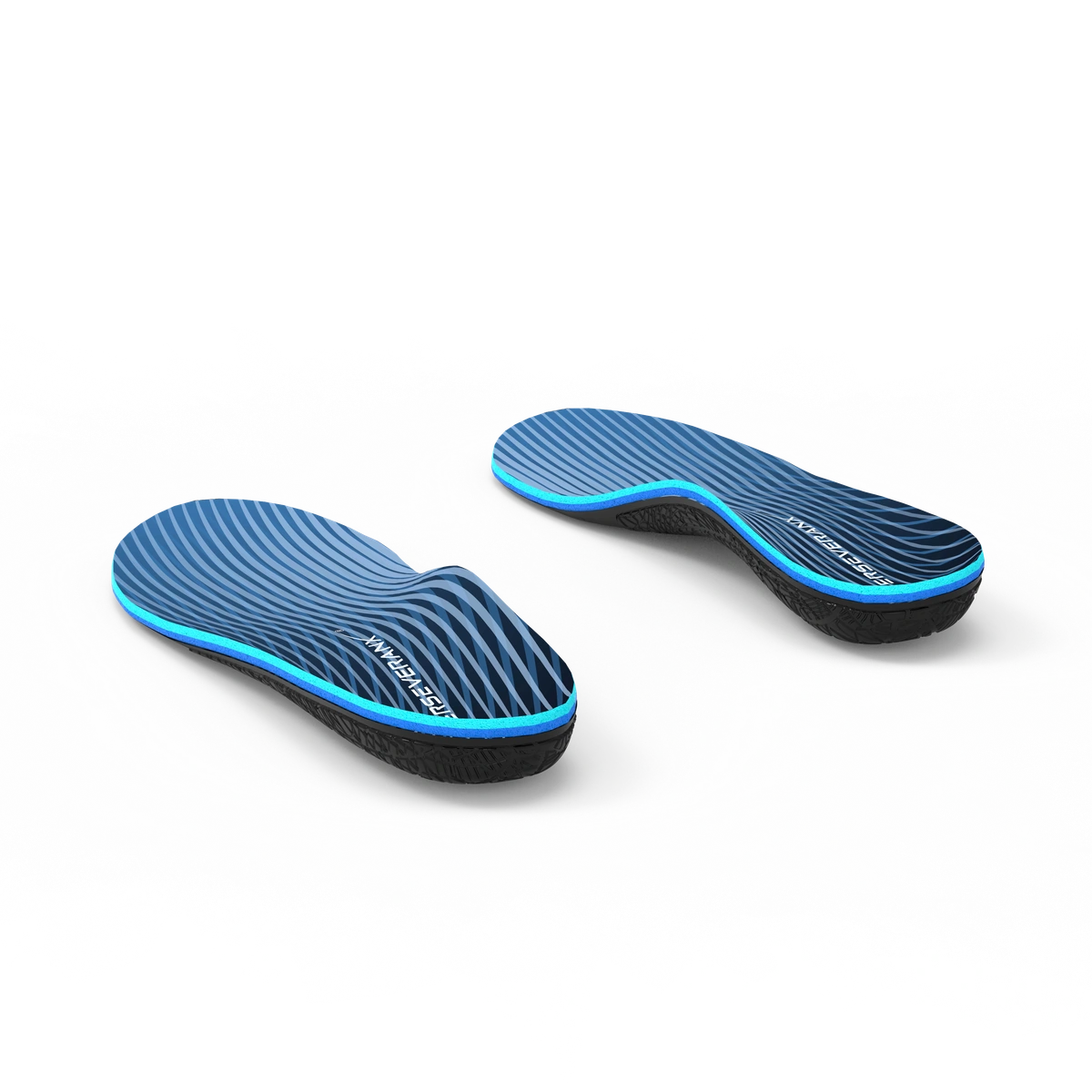
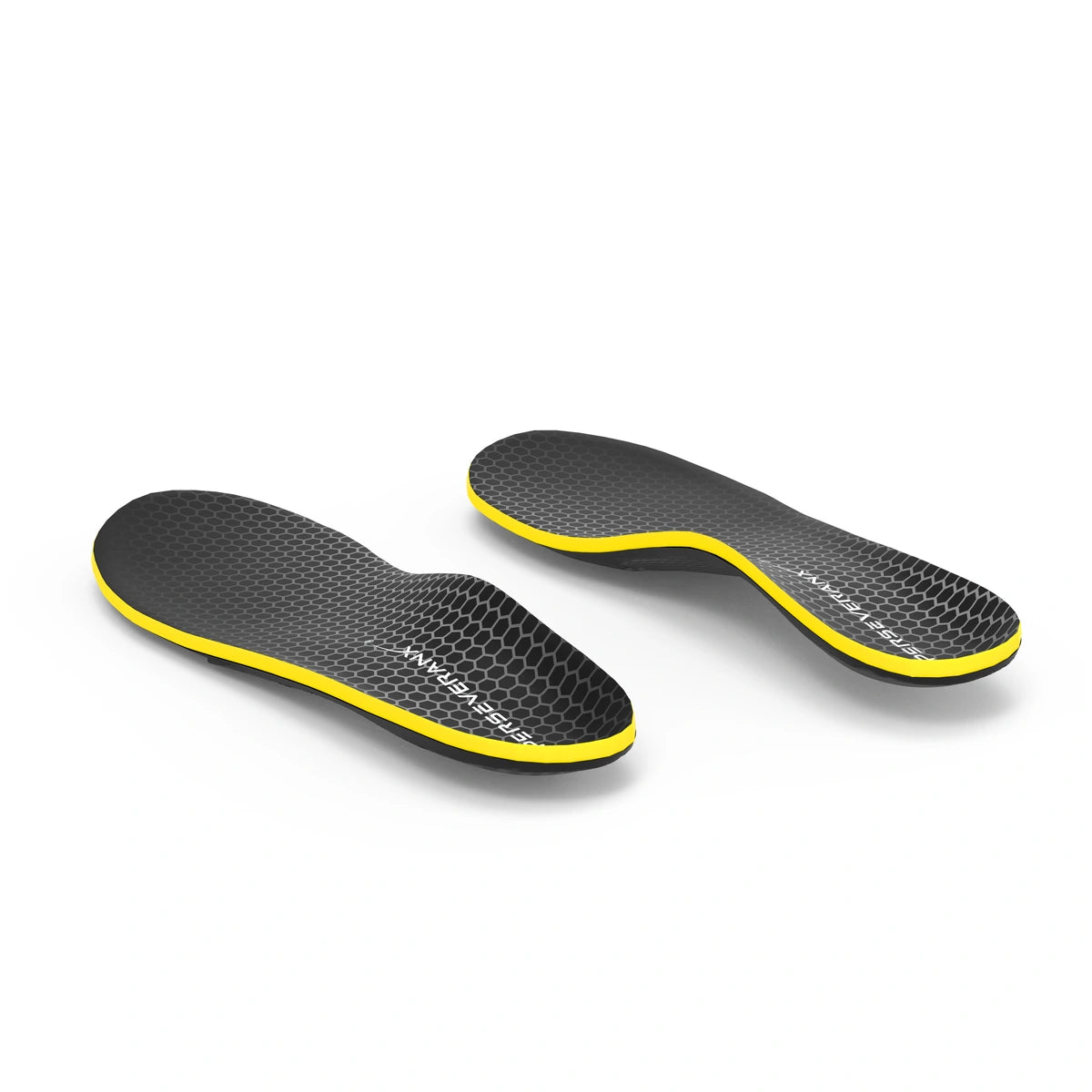
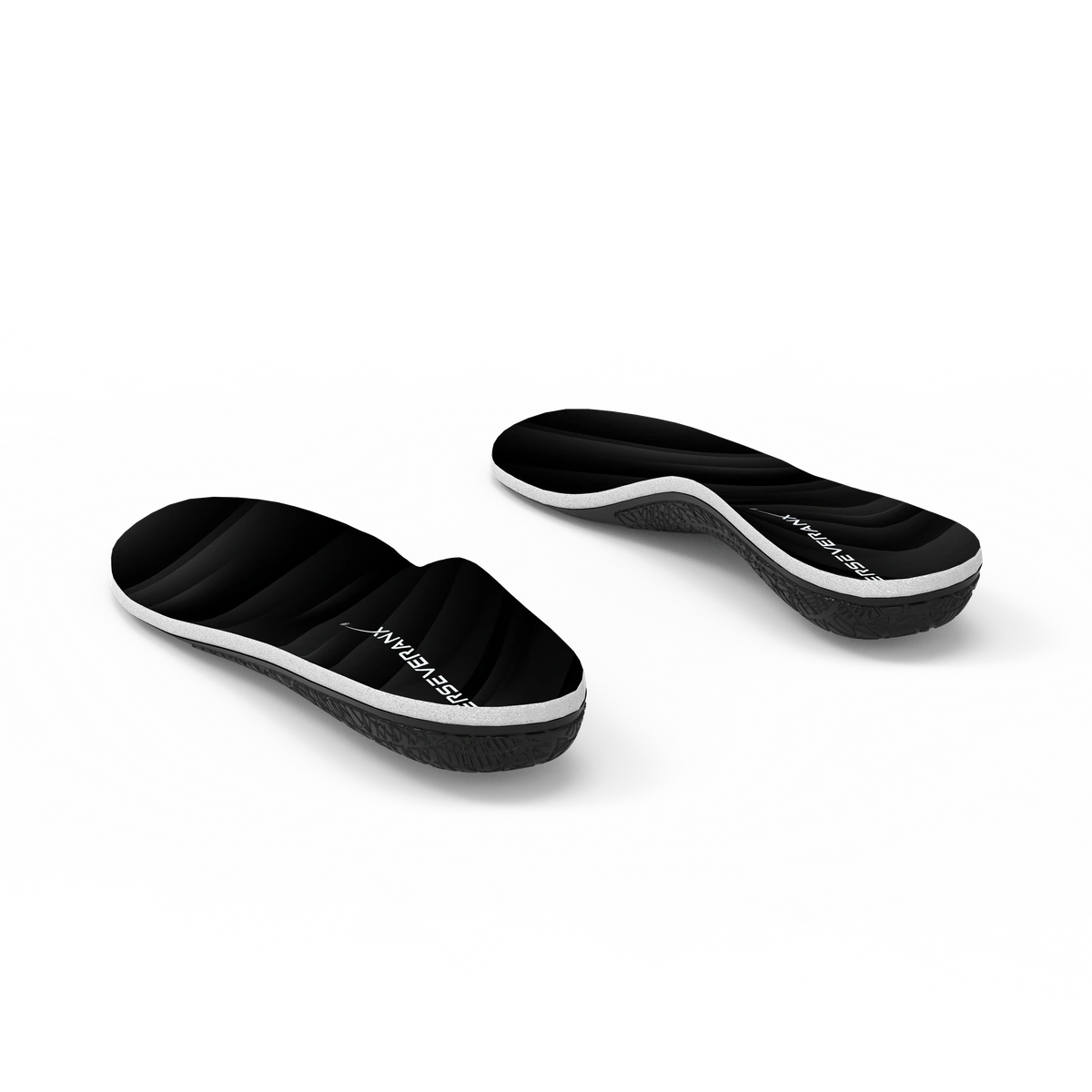
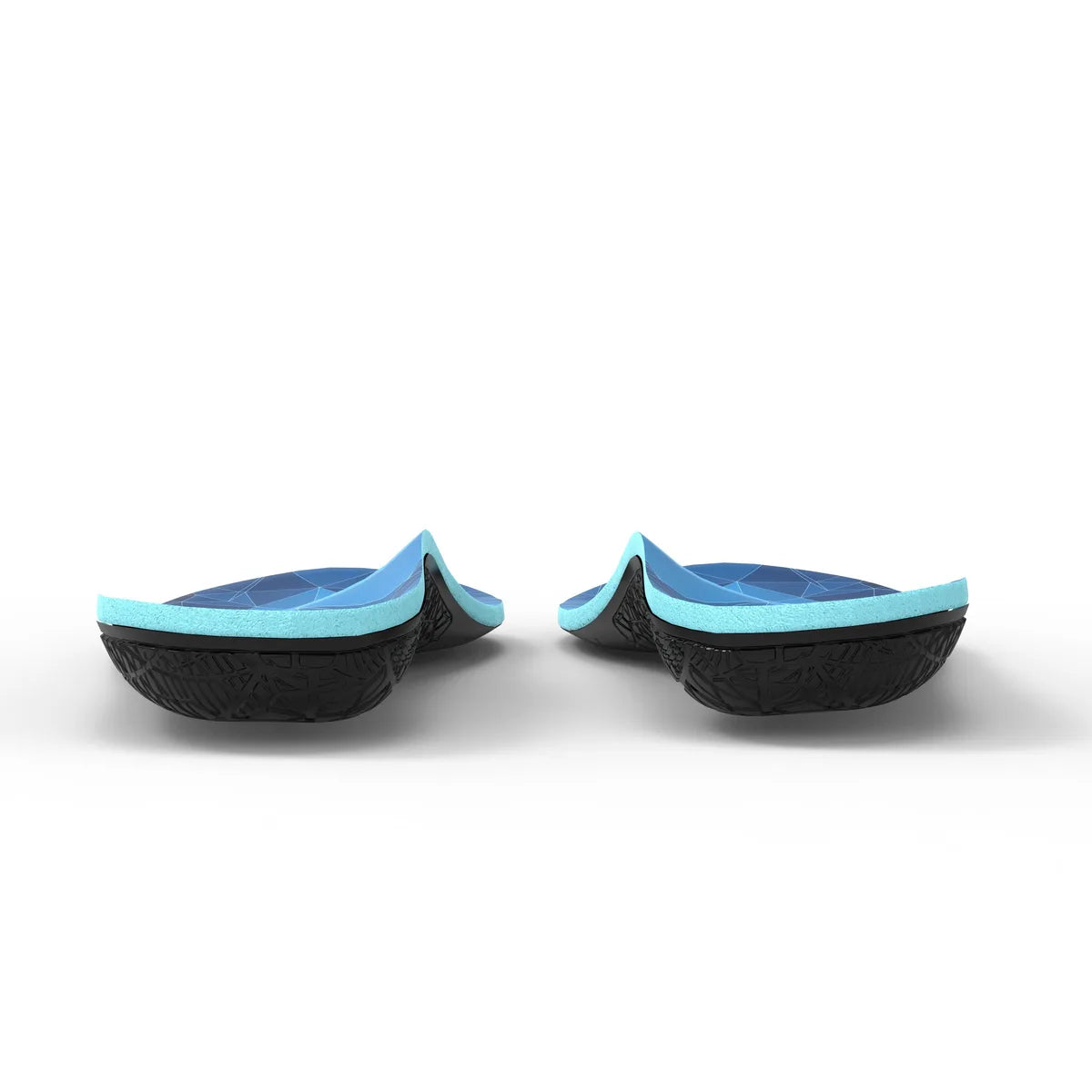
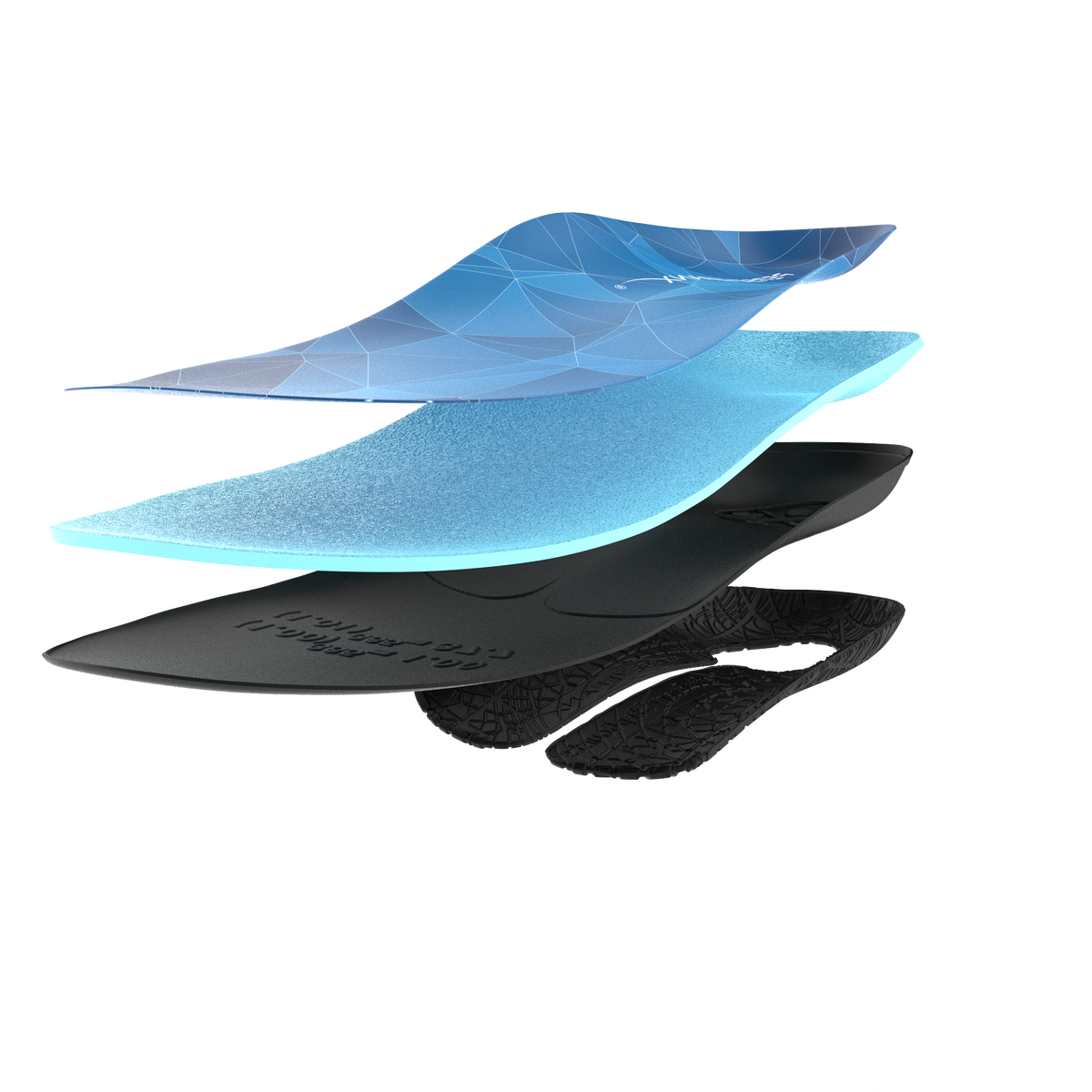
A good insole has two jobs: cushion the contact beneath your foot and provide a shape your foot can rest against. PerseveranX brings those jobs together with open-cell polyurethane cushioning, a contoured comfort base and a firm support frame. You choose how the cushioning feels; the foundation supports your arch and cradles your heel.
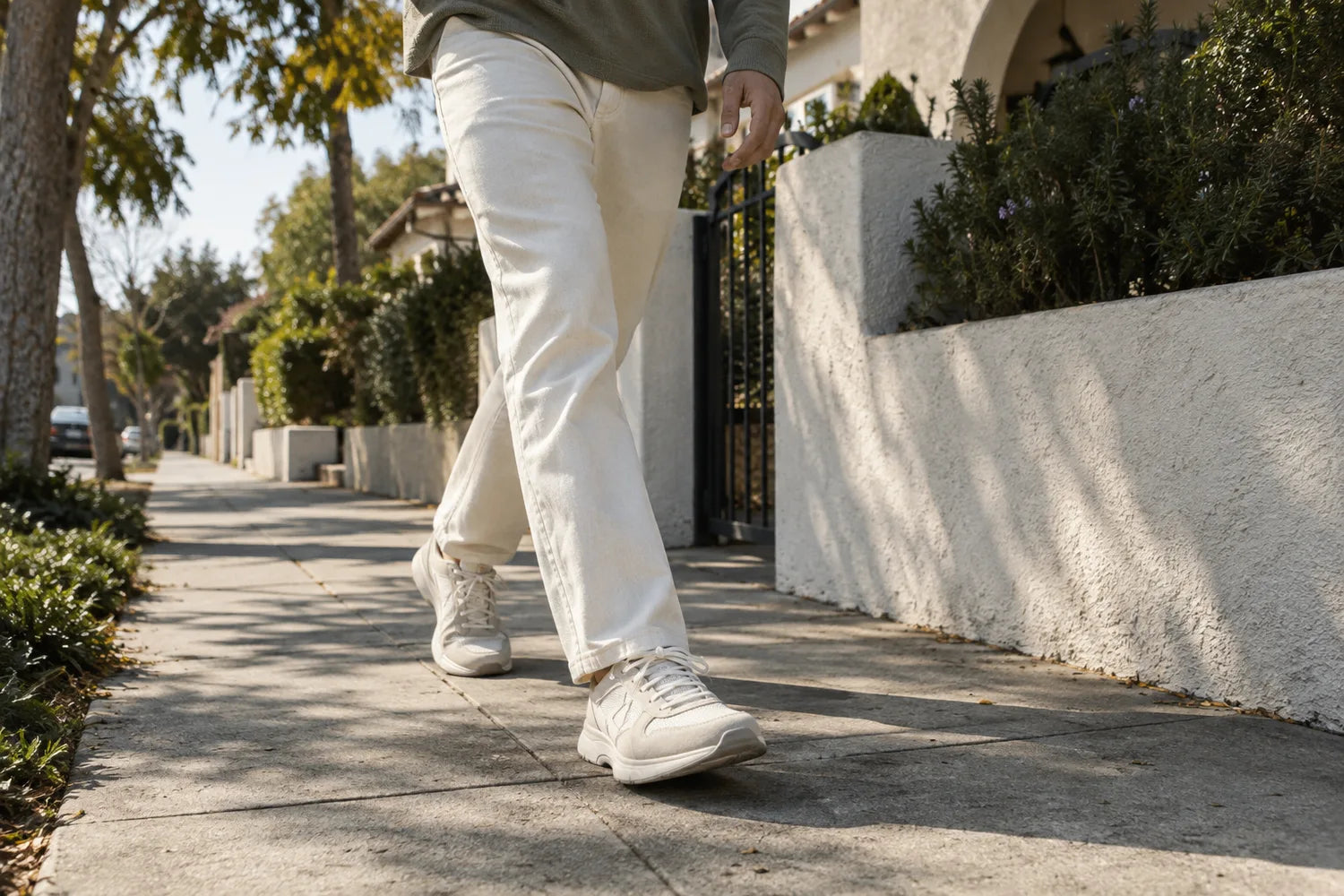
The benefit is easy to picture: a softer surface between your foot and a hard floor, with support underneath as you stand, walk or run. Here is what each part contributes.
Cushioning, rebound and recovery are different
Cushioning is what you feel as the material yields under pressure. Rebound is its springy response as that pressure lifts. Recovery describes its return toward its original shape. A cushion can feel gently conforming without producing a pronounced bounce.
That distinction matters when you shop. The highest bounce is not automatically the feel you want for hours at a counter. And the softest thumb press does not tell you how much support you will feel beneath your arch.
Three layers, one comfortable foundation
- Open-cell PU cushioning: approximately 0.16 in (4 mm), giving each model its particular contact and response. This is the cushioning layer's thickness, not the total height of the shaped insole.
- Contoured EVA comfort base: approximately 0.04 in (1 mm) beneath the forefoot, with a thicker heel area. It forms the transition between the cushioning and the support below.
- Stability frame: a firm TPU structure that supports the arch and cups the heel. Cushioning above it softens contact with that foundation.
Softness and structure can belong in the same insole. You do not have to choose between a cushioned surface and a defined shape beneath your foot. See the layers together in How it works.
Comfort that keeps coming back
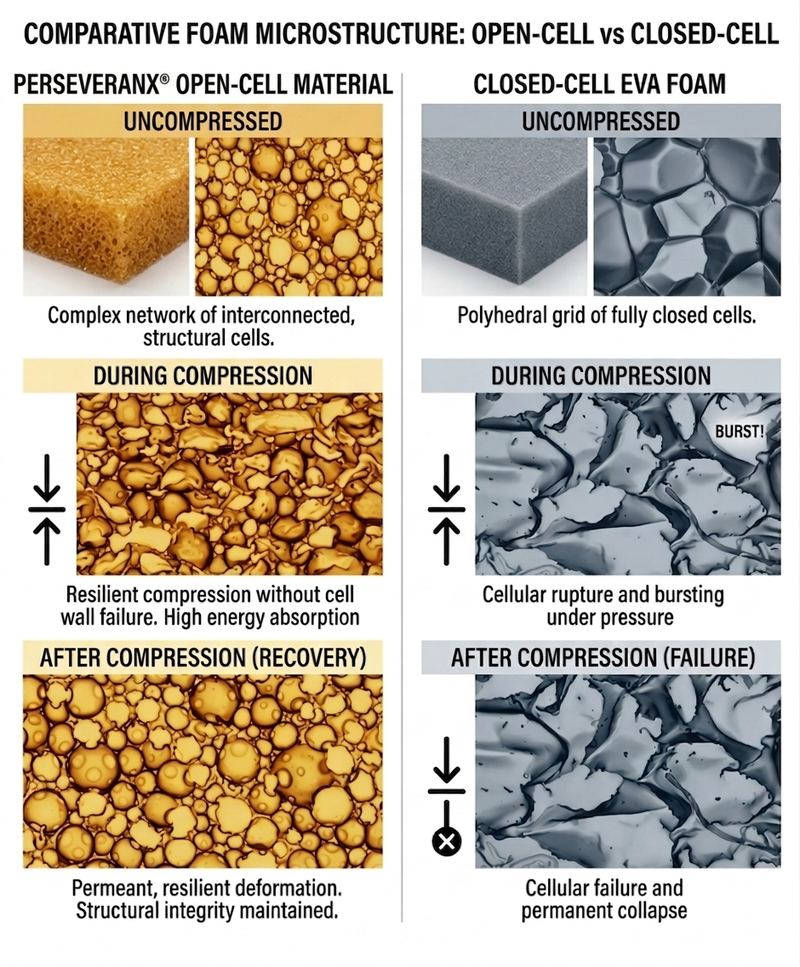
A cushion is useful for more than the first few steps out of the box. Our open-cell PU materials are selected for recovery after pressure and resistance to lasting flattening, helping preserve cushioning through repeated wear.
Open-cell PU can be formulated for different comfort and response characteristics, as illustrated in material manufacturer Rogers' cushioning-material overview. For a closer explanation of why recovery matters, read our open-cell and closed-cell foam guide.
Choose the response you want beneath you
Bouncy brings pronounced spring to running and training. Embrace yields into a softly contouring, low-bounce feel. Fusion feels firmer and less easy to sink into than Embrace, while retaining cushioning and low bounce. Plush pairs soft contact with spring-back. HoneyComb responds to pressure and the force of impact.
These are five cushioning choices within a shared support concept, not five levels of arch correction. Start with the feel you enjoy, then check that the arch contact, heel position and shoe space work together. Our arch-support buying guide explains what to look for.
What to notice in the material demonstration
Watch the ball's rebound, then look at the surface after impact. Those show the response and recovery visible in that demonstration. Long-term resistance to flattening is a separate material-testing question; the video is a useful close-up of behavior, not a prediction of your running performance.
Ready to turn the material choice into a pair for your shoes? Find your feel and choose the cushioning you want to come back to every day.