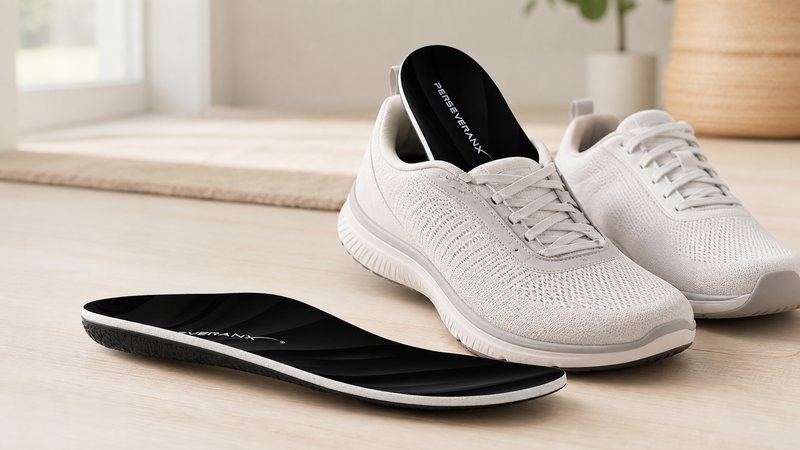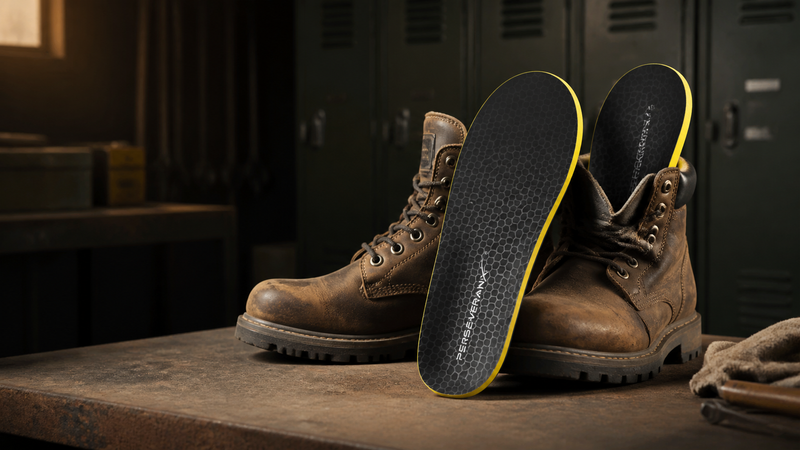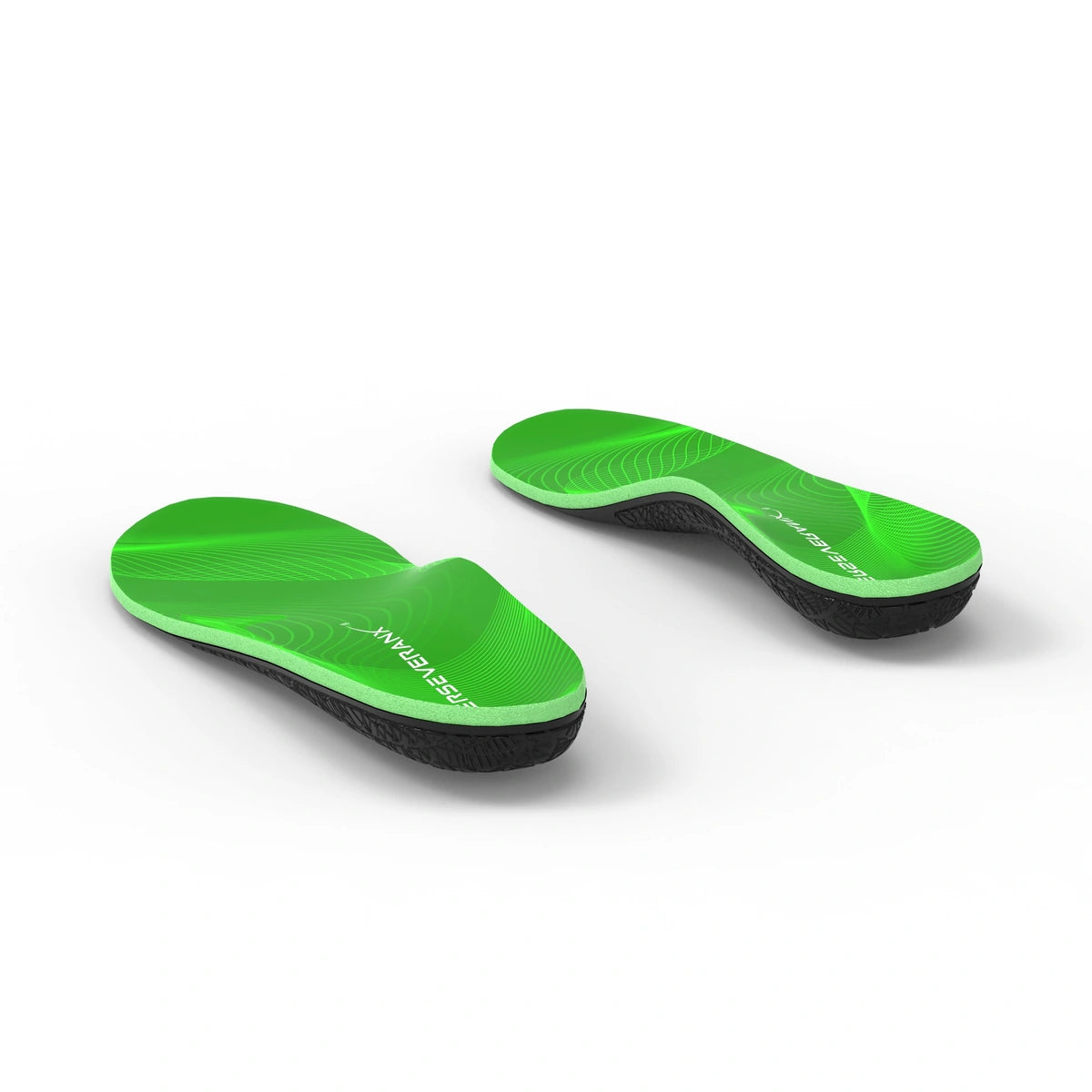
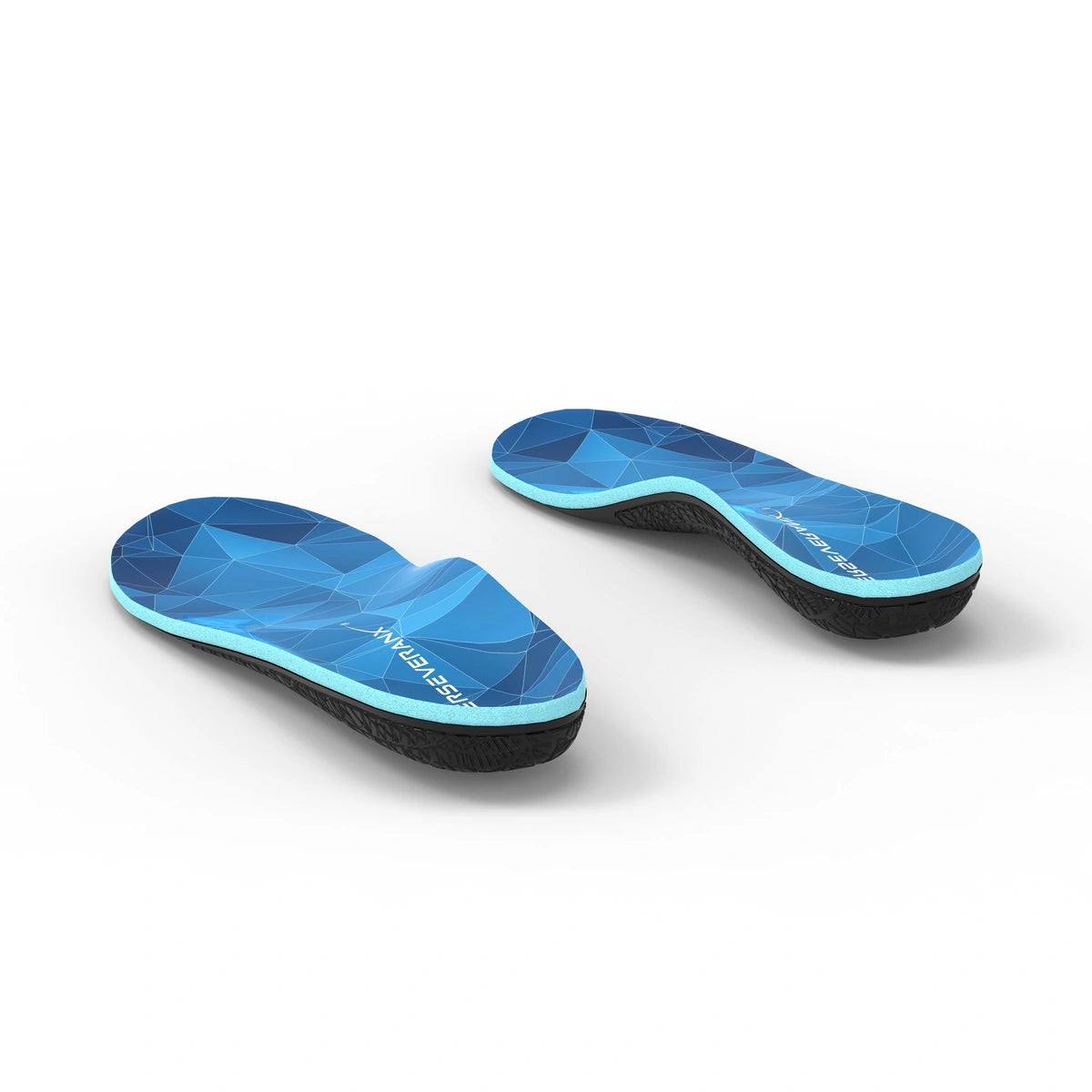
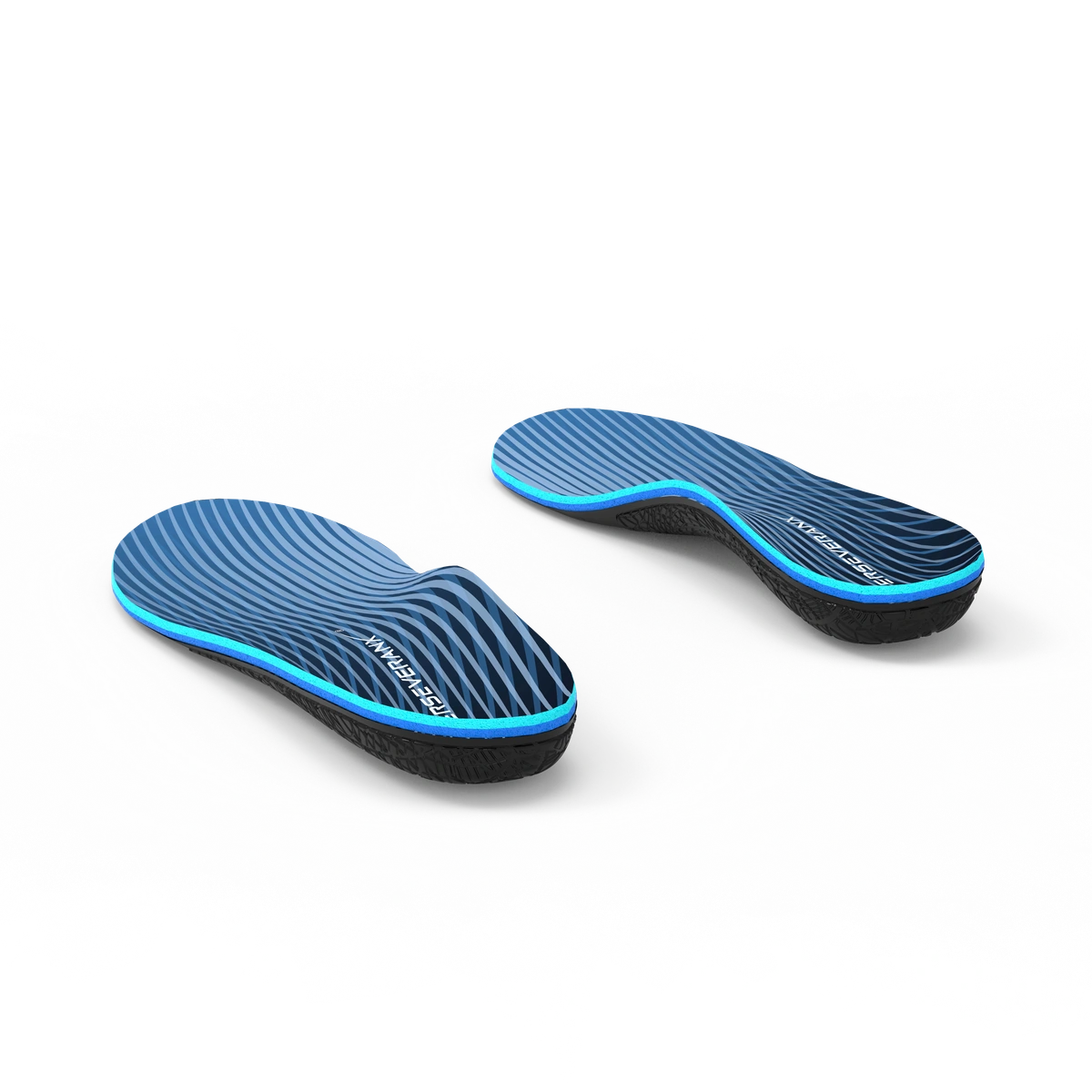
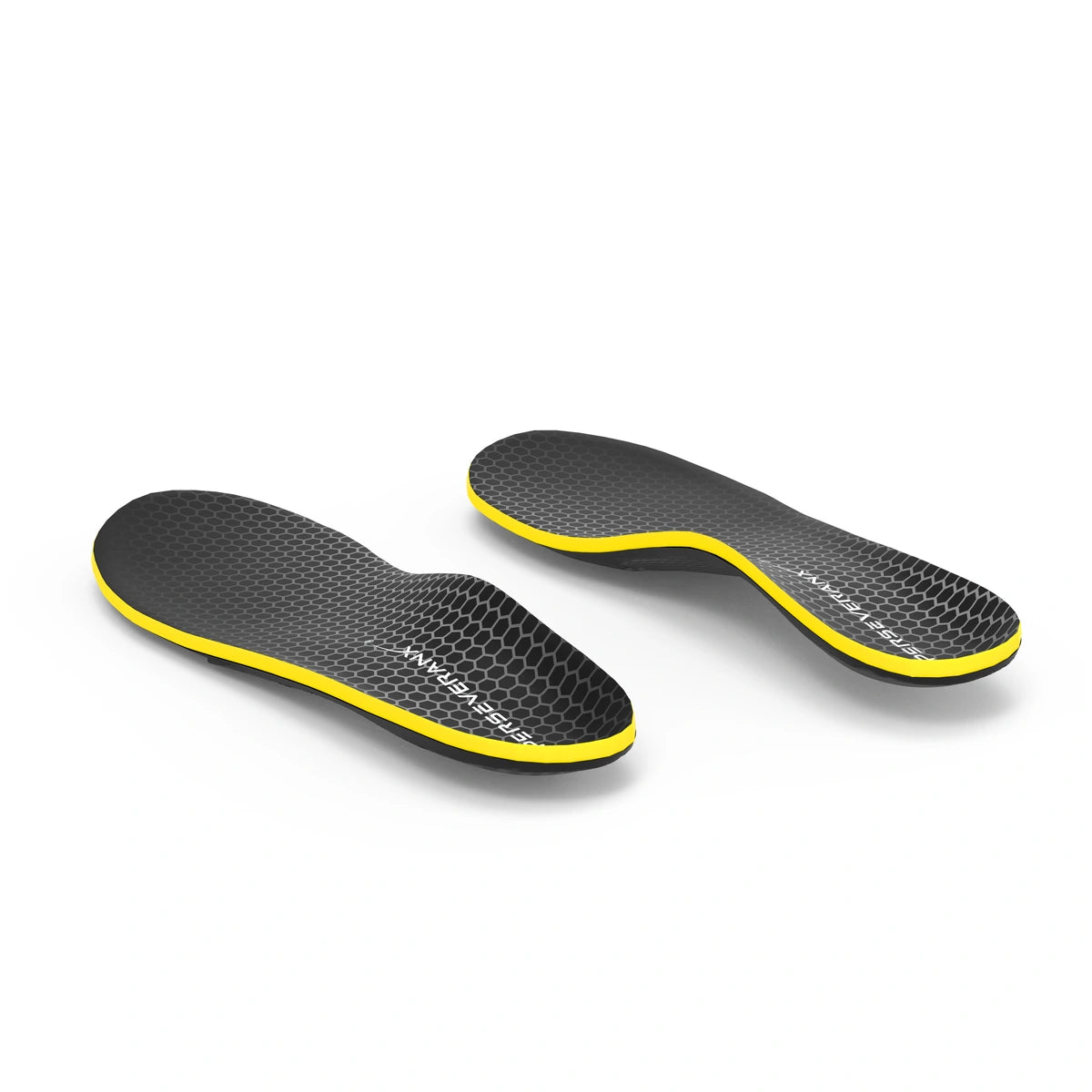
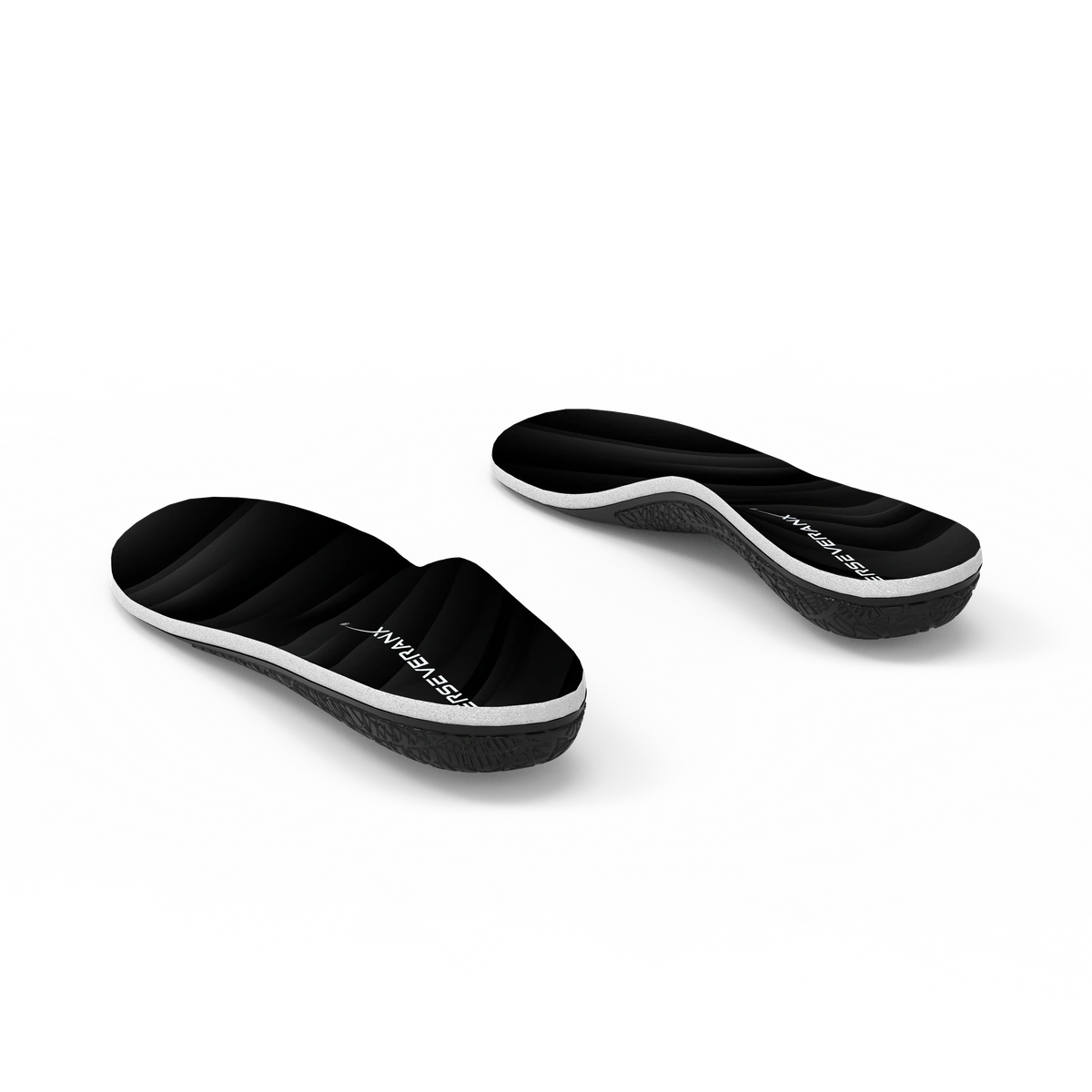
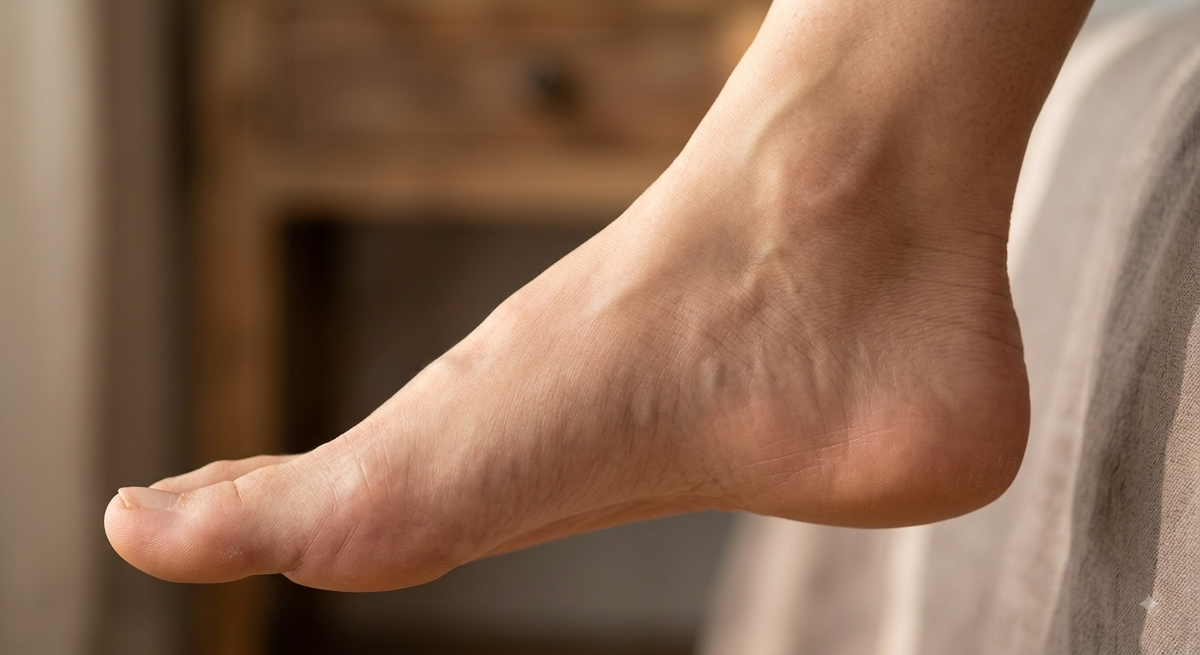
A good high-arch insole should meet the curve beneath your foot comfortably, cushion the heel and forefoot, and fit inside your shoe without crowding it. The goal is useful contact across the shape of your foot, rather than the tallest arch you can find.
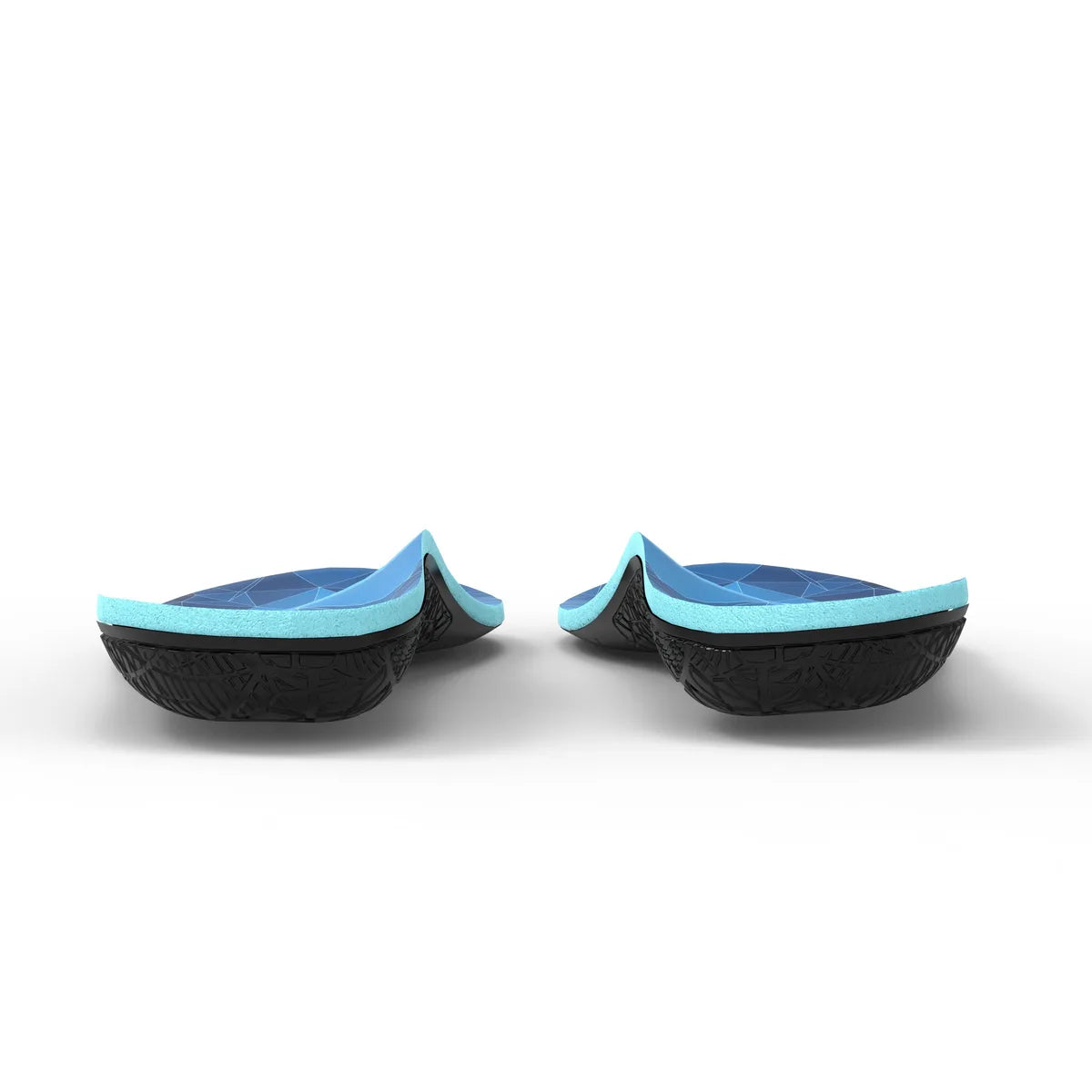
PerseveranX combines a raised, shaped support frame with five cushioning feels. Choose the contour that fits your foot first, then the softness and response you want above it.
Check where the arch meets your foot
Arch height is only one part of the shape. The length and position of the curve matter too. With the insole seated in your shoe, the support should sit beneath your arch rather than feel like a lump too far forward or back.
Try both shoes while standing and walking. Notice whether contact feels broad and comfortable, whether your heel stays seated, and whether the edge of the support draws your attention with each step. More noticeable pressure is not a sign that an insole is working better.
Pair the shape with the cushioning you enjoy
The support frame and the cushion have different roles. The frame gives the arch and heel a defined foundation. The material above it softens contact and determines whether the insole feels gently yielding, firmer or springier.
Embrace is softly contouring with low bounce, a choice for people who like to settle into the cushion. Fusion feels firmer and less easy to sink into while retaining cushioning and a low-bounce response. Neither choice changes the collection's underlying support concept.
If you prefer more spring as you move, explore the other feels after confirming the fit. Our cushioning and arch-support guide explains the differences without treating softness as a substitute for shape.
Make room for the whole insole
A full-length insert occupies space above the shoe's sole and around the heel. Remove the original liner if it is removable, rather than stacking the replacement over it. Check the fit with the socks you actually wear.
PerseveranX cushioning is approximately 0.16 in (4 mm) thick. Beneath it, the contoured EVA comfort base is approximately 0.04 in (1 mm) at the forefoot and thicker at the heel. Those figures describe individual layers, not a uniform total insole height.
Use our size and shoe-fit guide to compare the untrimmed liner dimensions. If your foot needs extra width, read the wide-feet guide too: trimming can remove excess material, but it cannot add missing width.
A comfortable fit should survive a short walk
- At the heel: a secure seat without the shoe rubbing higher on your heel.
- At the arch: supporting contact without a sharp or concentrated pressure point.
- At the toes: space to move without pressing against the upper.
- During movement: an insert that stays flat and does not shift, buckle or slide.
Start with a shorter wear period and pay attention to the whole fit. Do not force yourself through increasing pressure just to finish a break-in schedule.
When individual advice is useful
Persistent pain, repeated ankle instability or a changing arch deserves assessment. The American College of Foot and Ankle Surgeons describes how high-arched feet can have different causes and may need individualized footwear, orthotics or other care in its cavus-foot guide.
For everyday comfort, start with a shape that meets your foot and a cushion you want to wear. Find your PerseveranX feel to narrow the choice.