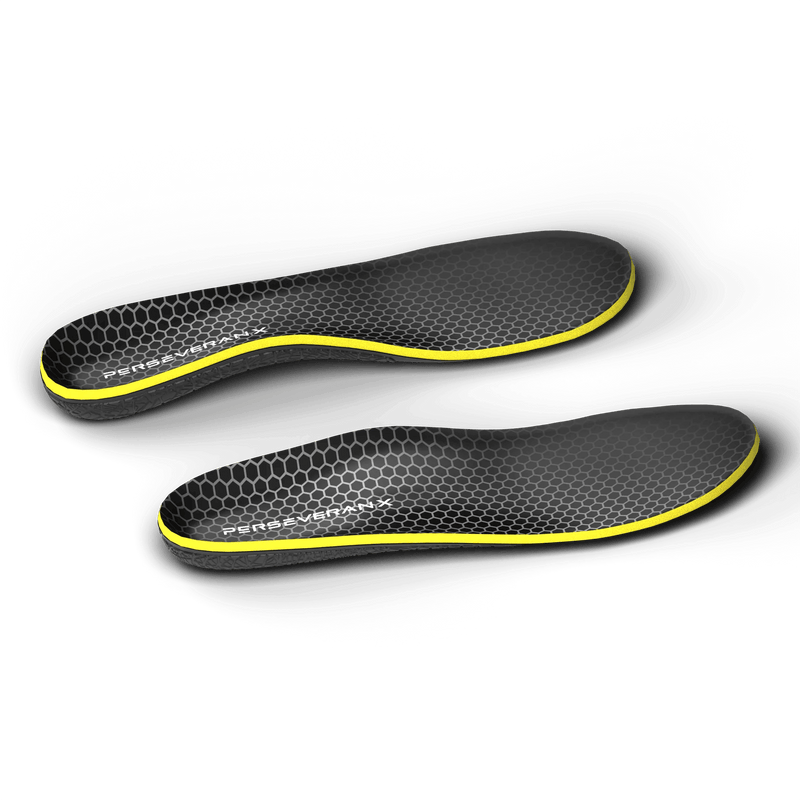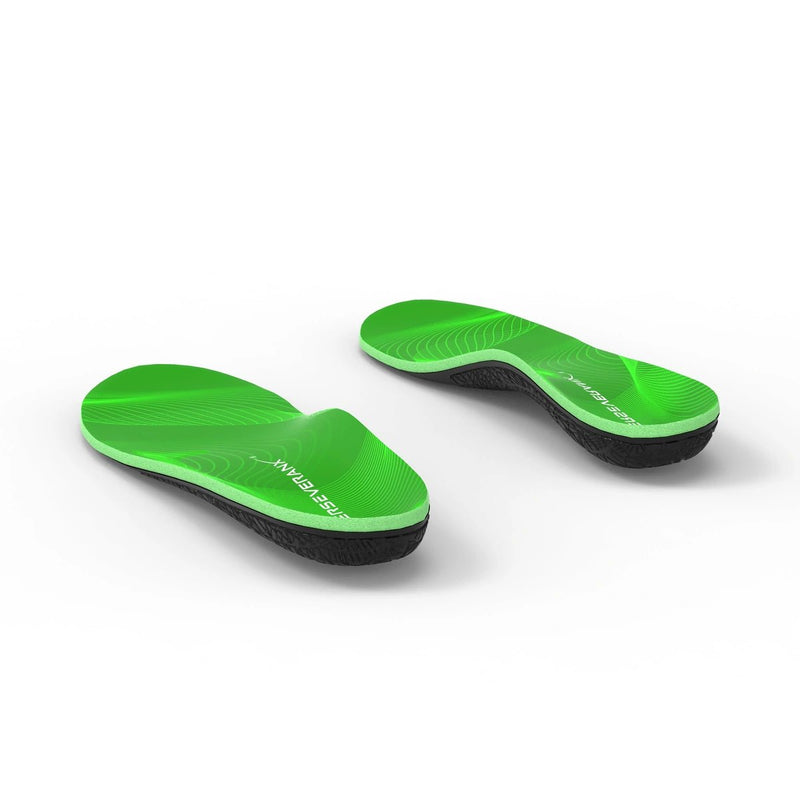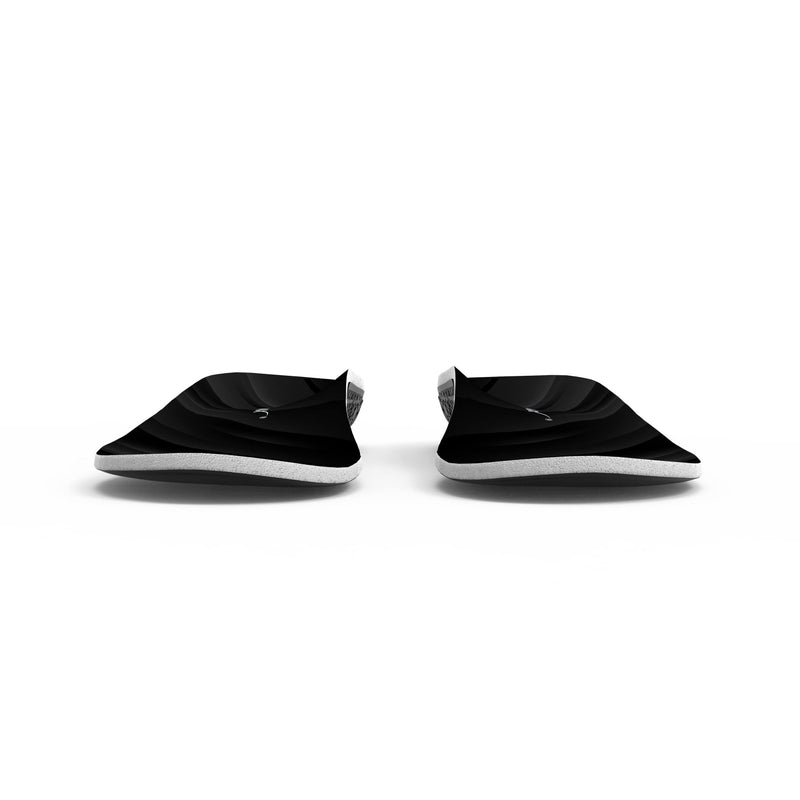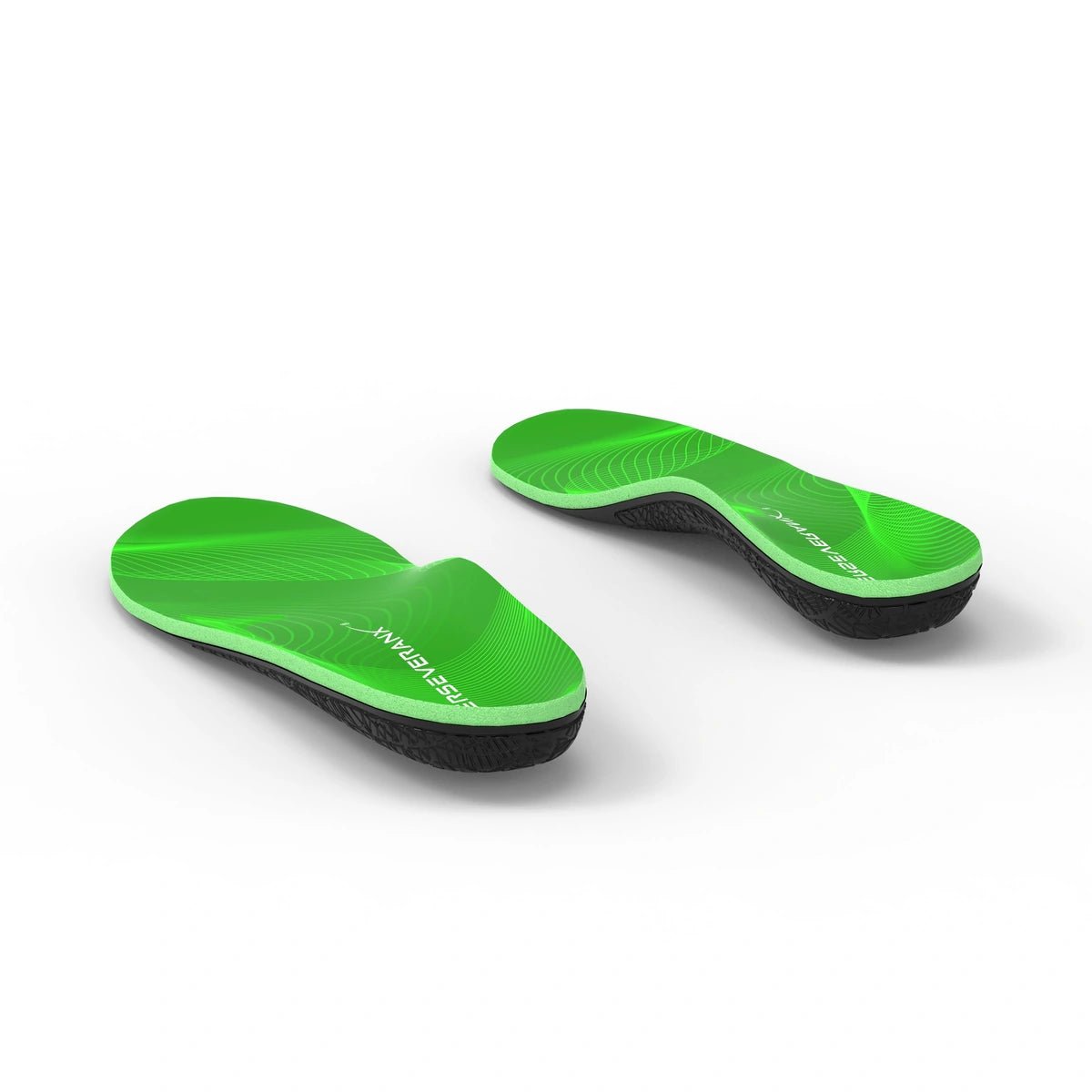
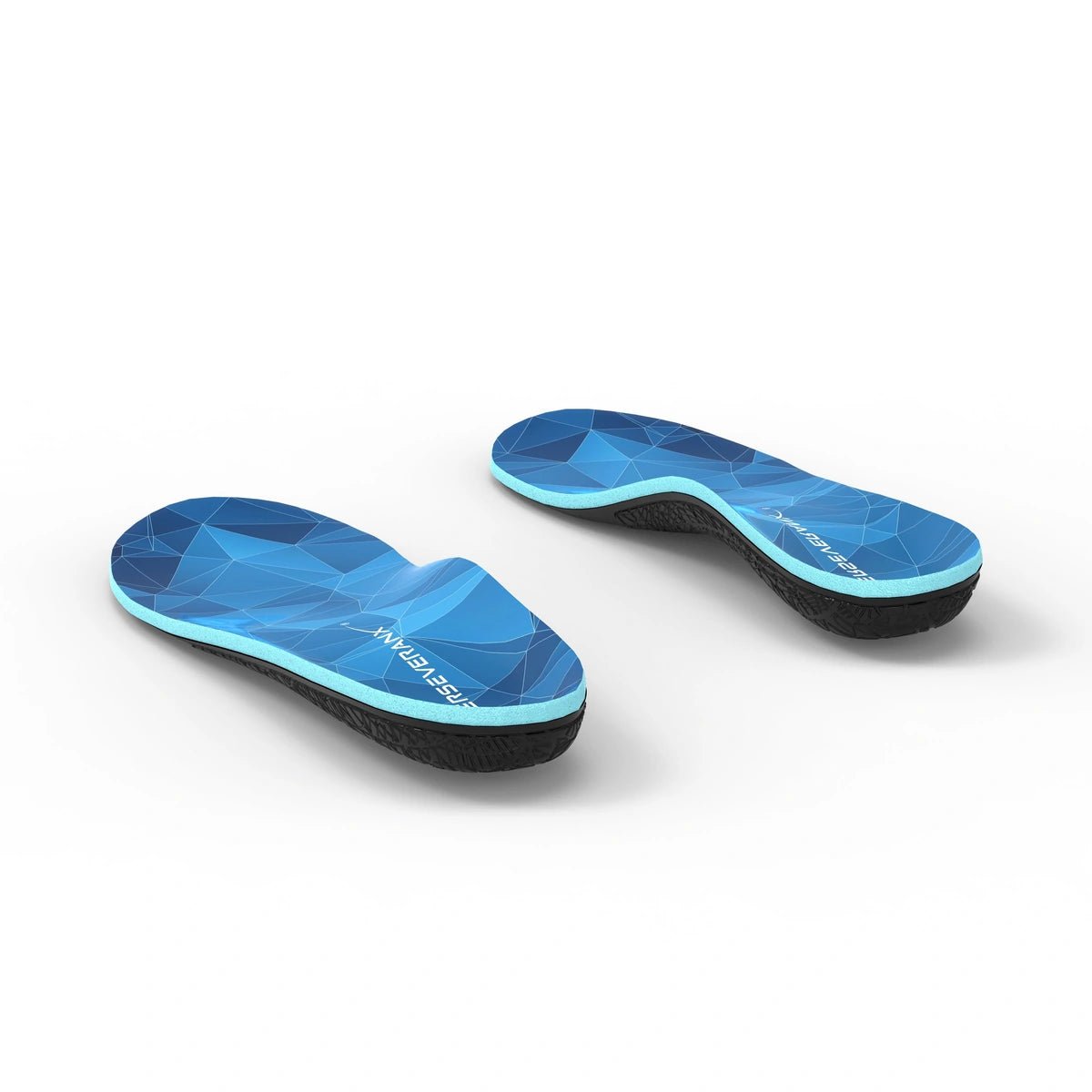
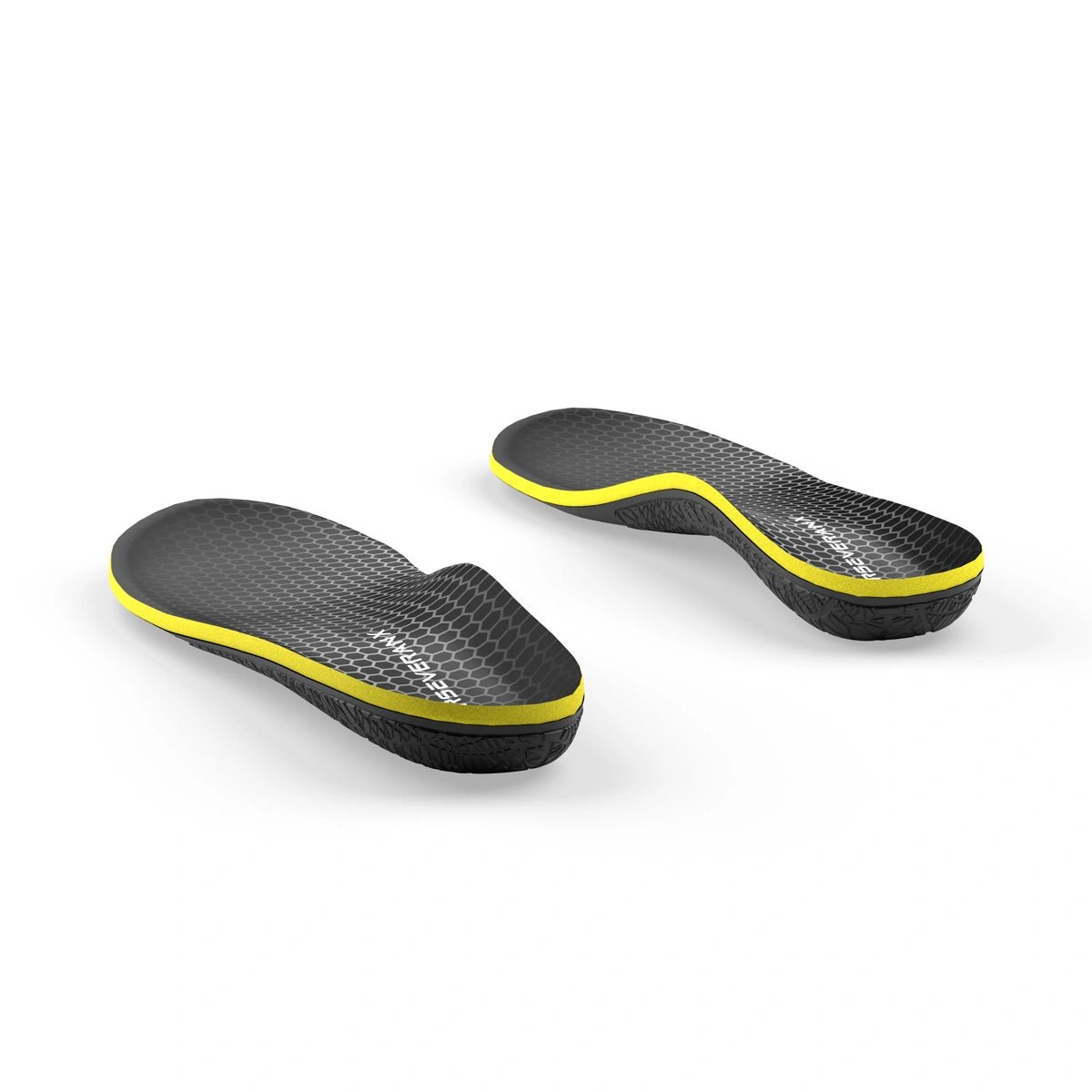
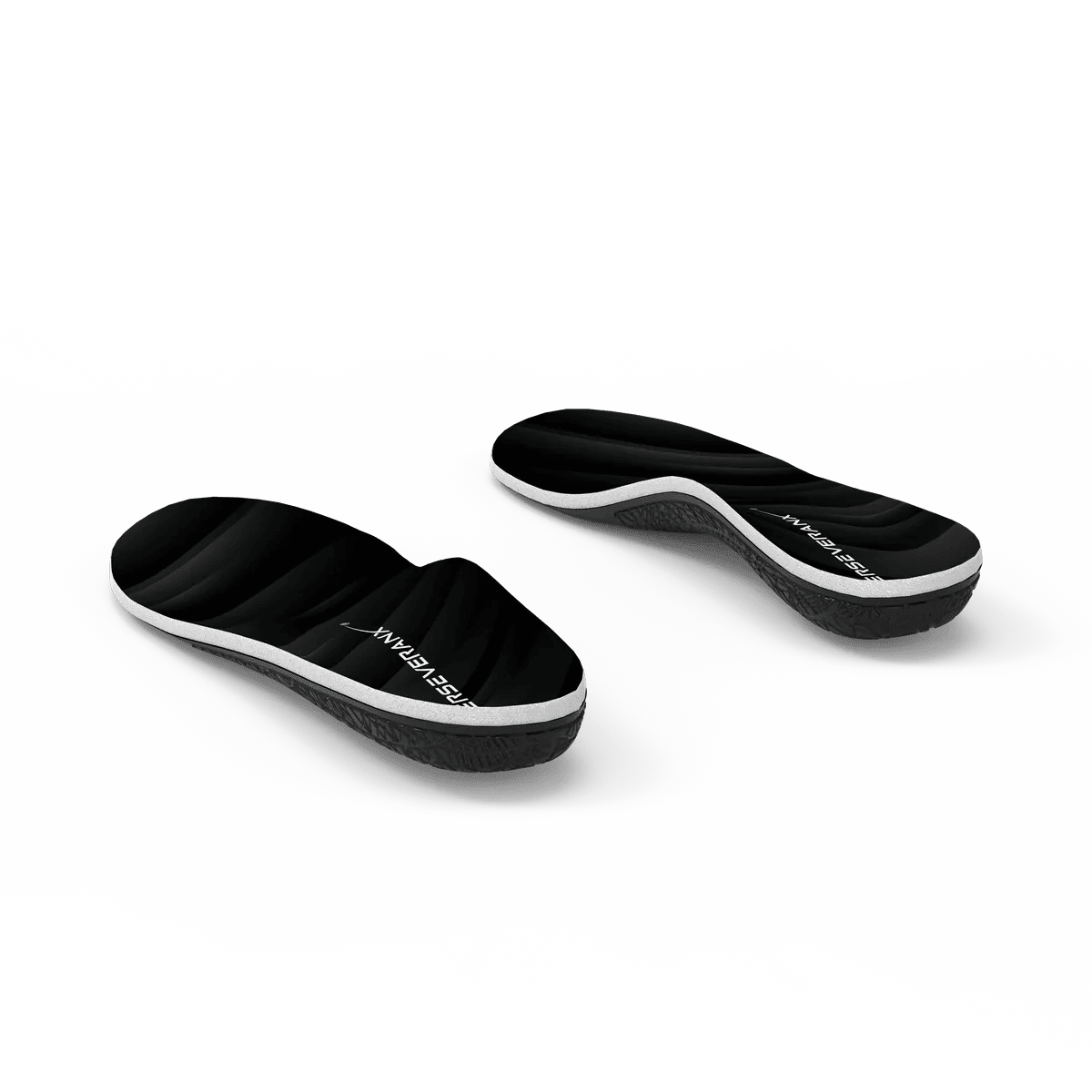
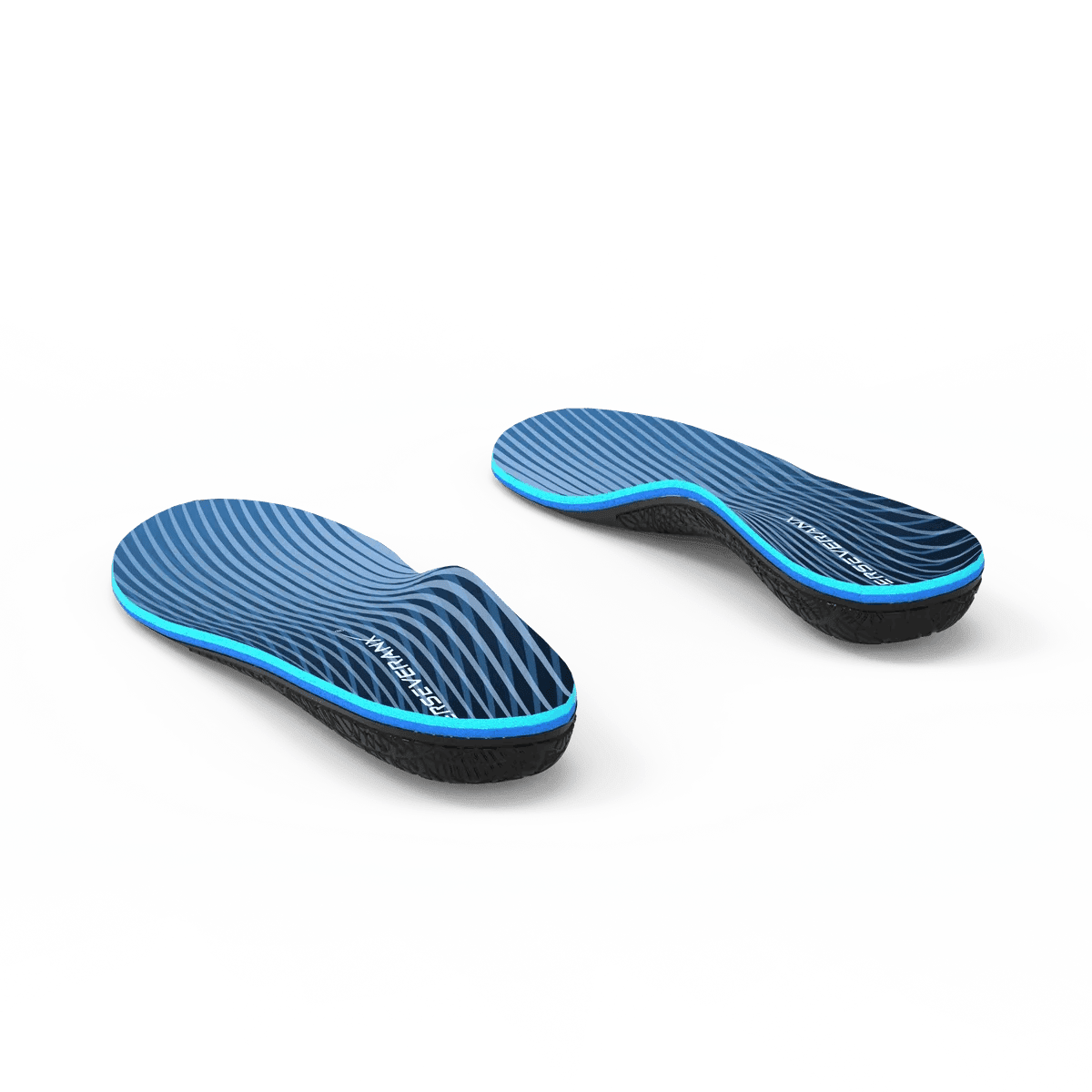
The best-fitting insole for wide feet needs enough width where your foot needs it, an arch contour in the right place and enough space left inside the shoe. Matching your shoe size is a starting point. It does not confirm all three.
Begin with the shoes themselves. The American Orthopaedic Foot & Ankle Society's shoe-fit guidance recommends checking both feet and judging shoes by their actual fit. Length, forefoot width and depth all matter. A thicker insert cannot make a narrow shoe wider.
Measure the liner you already use
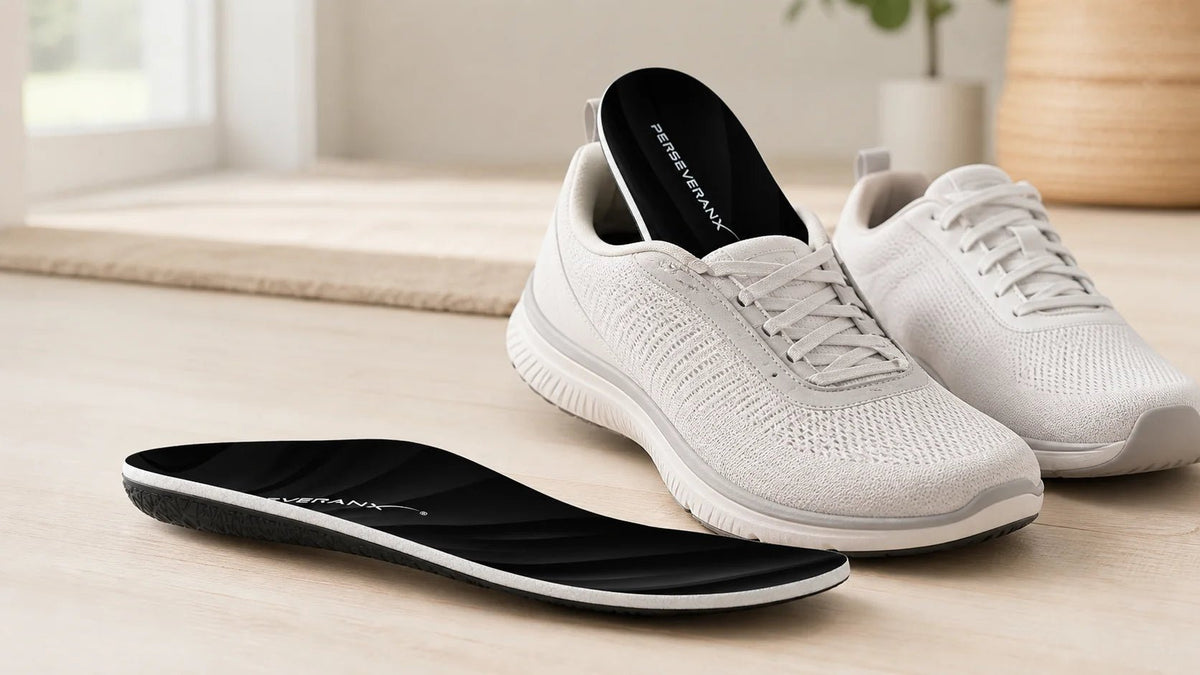
If your factory liner is removable, take it out and place it flat beside a ruler. Note its length and its width across the broadest forefoot area. Keep the shoe brand, model and labeled width with those measurements. A photo of the liner beside the ruler is useful when asking for sizing help.
Compare the replacement's outline at the forefoot, heel and arch. Do this with both shoes; a good match on one side is not enough. Look for curled edges, a heel that cannot settle into its intended position or a contour that sits too far forward or back.
Check space above your foot, too
Put on your usual socks, install the replacement and lace the shoe normally. Notice pressure across the top of your foot, toe crowding and whether the heel sits higher against the collar. If you have to loosen the shoe dramatically to tolerate the insert, revisit the combination.
This is particularly useful in work boots and basketball shoes, where the shape of the shoe can differ considerably even at the same labeled size.
What trimming can—and cannot—change
Trimming removes excess material from the forefoot. Use the original removable liner as a guide, make small cuts and test the fit between cuts. Keep the shaped heel and support frame intact.
Trimming cannot add width, move the arch contour or create extra depth inside the upper. Buying a much longer insert solely to gain width can also put its shape in the wrong position. Compare measurements first rather than assuming you can cut every mismatch away.
PerseveranX sizing at a glance
| Size | Untrimmed length |
|---|---|
| XS | 9.92 in / 25.2 cm |
| S | 10.63 in / 27 cm |
| M | 11.22 in / 28.5 cm |
| L | 11.81 in / 30 cm |
| XL | 12.40 in / 31.5 cm |
These are insole lengths, not foot-length measurements or a universal shoe-size conversion. We do not describe the collection as a dedicated extra-wide range. Check the full size guide before ordering; if width is uncertain, send your liner measurements and shoe model to care@perseveranx.com.
Then choose the comfort you want
Once the dimensions work, decide how you like cushioning to feel. Embrace provides soft contouring with low bounce. Fusion feels firmer and less easy to sink into, while retaining cushioning and a low-bounce response.
Fusion availability: Fusion is temporarily unavailable and is not accepting orders. Restock timing is not yet confirmed. Request a notification for your size.
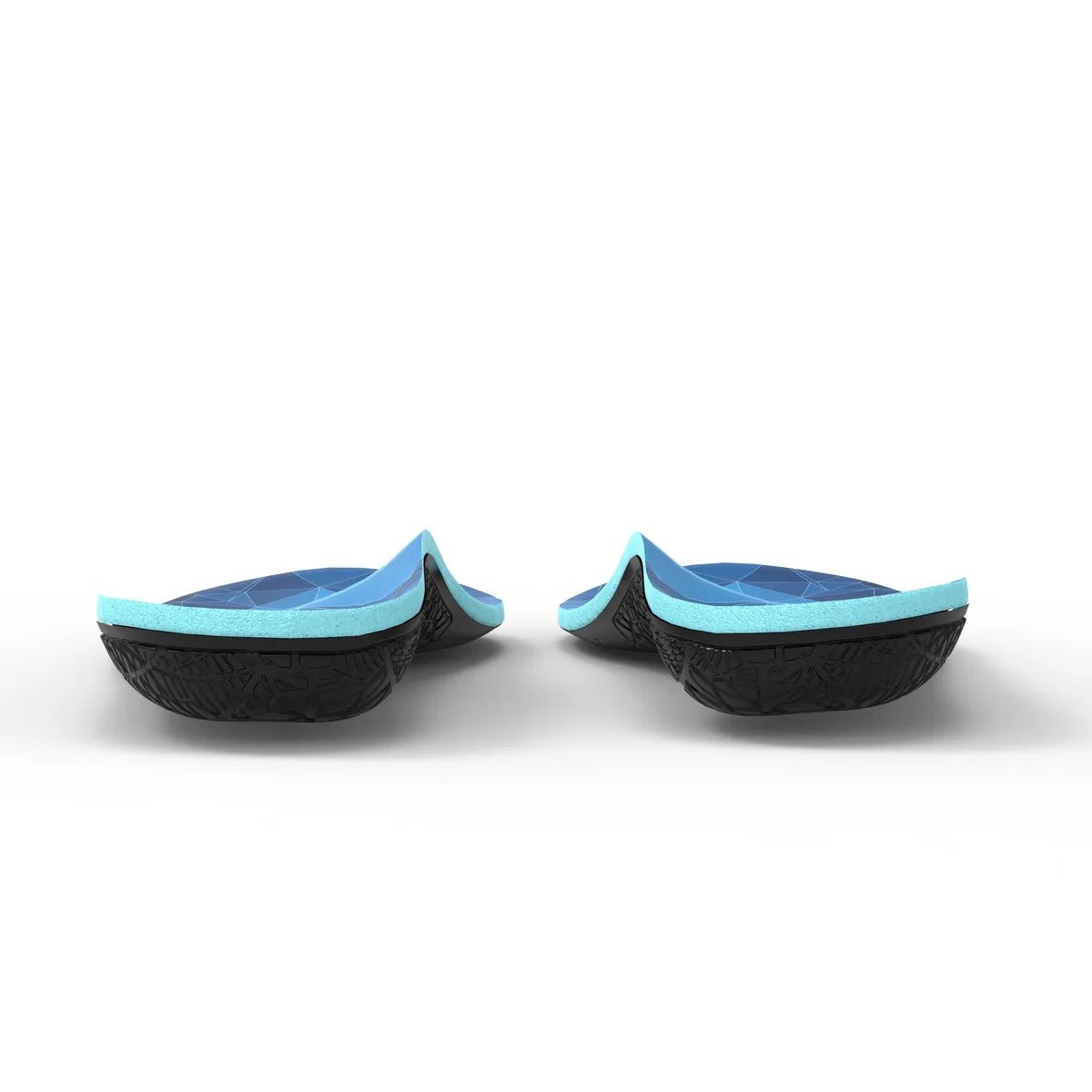
Both combine open-cell PU cushioning with shaped arch support and a heel cradle. Material recovery after pressure helps preserve cushioning through repeated wear. Use the feel finder to narrow that preference after checking the physical fit. Comfort starts with room for your foot and support in the right place.