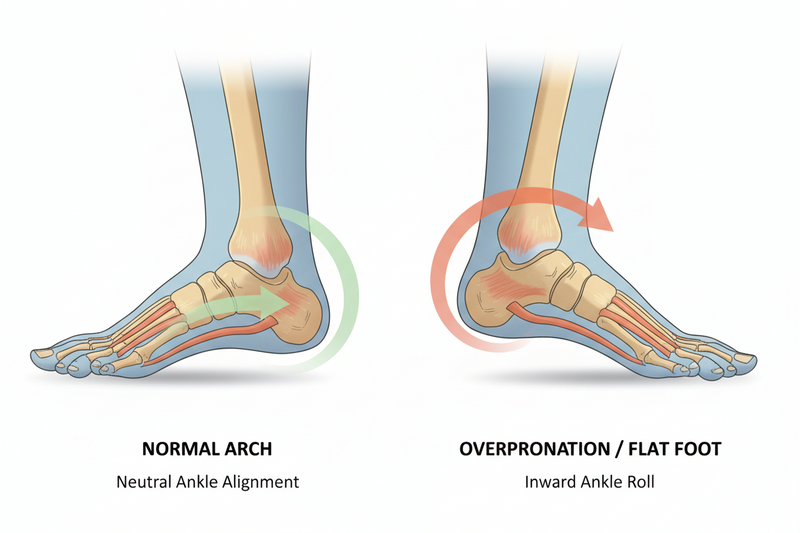
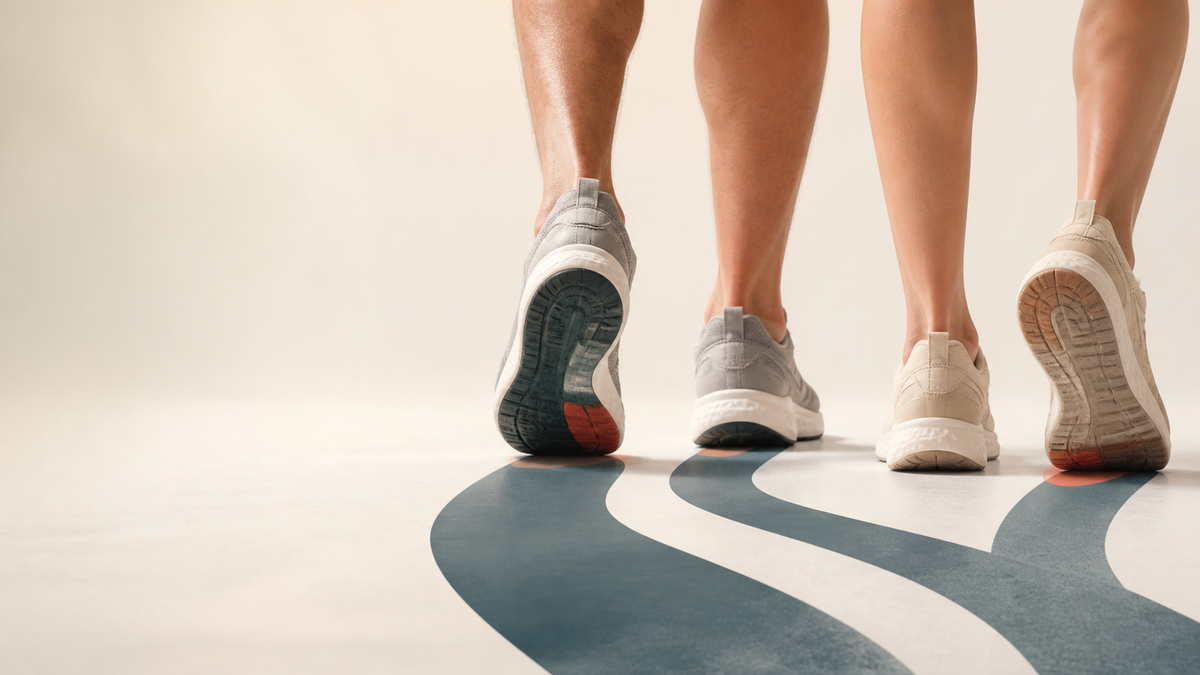
Overpronation and supination refer to different foot-movement patterns. In everyday footwear discussions, overpronation usually means rolling inward too far; supination, also called underpronation in this context, refers to a pattern that stays more toward the outside. Arch height is a separate description of shape.
Cleveland Clinic explains the inward-versus-outward distinction. Use these terms to understand a conversation about your feet, then make your buying decision around the support you need and the fit you can actually feel.
The comparison that matters when shopping
| Question | Overpronation | Supination or underpronation |
|---|---|---|
| What is being described? | An inward-rolling movement pattern. | A movement pattern favoring the outer side. |
| What should I avoid assuming? | That the tallest or hardest arch is automatically the best choice. | That maximum softness automatically supplies the support I need. |
| What should I bring to a fitting? | My actual shoes, usual socks and any professional recommendation. | My actual shoes, usual socks and any professional recommendation. |
A worn patch on a sole may prompt a question, but buying solely from that observation skips the rest of the picture. If you have pain or recurring instability, ask for an assessment before selecting an insert intended to change your movement.
Three things you can evaluate without diagnosing yourself
Contact: Does the cushioning feel comfortable beneath your heel and forefoot? Notice whether you like a yielding surface, a firmer cushion or a more noticeable spring as pressure lifts.
Contour: Does the support meet your arch in a comfortable place? The aim during a fitting is to identify comfortable contact. A concentrated, sharp sensation is useful feedback to reassess the fit, rather than a reason to choose even more height.
Space: Does the insert lie flat, and can your heel remain seated with your toes uncrowded? Compare dimensions in the size and shoe-fit guide. Trimming can remove excess forefoot material; it cannot relocate the support beneath your arch.
Cushioning preference is another useful choice
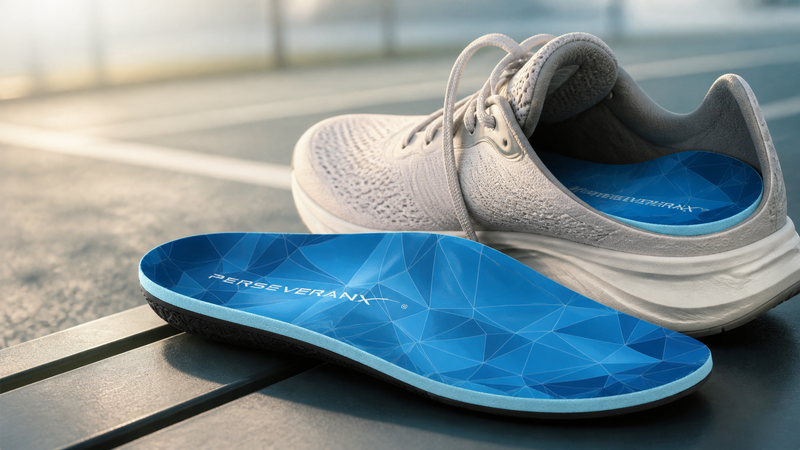
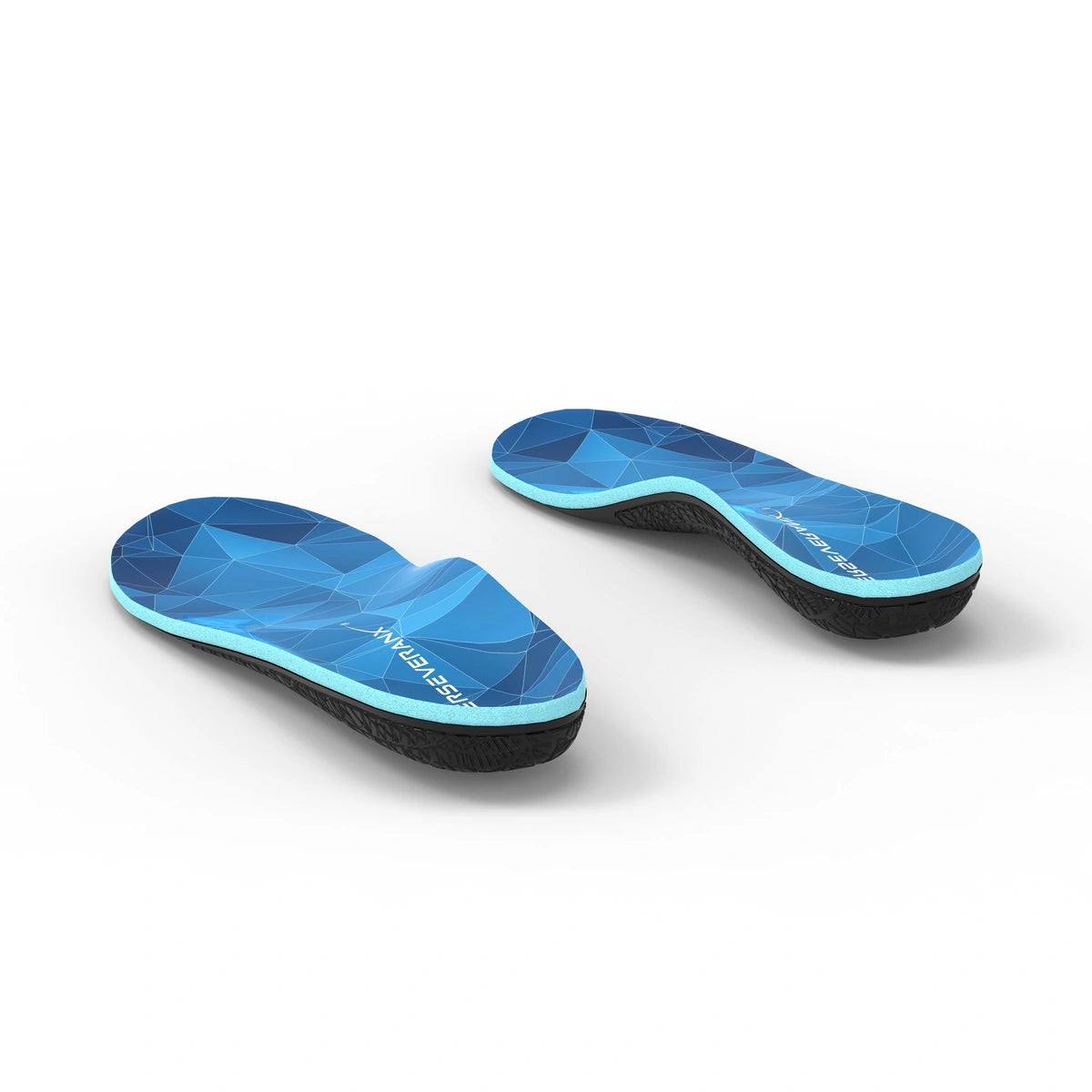
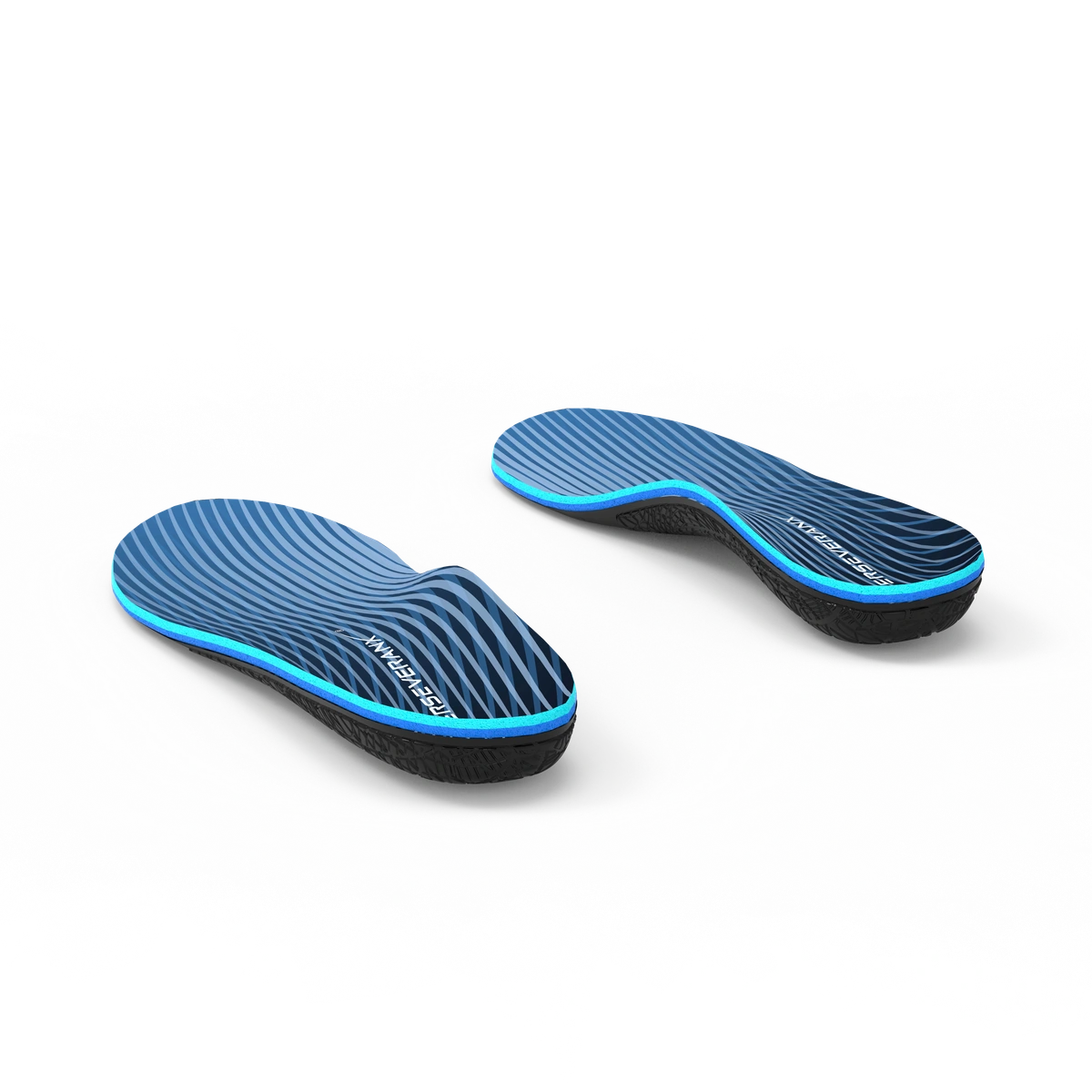
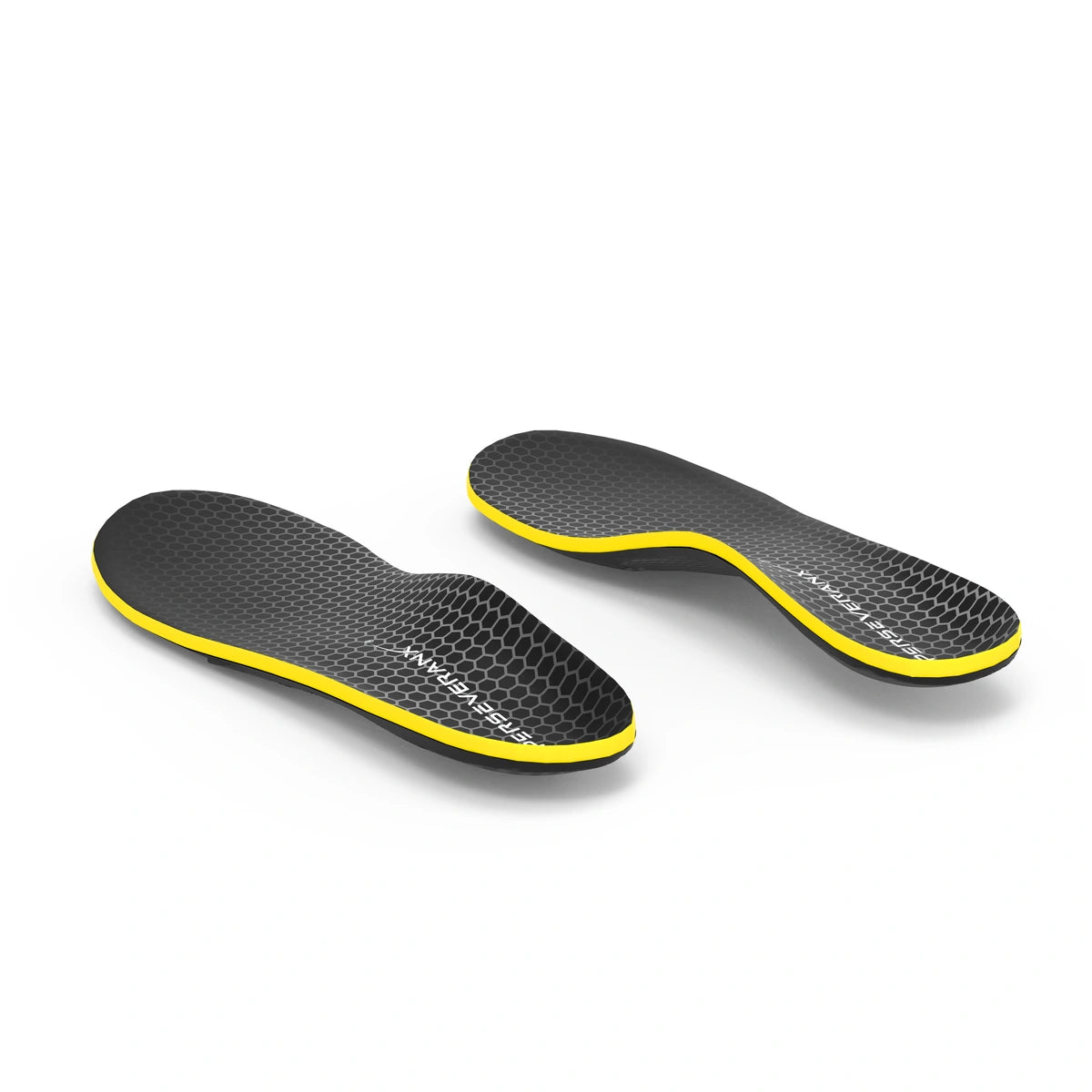
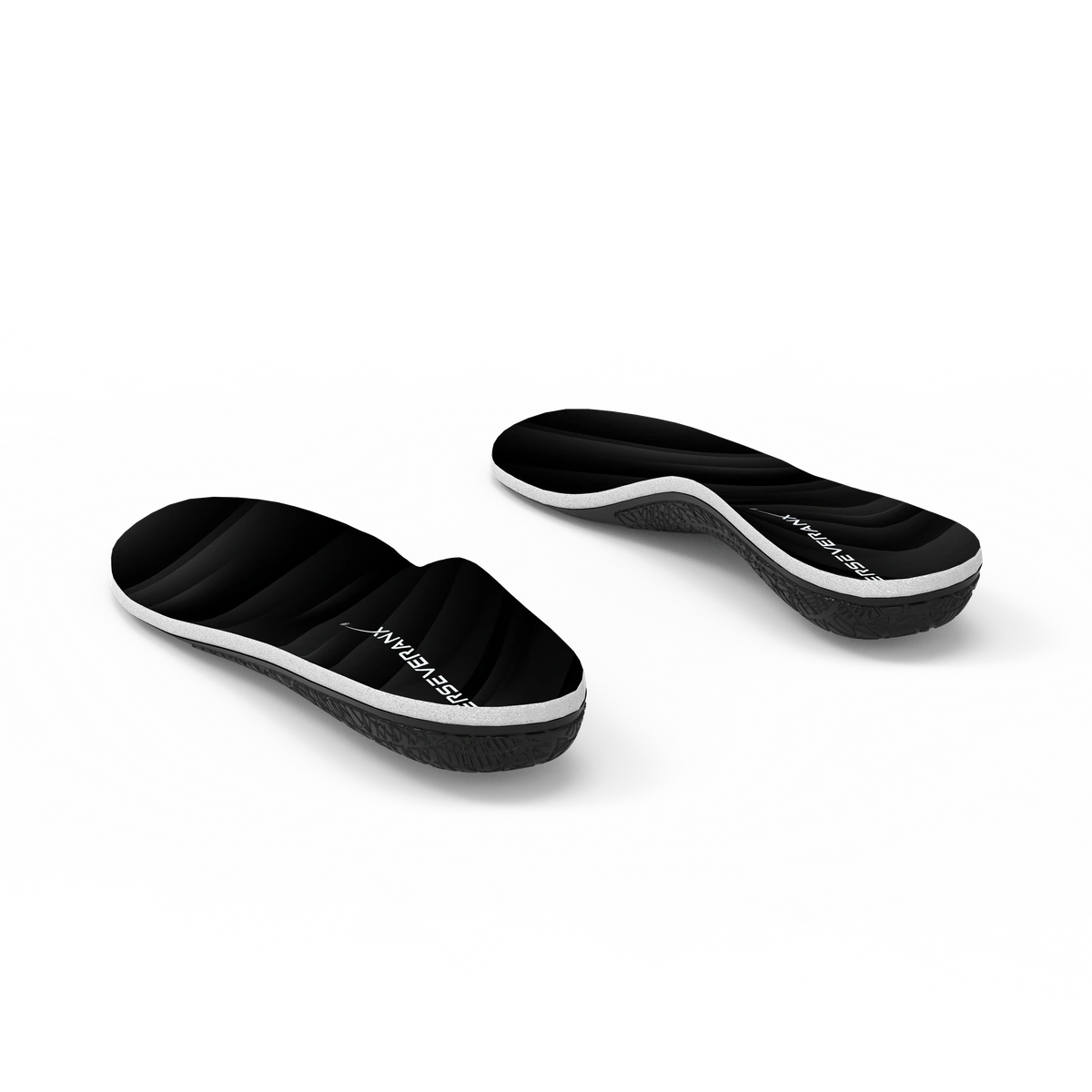
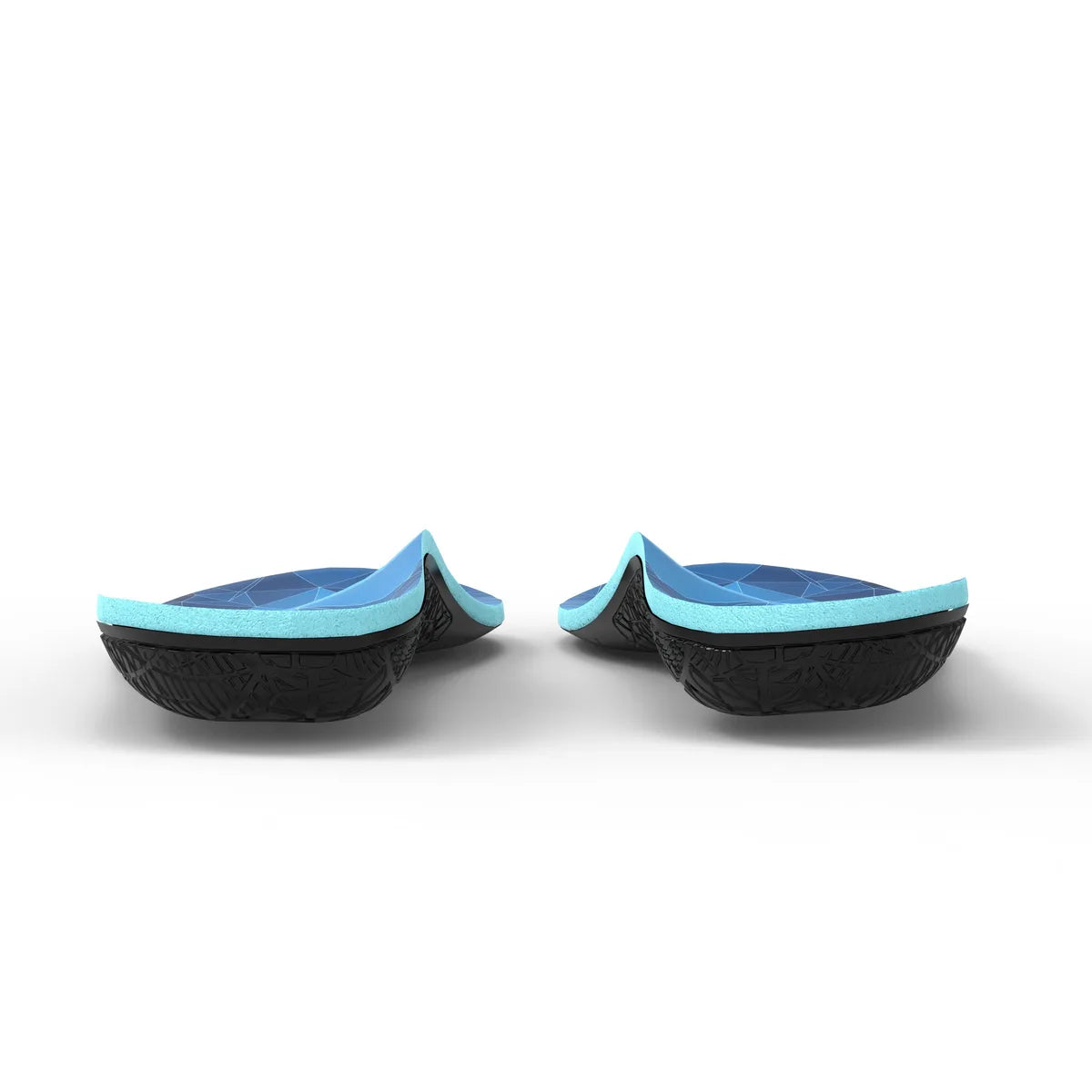
You may enjoy different cushioning sensations even when two inserts have a similar support shape. That is where the PerseveranX collection gives you a practical choice.
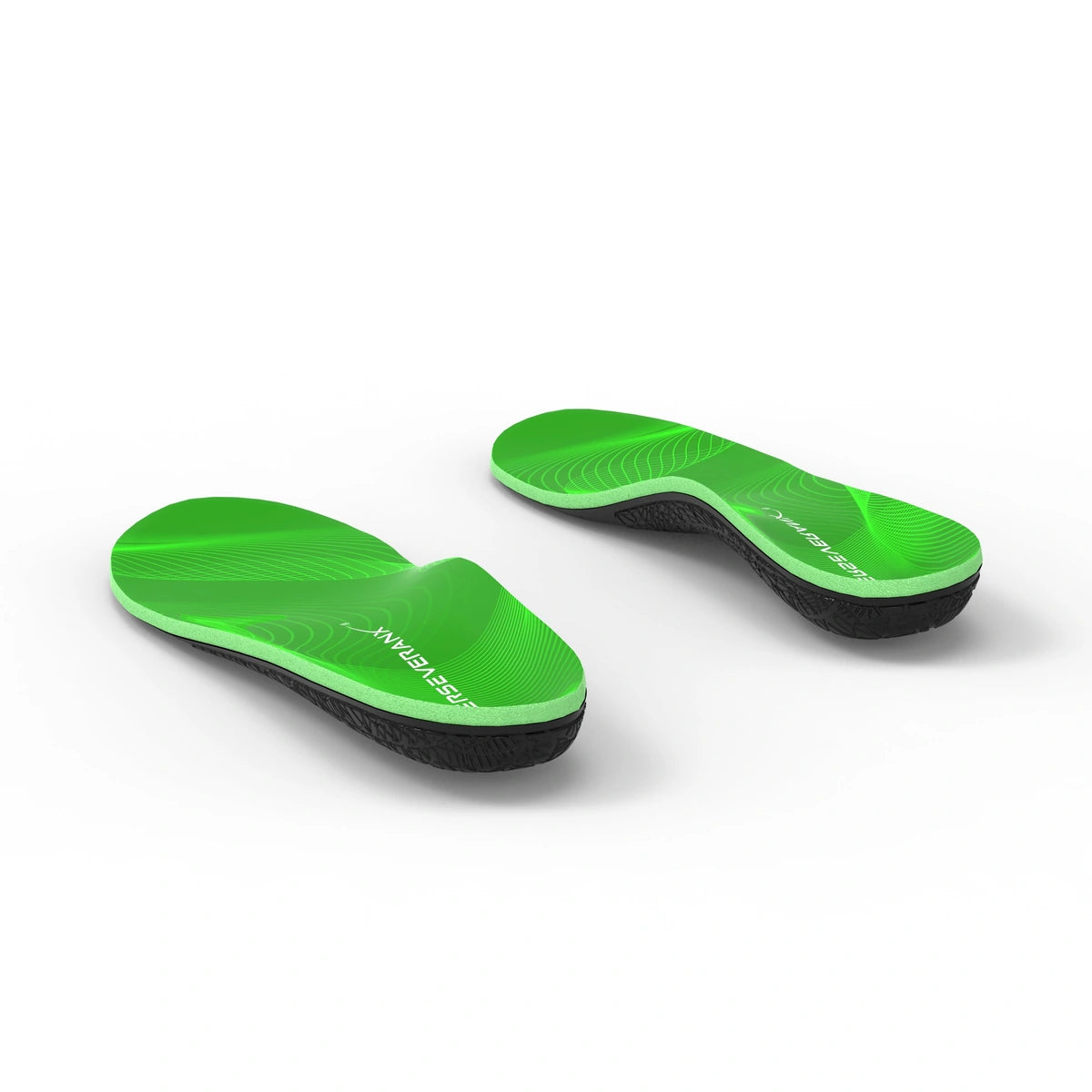
Embrace yields into soft, contouring contact with low bounce, a feel you may prefer through a day of standing and walking. Plush combines softness with spring-back for someone who likes a returning sensation as pressure comes off. These are comfort preferences, not labels for treating opposite gait patterns.
Both pair open-cell PU cushioning with a shaped arch-support frame and heel cradle. The material's recovery after pressure and resistance to lasting flattening help preserve cushioning through repeated wear. That gives you a reason to compare how the material behaves, alongside how the contour fits.
Choose your next step
If you want a closer explanation of inward rolling, read what overpronation means. For an outer-edge loading concern, use our supination insole checklist.
Ready to compare comfort preferences? The feel finder helps narrow the choice. You can select a cushioning feel without turning a footprint into a diagnosis.