
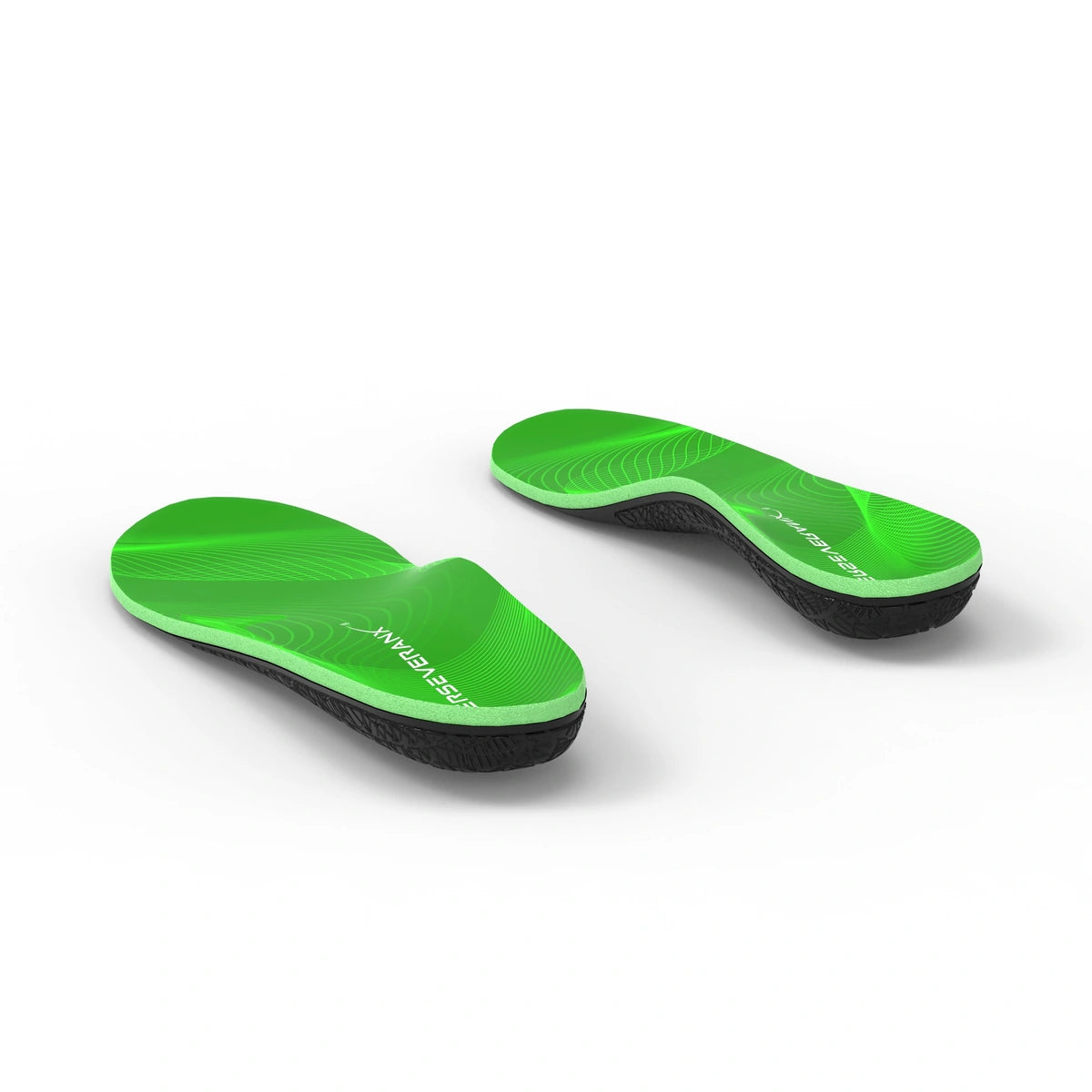
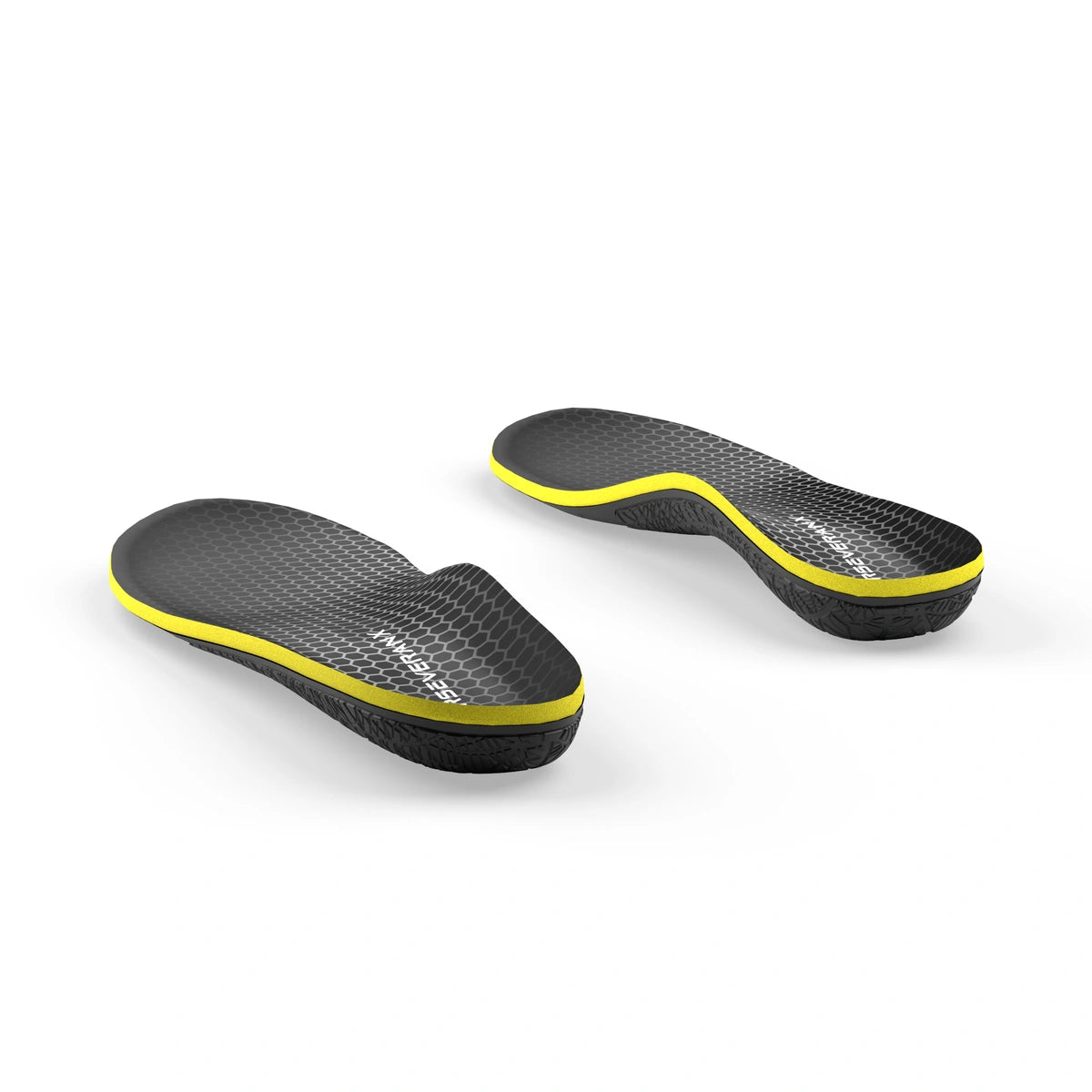
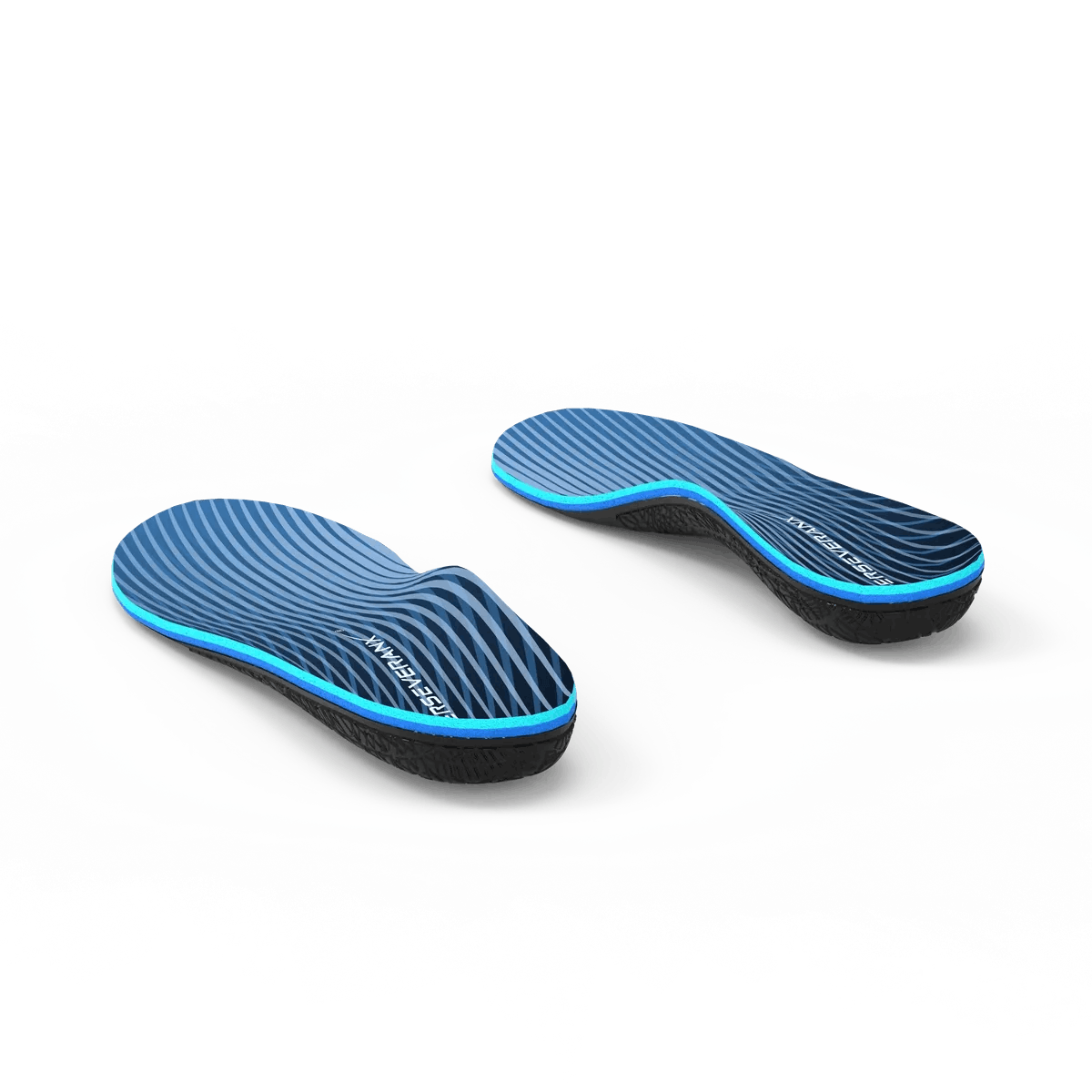
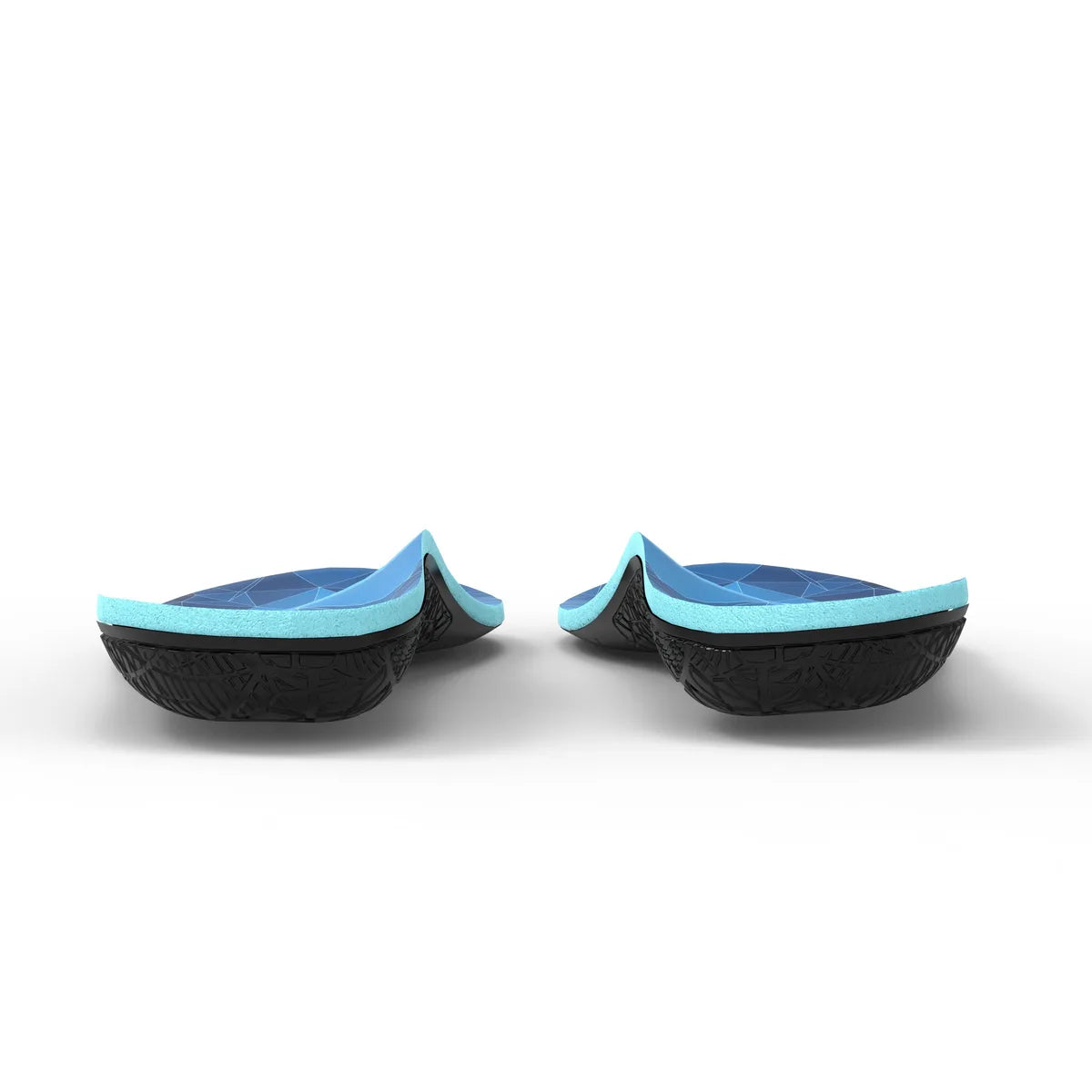
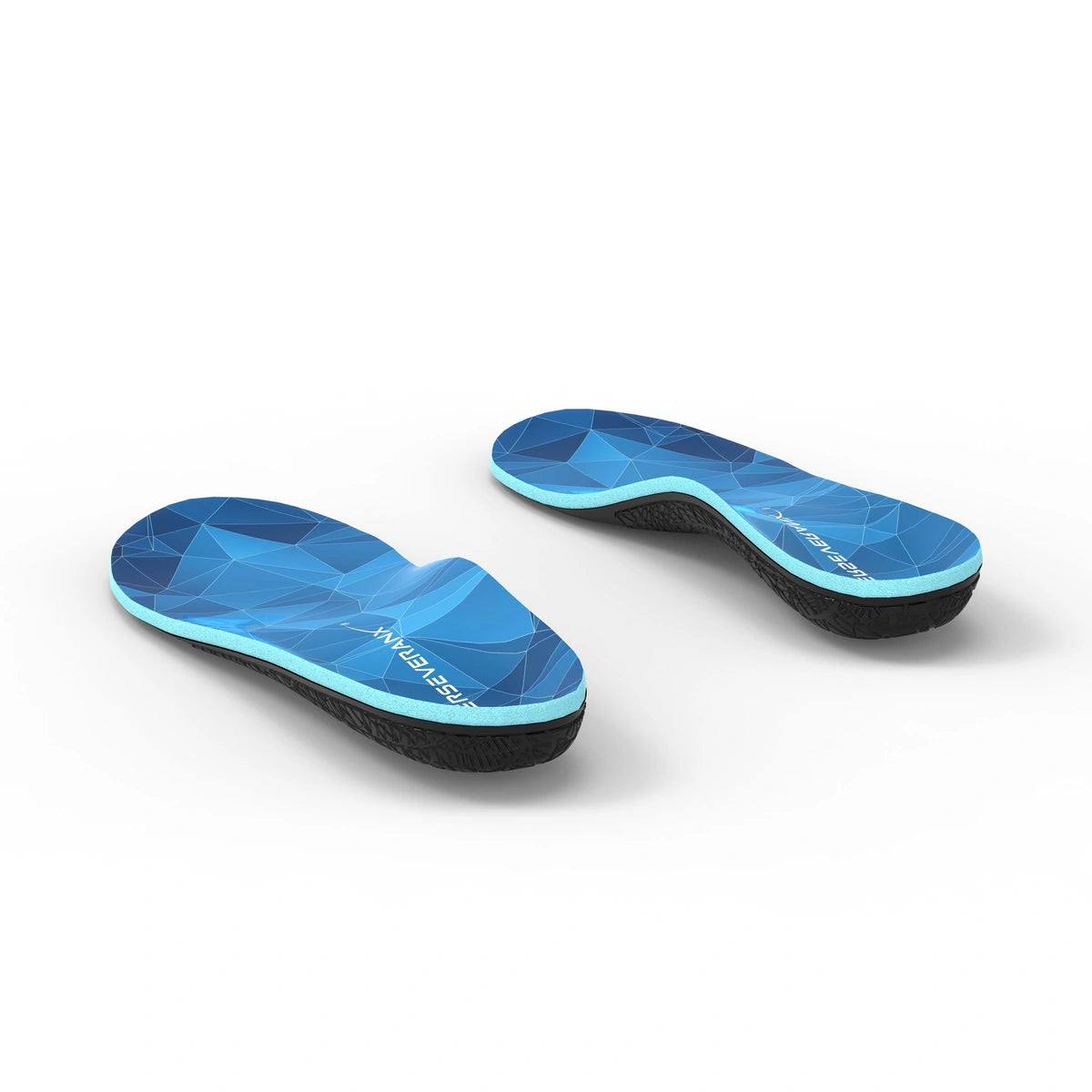
Soft contact · Low bounce
Embrace
Choose gentle contouring with less spring. A softly yielding cushion above shaped support.
Embrace · $59.95 USDper pair
In stock · Check available sizes
Shop EmbracePair savings
Mix models, sizes and colors.
Applied automatically in cart. No code needed.
Your total number of pairs sets your saving: 15% for 2 pairs, 17.5% for 3, or 20% for 4 or more. Cannot be combined with other discounts.
International shipping calculated at checkout. Taxes calculated at checkout.
Metatarsalgia · Insole buying guide
A sore forefoot needs room in the shoe before you add cushioning. Compare Embrace and Plush, then check toe space and comfortable arch contact.
Embrace · $59.95 USD / pair
Choose by feel after checking the high-arch shape in your shoes. Current availability is shown below.
Soft contact · Low bounce
Choose gentle contouring with less spring. A softly yielding cushion above shaped support.
Embrace · $59.95 USDper pair
In stock · Check available sizes
Shop Embrace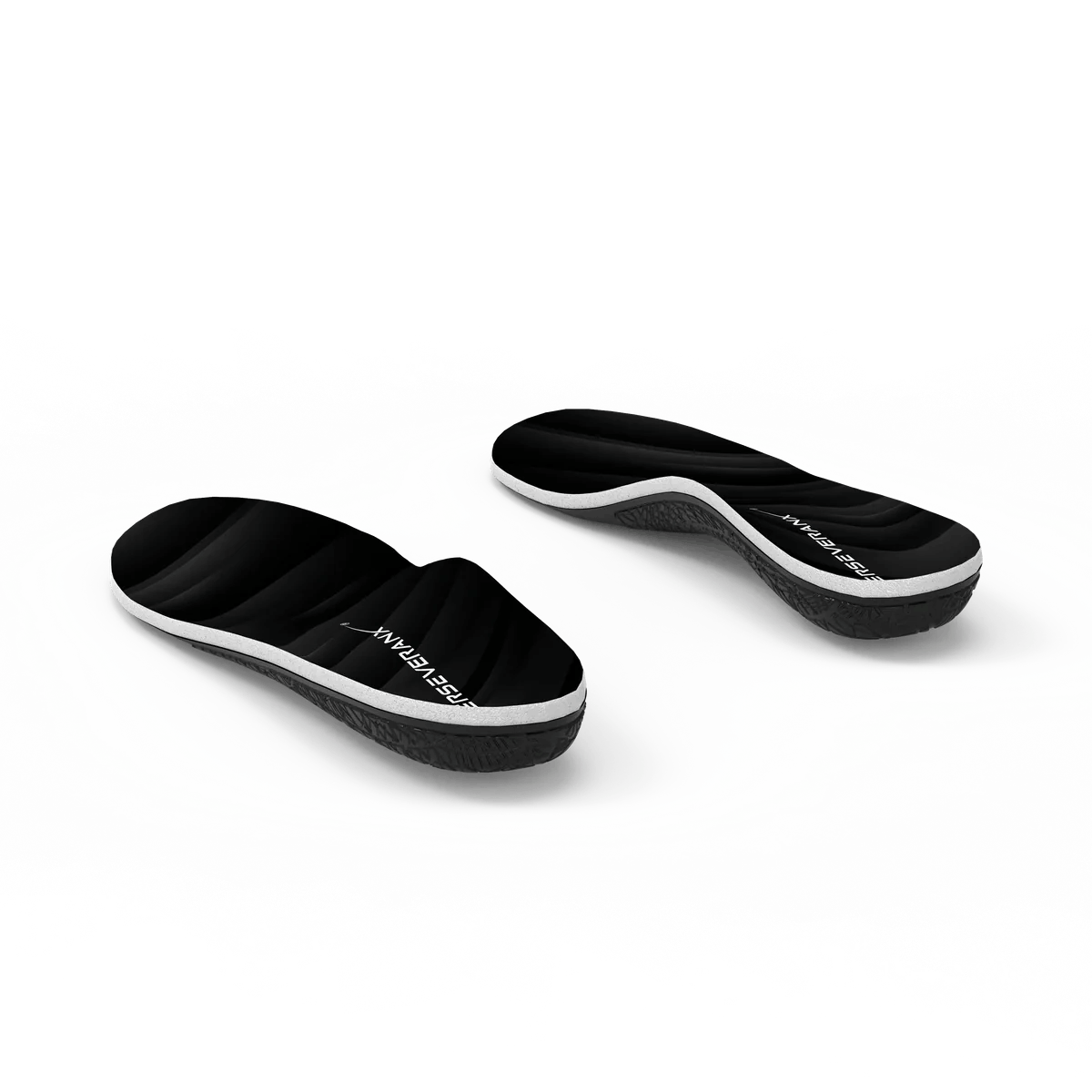
Soft contact · Springy return
Choose soft cushioning with a livelier return. Check the same arch and shoe-fit points before buying.
Plush · $79.95 USDper pair
Backorder · Expected to ship from Nov 1, 2026
Backorder PlushMetatarsalgia describes pain in the ball of the foot. Tight footwear, activity and several different conditions can contribute. NHS guidance includes roomy footwear and soft insoles or pads among self-care options; it also recommends assessment when symptoms persist or worsen. An insole purchase is not a diagnosis.
Check your toes in the shoes and socks you actually wear. They should not be squeezed sideways or pressed into the upper.
Remove the original liner only when designed to do so. Fit the replacement without curling, buckling or stacking layers beneath your foot.
Check where the arch meets your foot as well as forefoot comfort. If either feels intrusive, more wear is not the answer.
An insole cannot make a narrow toe box wider. Our approximately 4 mm cushioning specification describes the cushioning layer, not the total height of the finished insole. Use the size guide to compare dimensions before trimming.
Five materials. Different responses.
A short sample demonstration makes the difference in feel easier to see.
Real samples · Original speed. This demonstrates rebound after impact, not long-term wear or treatment outcomes.
Compare all five feelsA full-length insole cushions a broad area under the foot. A metatarsal pad is a separate, deliberately positioned feature used for particular forefoot needs. Where it sits matters. NHS podiatry guidance describes cushioning, pads and arch supports as individual options rather than one universal solution.
PerseveranX does not include a dedicated metatarsal pad. If a clinician has recommended a pad, offloading device or a specific orthotic, ask about that requirement before choosing our insoles.
Embrace combines a softly yielding, low-bounce surface with a shaped high-arch frame. The cushioning softens contact under the heel and forefoot; the foundation supports the arch and cradles the heel. It is a feel choice for a shoe with enough room, not a targeted treatment for a painful spot.
Compare the other cushioning feels if you prefer more spring or a firmer sensation. All five keep the high-arch support concept. Read current availability on each product page; a different feel does not make a crowded shoe fit.
Persistent or worsening pain, tingling or numbness, or foot pain with diabetes deserves medical advice. Severe pain, an inability to walk, or a hot, swollen foot needs urgent assessment. Do not keep changing inserts while those symptoms go unexplained.
No. Extra material can crowd the shoe. Assess the finished fit, including toe room and arch contact, rather than judging softness by hand alone.
Ask the clinician or fitter who recommended it about placement and compatibility. Do not guess where to put a pad to treat a painful area.
Start with a roomier shoe or another appropriate fit solution. Trimming changes the outline of an insole; it does not remove its thickness or create space above your toes.
Embrace has a softly contouring, low-bounce feel. Plush combines soft cushioning with a springier return. Both use a high-arch shape, so check comfortable arch contact and shoe space before choosing by feel.
If the original liner is designed to come out, replace it instead of stacking. Check the new pair with your usual socks, paying attention to toe room and heel position. Do not force out a glued-in liner.
Yes. You have 60 days from delivery to try the pair, even if worn or trimmed. We provide a prepaid return label. Each separately delivered pair has its own window. See our return policy.
A concentrated lump or painful pressure is not a sign of better support. Stop using a fit that increases discomfort. Our current models share a high-arch profile; changing the cushion does not make the arch lower.
Give comfort time.
Try your pair for 60 days from delivery—even if worn or trimmed. We provide a prepaid return label. For separate shipments, each pair has its own 60-day window.