Collection: Insoles for Running & Sport

The pattern is specific enough that people recognise it immediately: you feel fine during the run. You feel fine for the first hour after. Then it shows up — the ball of the foot, the heel, sometimes the lower leg — and the next morning is worse than the evening was.

Pain that arrives after activity rather than during it usually means the same thing. The impact never got absorbed. It just got delayed.

## Why a high arch changes the maths

When your foot lands, it is supposed to roll slightly inward. That inward roll is your shock absorber — the arch flattens a little and the impact spreads across the foot instead of concentrating.

A high, stiff arch has less capacity to do that. It stays rigid through landing, so impact lands hard on the outside edge, the heel and the ball of the foot, and whatever is not absorbed travels up the leg. This is supination, and it travels with high arches often enough that if you have one you should check for the other.

## The part the running shop usually gets backwards

The wall in a running store is organised around pronation — neutral, stability, motion control, all describing how much a shoe resists the inward roll.

If you supinate, most of that wall is designed for the opposite problem. Stability and motion control shoes limit inward roll, and a supinating foot already does not roll inward enough. Adding resistance pushes the foot further onto its outside edge.

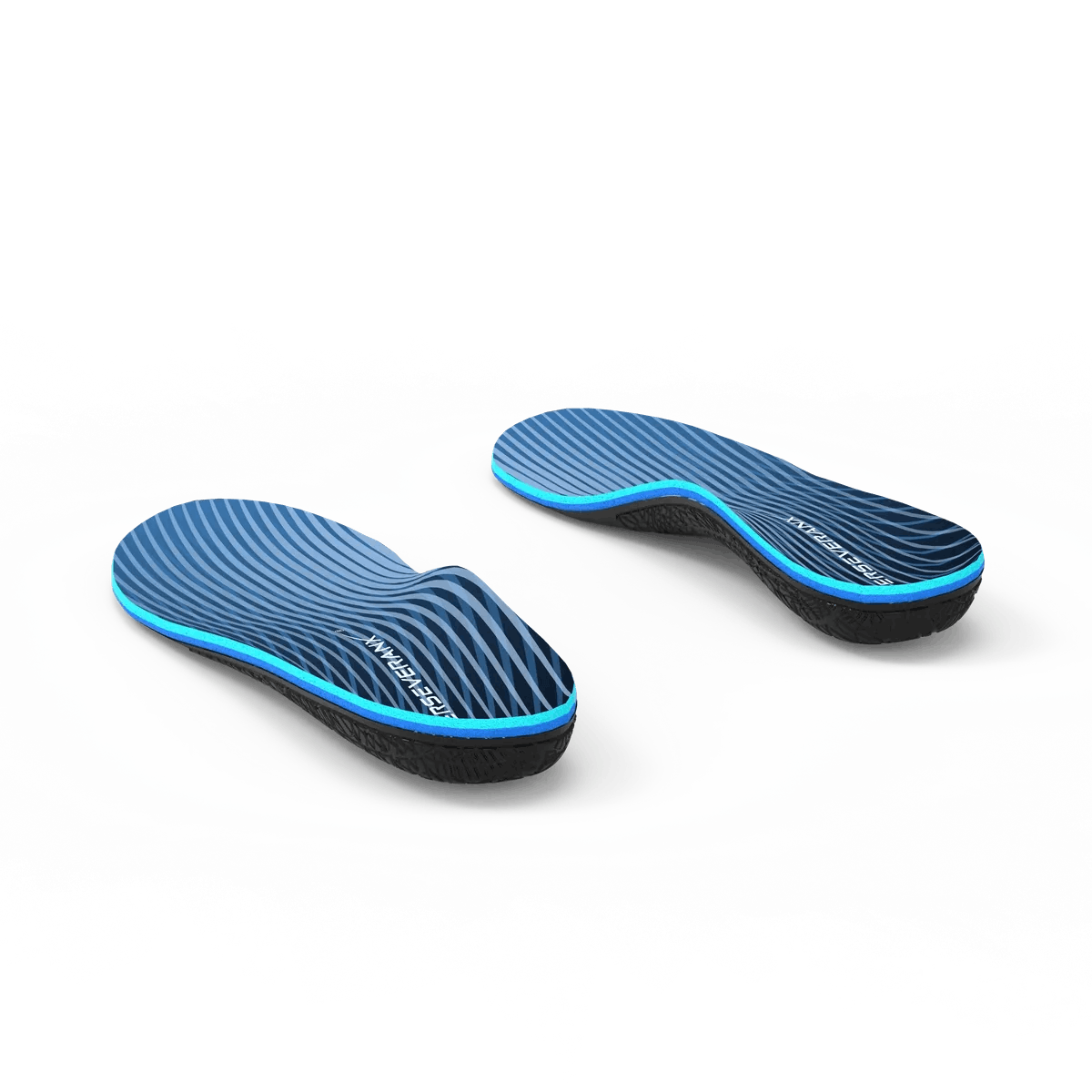
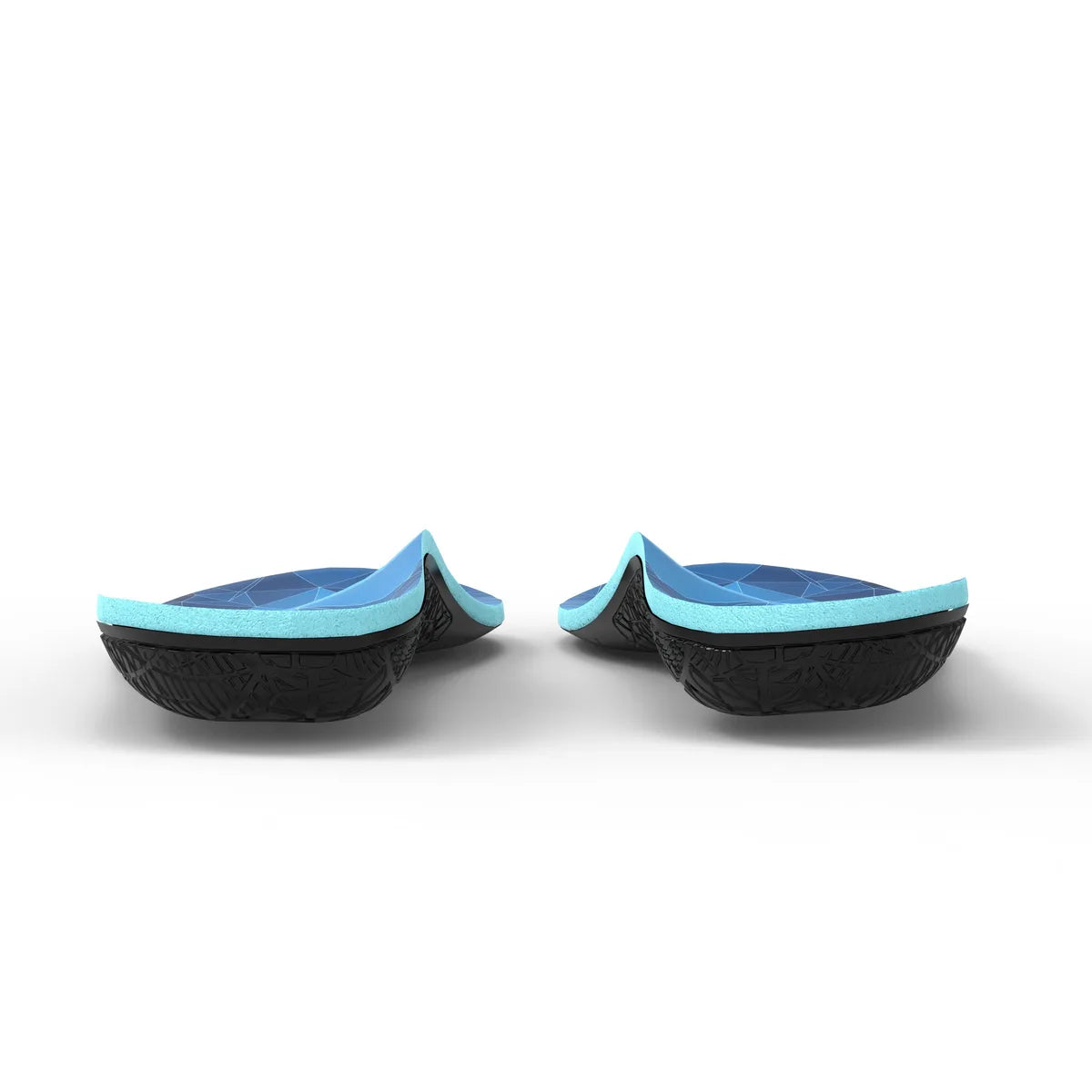
What you need instead is cushioning that survives, and an arch support that actually reaches a high arch. Most insoles are built around a medium arch because most feet are medium — put one under a high arch and your foot passes over the top of it and never touches it. That is why so many high-arched runners conclude that arch support does nothing for them. It never made contact.

## About the space in your shoe

This is where most support insoles fail runners before they get a chance.

A running shoe has a fixed volume, and adding a thick supportive insole changes the fit, the lacing, and sometimes the heel hold. So people either accept a shoe that no longer fits properly or give up on support entirely.

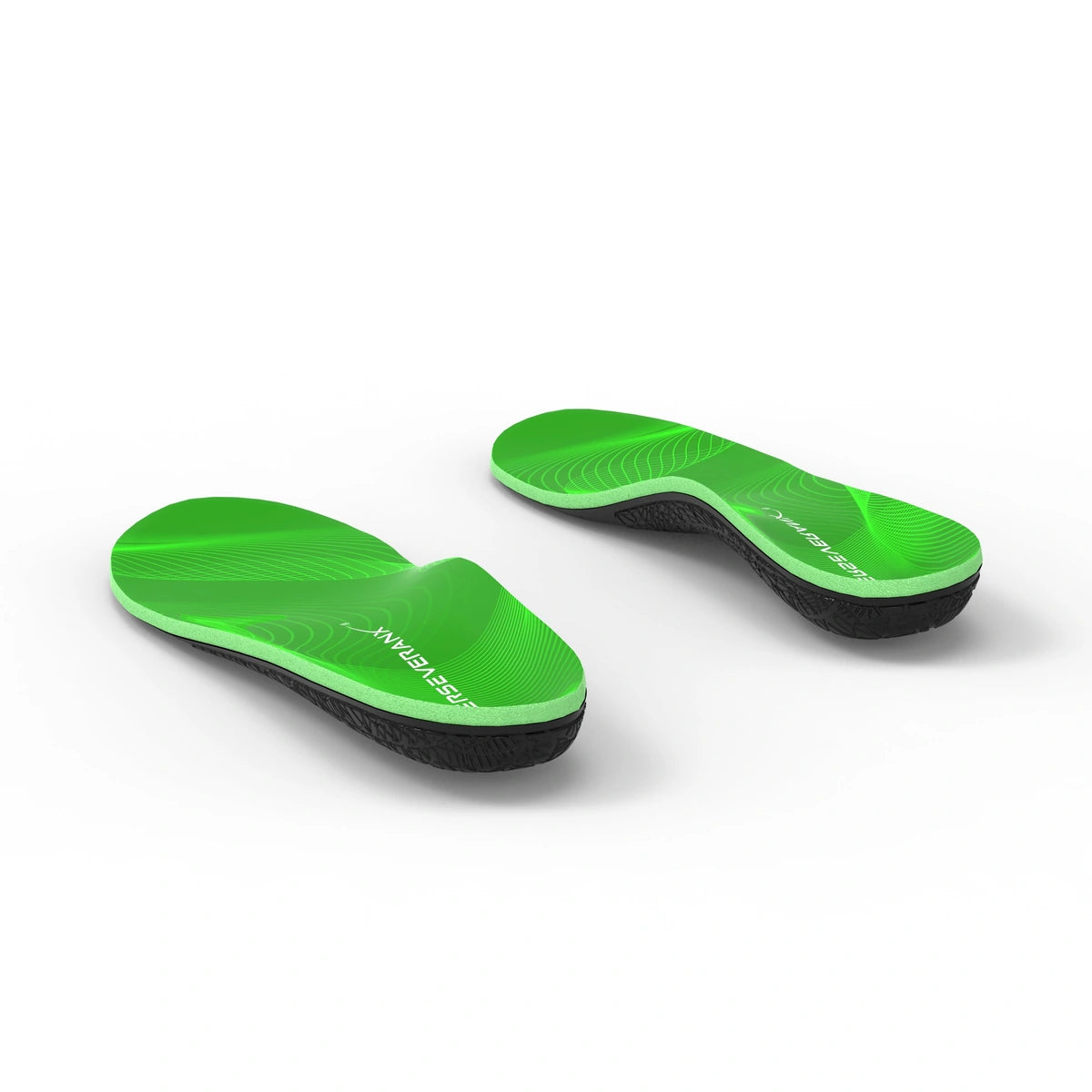
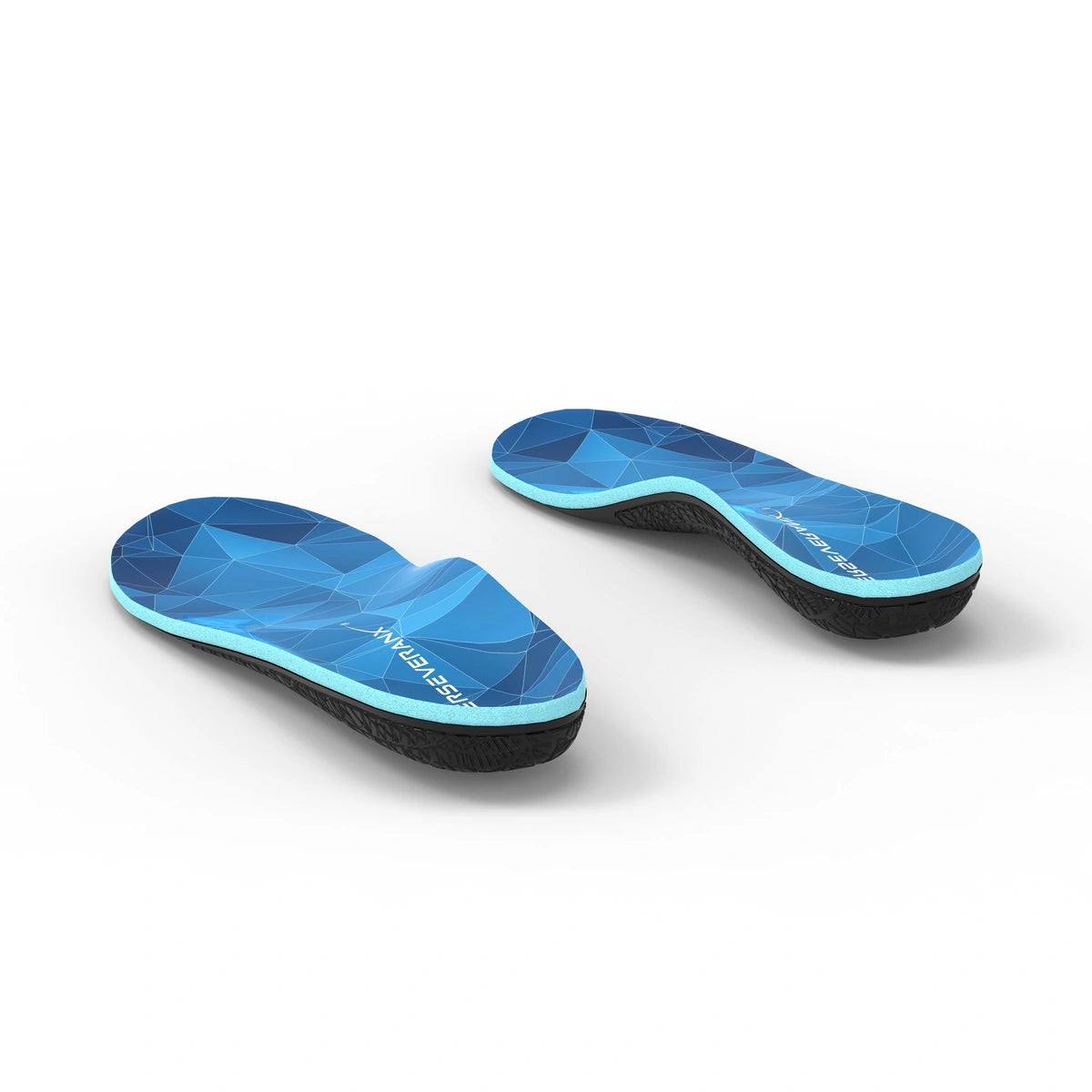
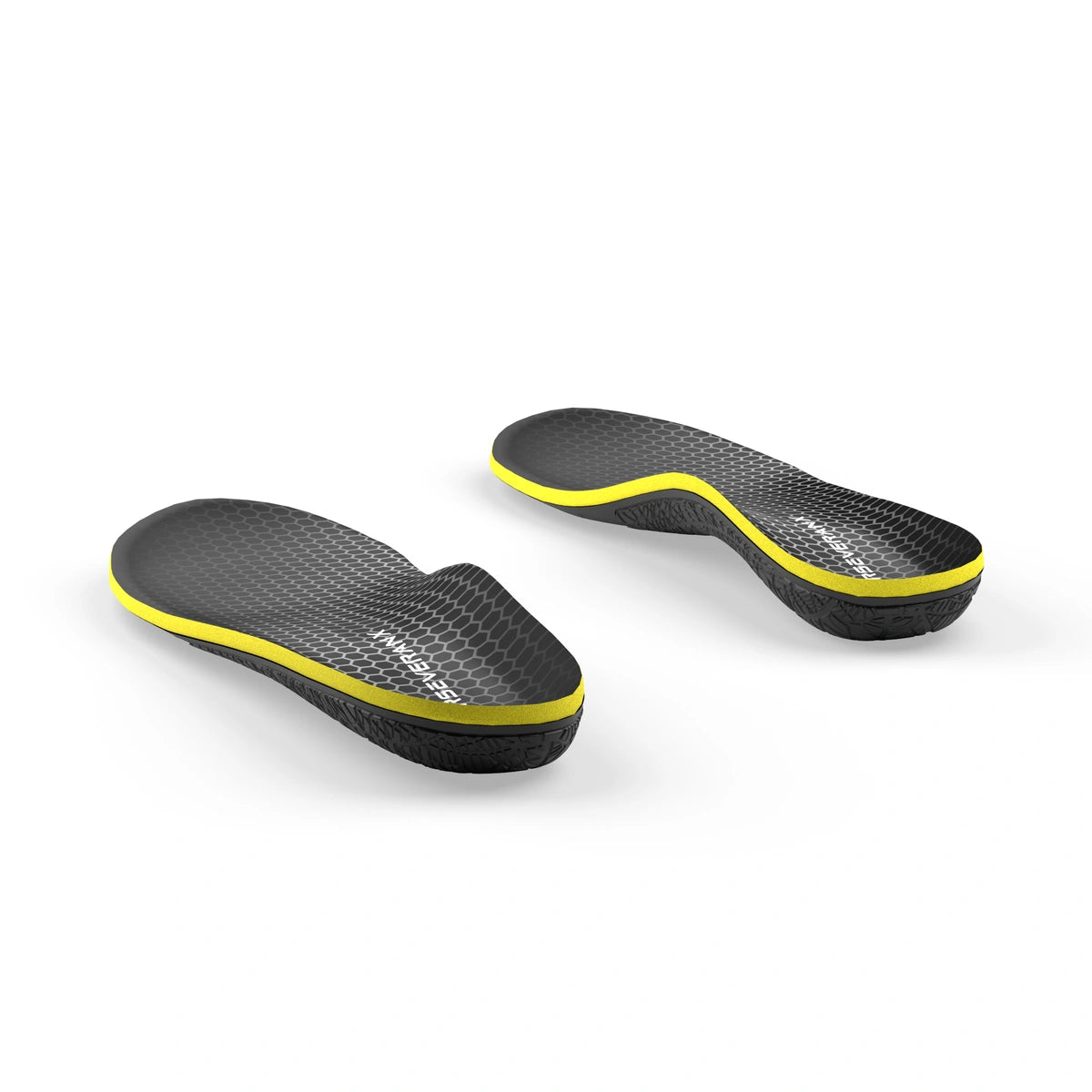
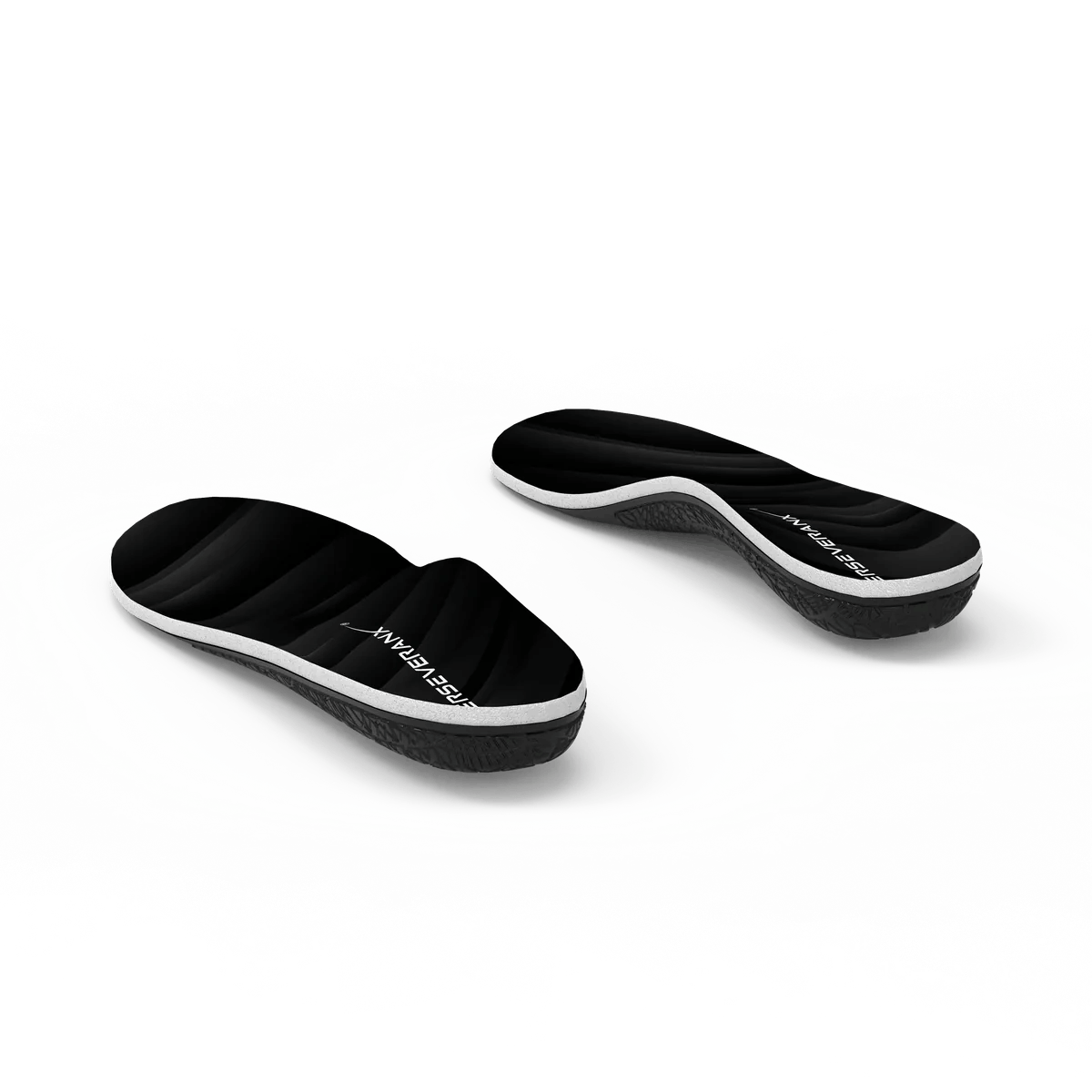
Bouncy is 5mm. A running shoe's factory sockliner is typically four to six millimetres, so this is close to a straight swap — pull the original out, put Bouncy in, and the volume barely moves.

That is not a small detail. It is the difference between support you actually run in and support that lives in a drawer.

## The thing that decides whether it lasts

Almost every insole is built from closed-cell foam — sealed gas bubbles in a rubber matrix. Under repeated load those bubble walls collapse and stay collapsed. The trade calls this pack-out.

Running punishes this faster than almost anything, because every stride is a full-body-weight impact and there are thousands of them per run. And rebound is the first property to go. An insole bought for energy return that has packed out returns nothing — it is a flat sheet that used to be springy.

For a high arch it costs twice over. A medium foot that loses three millimetres of arch still has contact. A high arch that loses three millimetres is back to a gap.

PerseveranX uses open-cell foam. Interconnected cells let air move in and out as the foam loads and unloads, so it displaces rather than crushes and recovers between steps. Thousands of times per run is exactly the condition it was chosen for.

Which one: Bouncy is the pick — our highest-rebound foam, at 5mm, on the same tall arch as the rest of the line. If your sport involves hard landings rather than steady miles — court sports, trail descents, jumping — HoneyComb stiffens on impact and stays soft the rest of the time.

## FAQ

Will it fit in my running shoes?
Pull the factory sockliner out first. At 5mm, Bouncy occupies close to the same space, so the fit should barely change. Do not stack it on top of the original.

I have high arches and my feet hurt after running. Related?
Frequently. A high, rigid arch absorbs less shock, and what is not absorbed has to go somewhere. Cushioning that stays cushioned is the thing to look for.

Should I get motion control shoes as well?
If you supinate, no — those are built to limit the inward roll, which is the motion you are already short on. Neutral or cushioned is the right category.

Do I need to trim them?
Trim to your factory sockliner as a template rather than to the printed lines. Cut conservatively; you can always take more off.

How often should I replace them?
More often than a walker would. Thumb-test the arch monthly — if the dent stays, the foam is done, whatever it looks like.