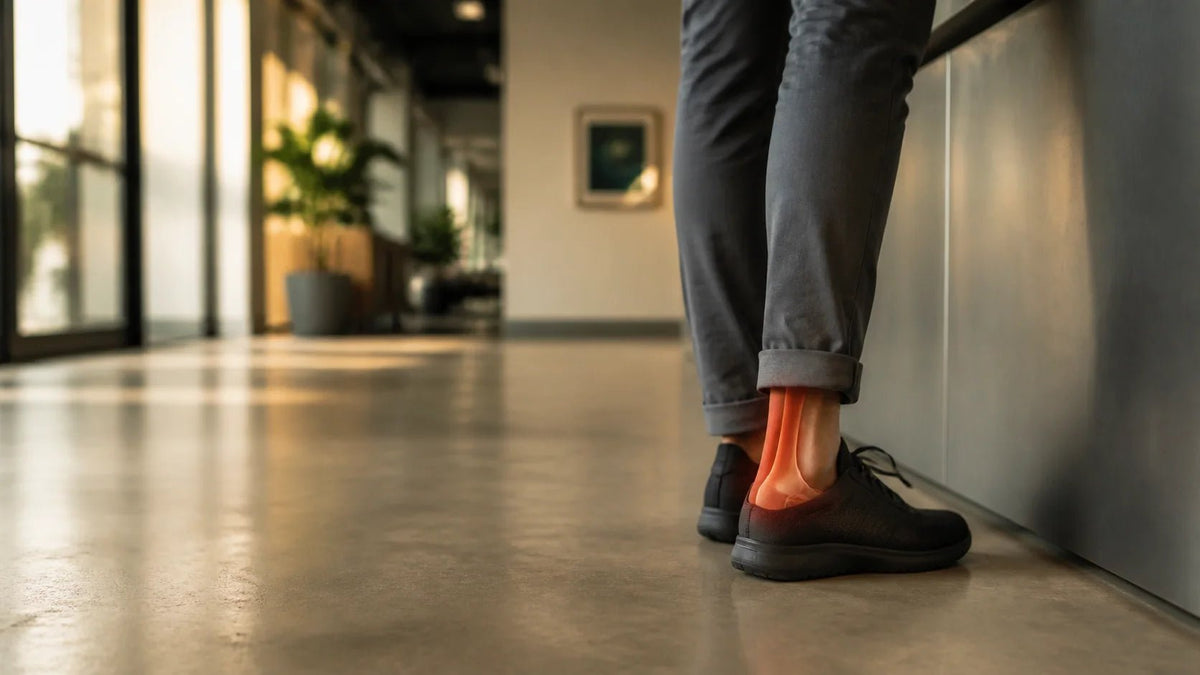
Pain at the back of your heel after a long day deserves a closer look at your symptoms, footwear, and time on your feet. Standing is part of the story, but it does not establish that the Achilles tendon is the cause.
Achilles tendinitis can involve morning stiffness, pain along the tendon or behind the heel, swelling, and discomfort where a shoe meets the back of the heel. A clinician can distinguish it from other problems. The American Academy of Orthopaedic Surgeons describes the symptoms and examination.
Check the shoe as well as the insole
Look at the shoe you wore during the difficult shift, not just the pair you use for exercise. Does the heel collar press into the sore area? Does the heel lift out as you walk? Is the shoe crowded after adding an insert? Bring those observations to your assessment rather than assuming that extra softness will address every type of heel discomfort.
An insole changes the space inside a shoe. Check the heel position again after fitting it: a replacement that raises your foot into an uncomfortable collar is not a successful fit. Our size and shoe-fit guide helps you assess the available room before trimming.
Describe the workday precisely
Keep a brief record of the tasks surrounding the pain. Separate standing in one place from walking, stairs, lifting, and activity outside work. Note whether a different shoe changes the contact at the back of the heel.
These details make a more useful conversation than “I am on my feet all day.” Ask whether your duties can include seated tasks or breaks while you follow a care plan. For footwear considerations specific to a work setting, see our guide to insoles for work boots.
Where cushioning can fit
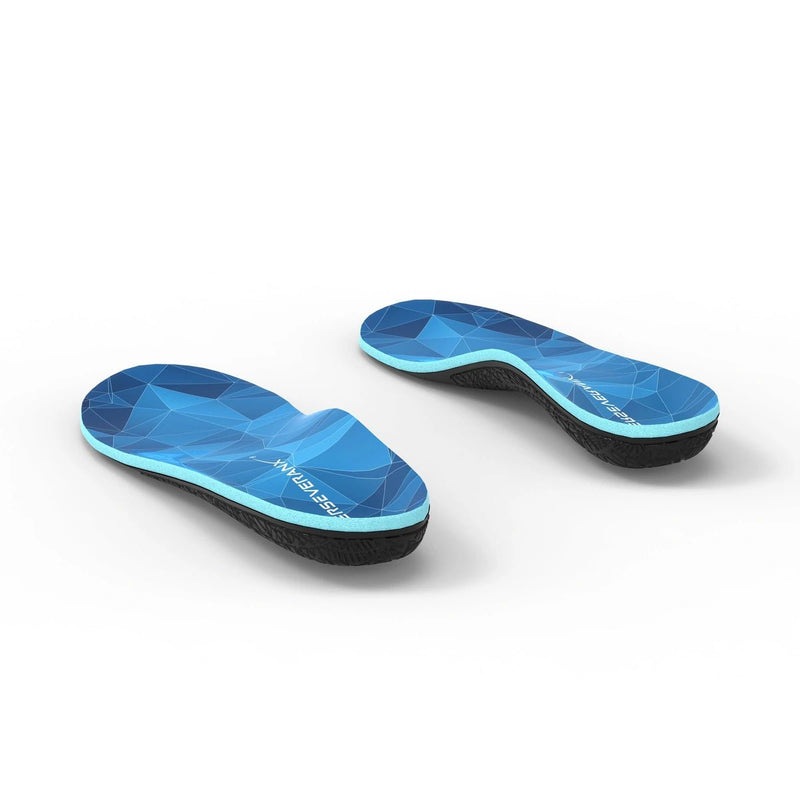
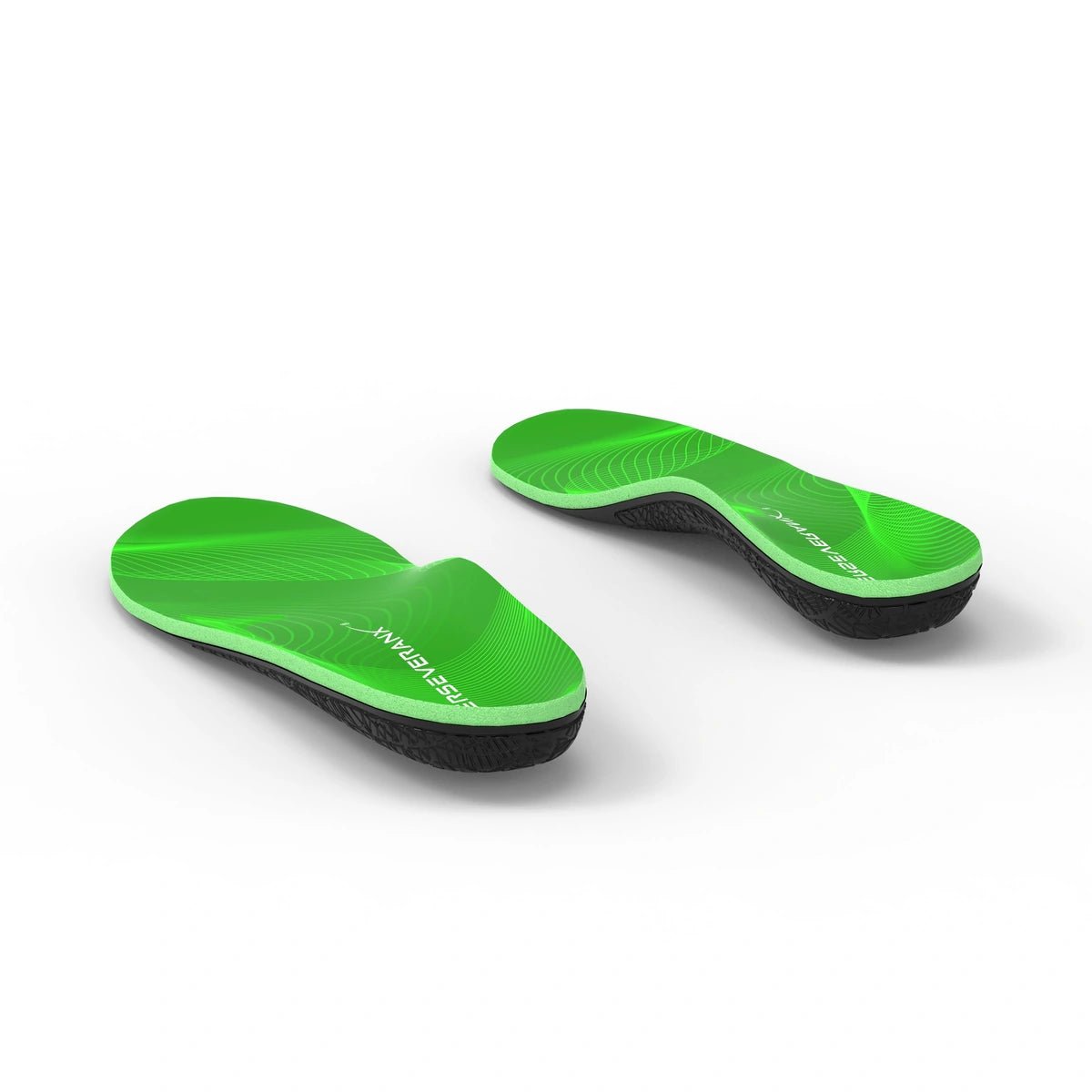
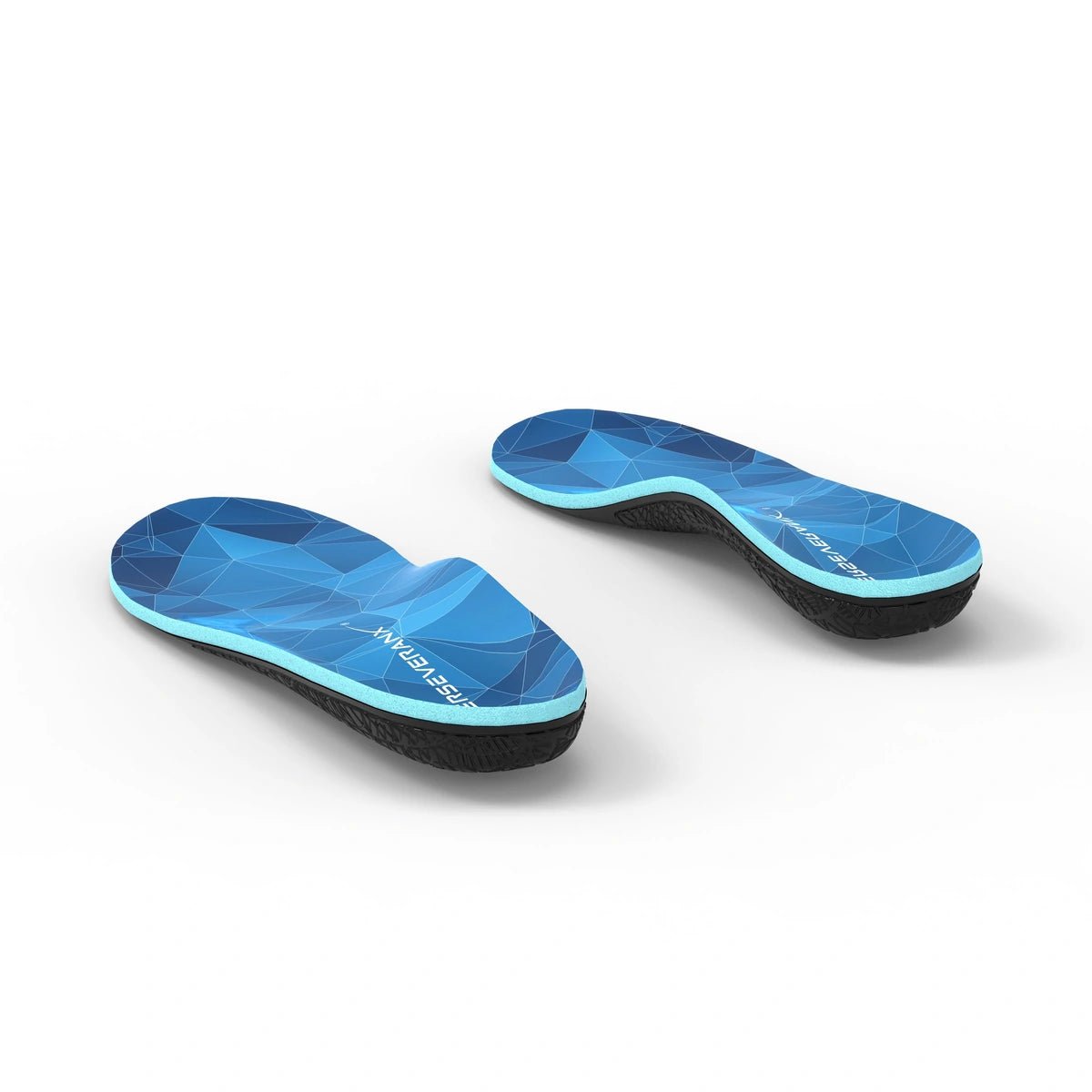
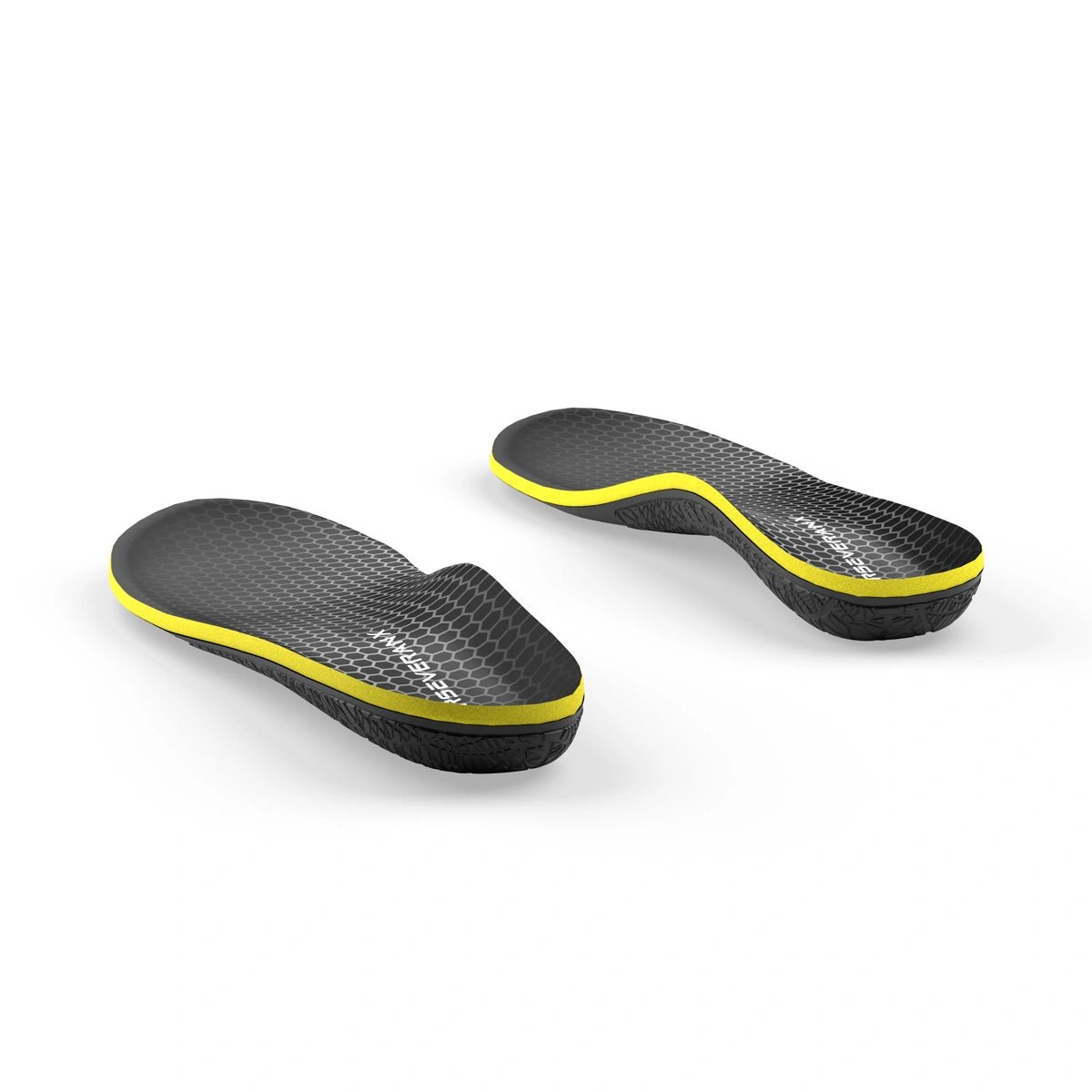
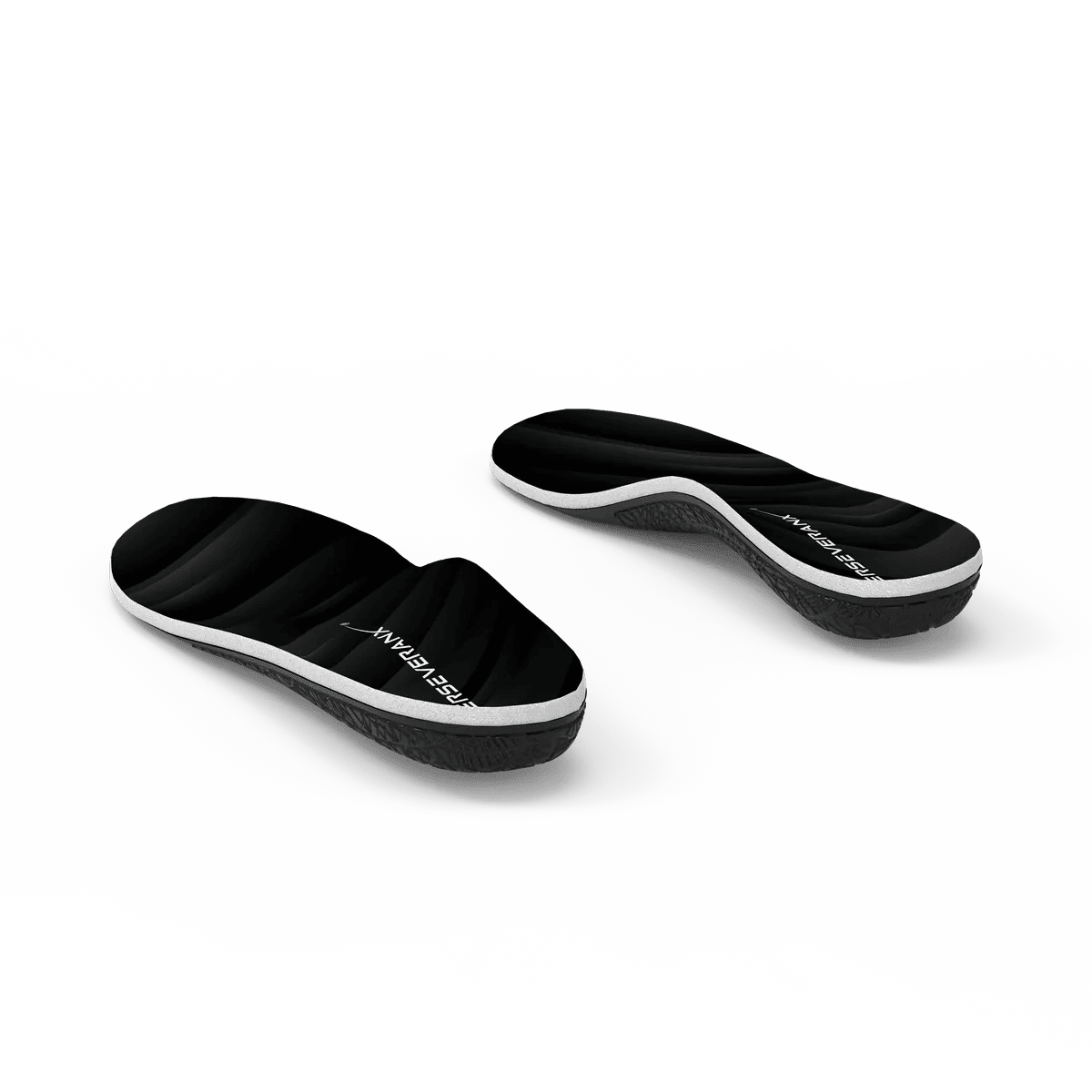
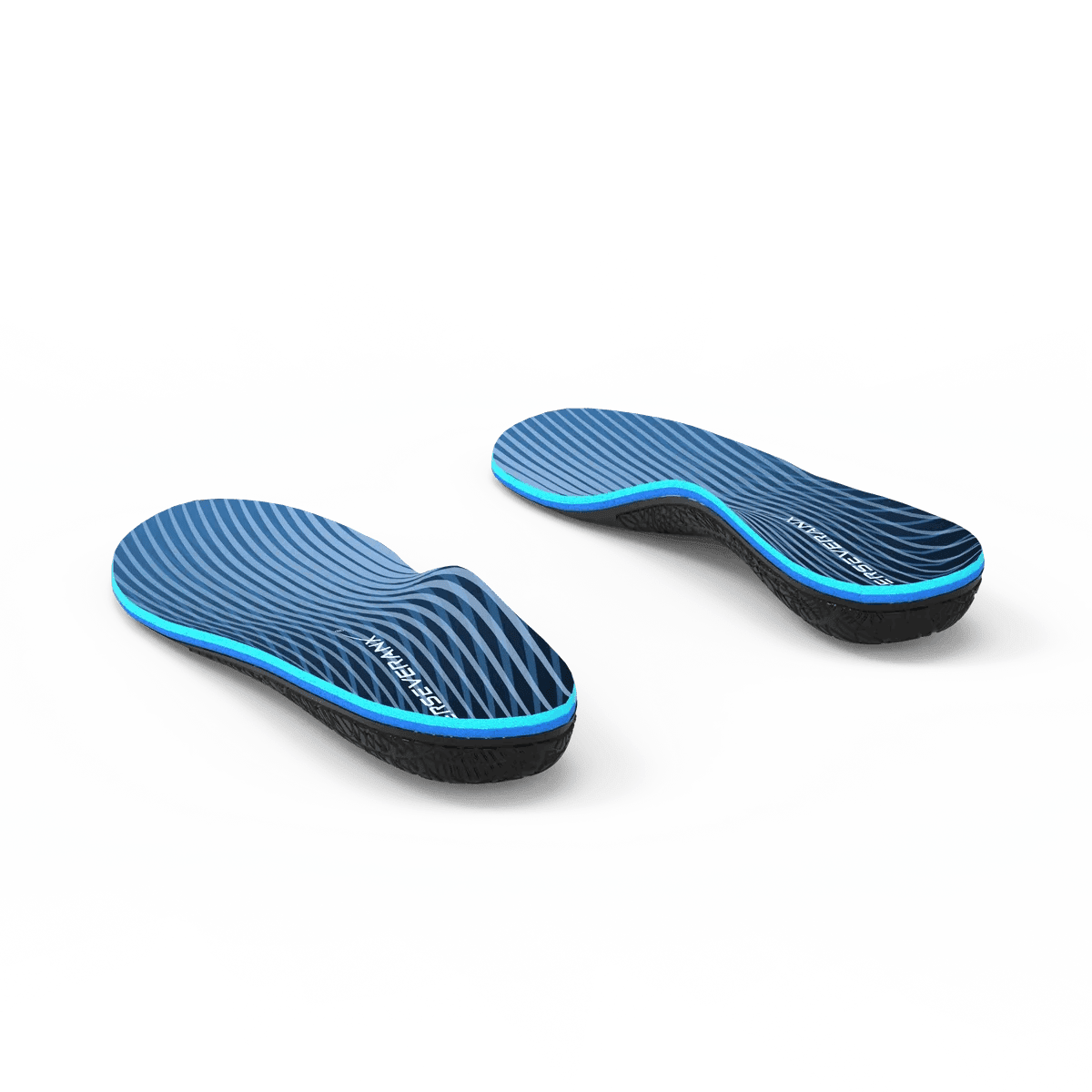
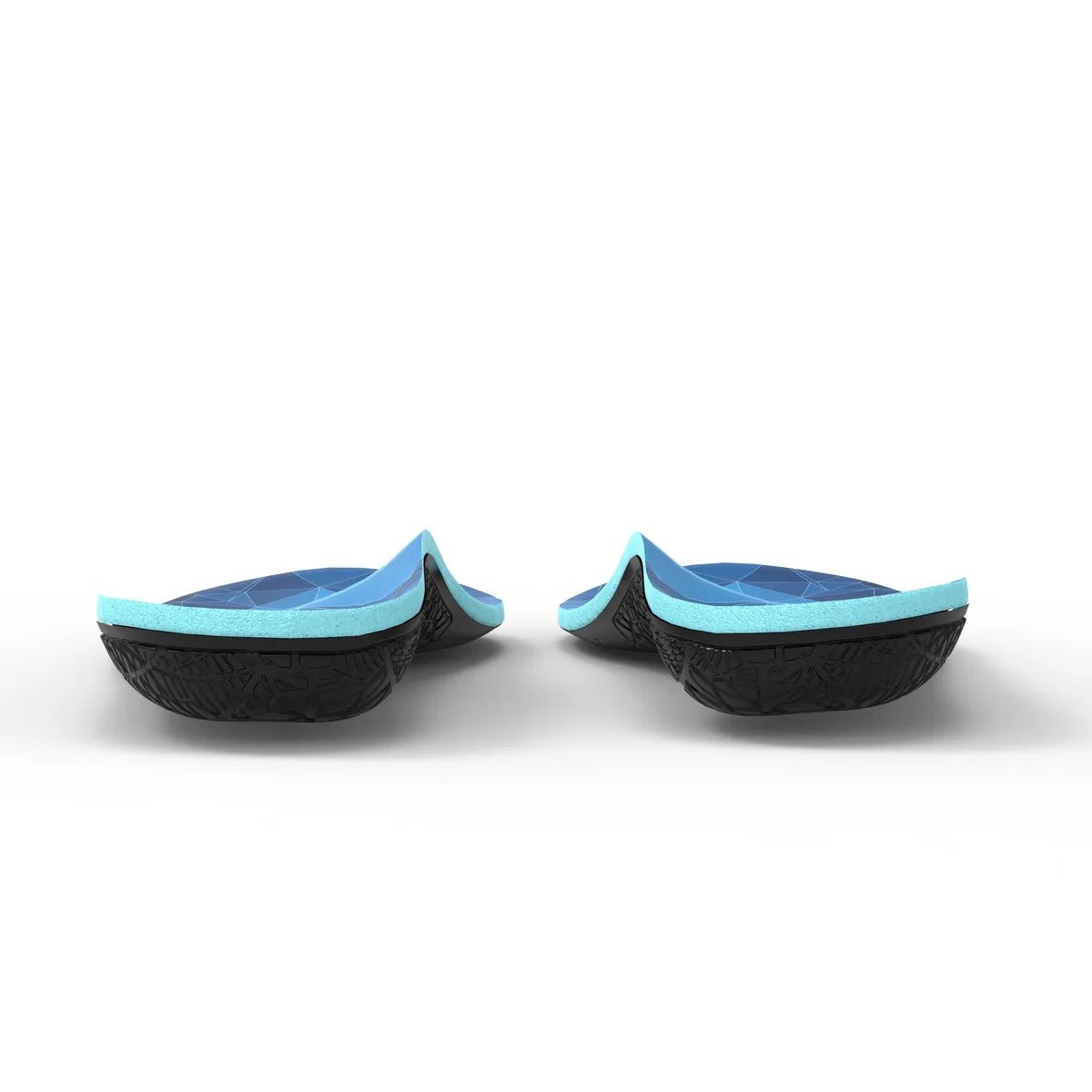
If you want a more substantial everyday cushioning feel, Fusion offers less easy sink than Embrace with low bounce. Open-cell PU cushioning softens contact beneath the heel and forefoot, while the shaped frame supports the arch and cradles the heel.
Fusion availability: Fusion is temporarily unavailable and is not accepting orders. Restock timing is not yet confirmed. Request a notification for your size.
Its material is selected to recover after pressure and resist lasting flattening, helping preserve the cushioning through repeated wear. For someone who dislikes a very yielding surface, that firmer feel can be a reason to choose Fusion. It does not make Fusion an Achilles treatment or a substitute for a prescribed heel lift or orthotic.
Choose by shoe compatibility and the feel you enjoy once any clinical requirements are clear. The Find your fit quiz can help compare cushioning preferences; it does not assess tendon injuries.
Be selective about exercise advice
AAOS distinguishes problems at the tendon’s attachment from those higher along it; suitable exercises can differ. Avoid adopting an online heel-drop routine without knowing what is appropriate for your situation. A physical therapist can guide loading and progression.
A sudden pop near the calf or heel, severe pain, or difficulty walking after an injury needs prompt medical assessment; see the AAOS guidance on Achilles tendon tears. Ongoing or worsening symptoms also deserve review. If your pain is beneath the heel instead, read our walking and plantar fasciitis guide for questions to discuss, rather than diagnosing it by location alone.