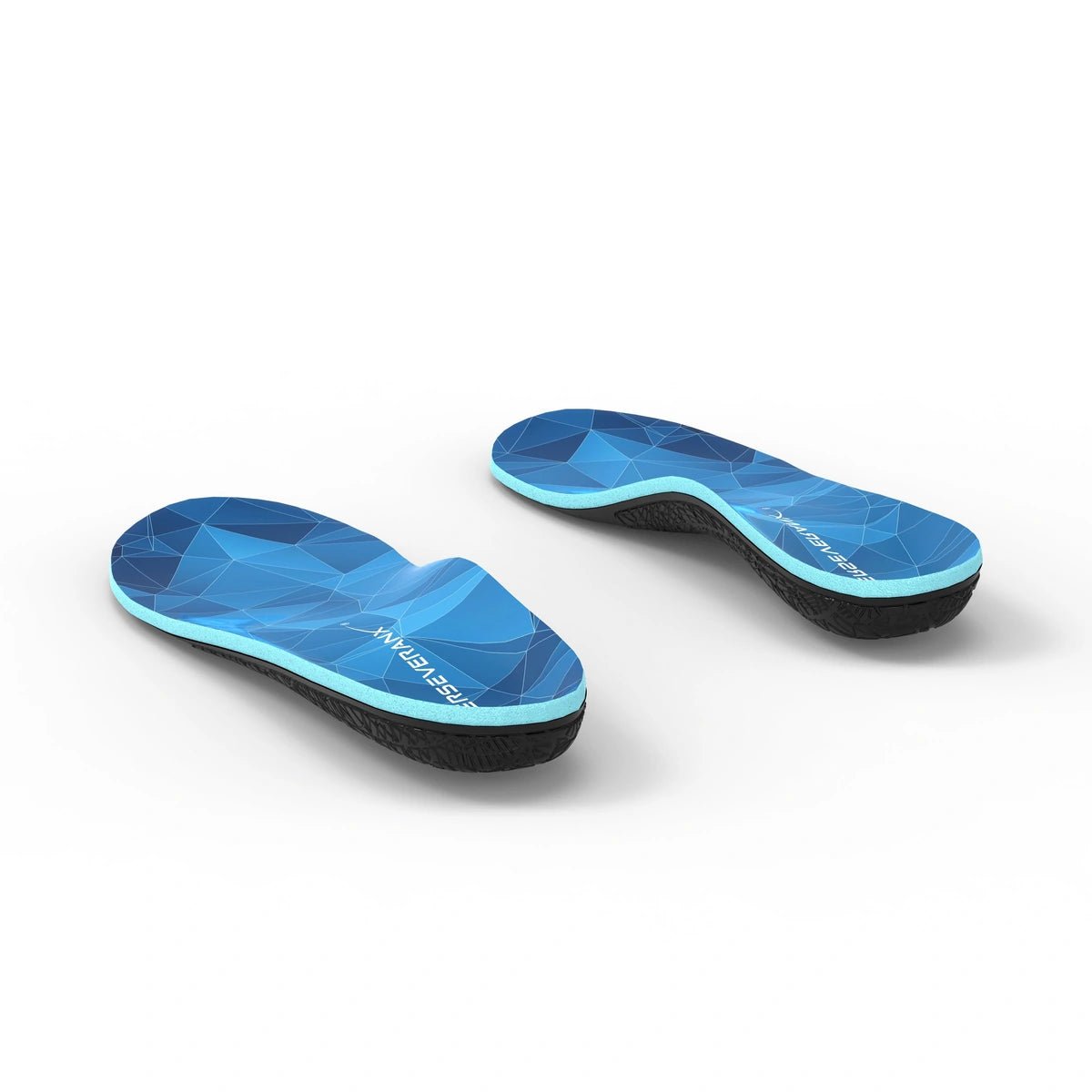
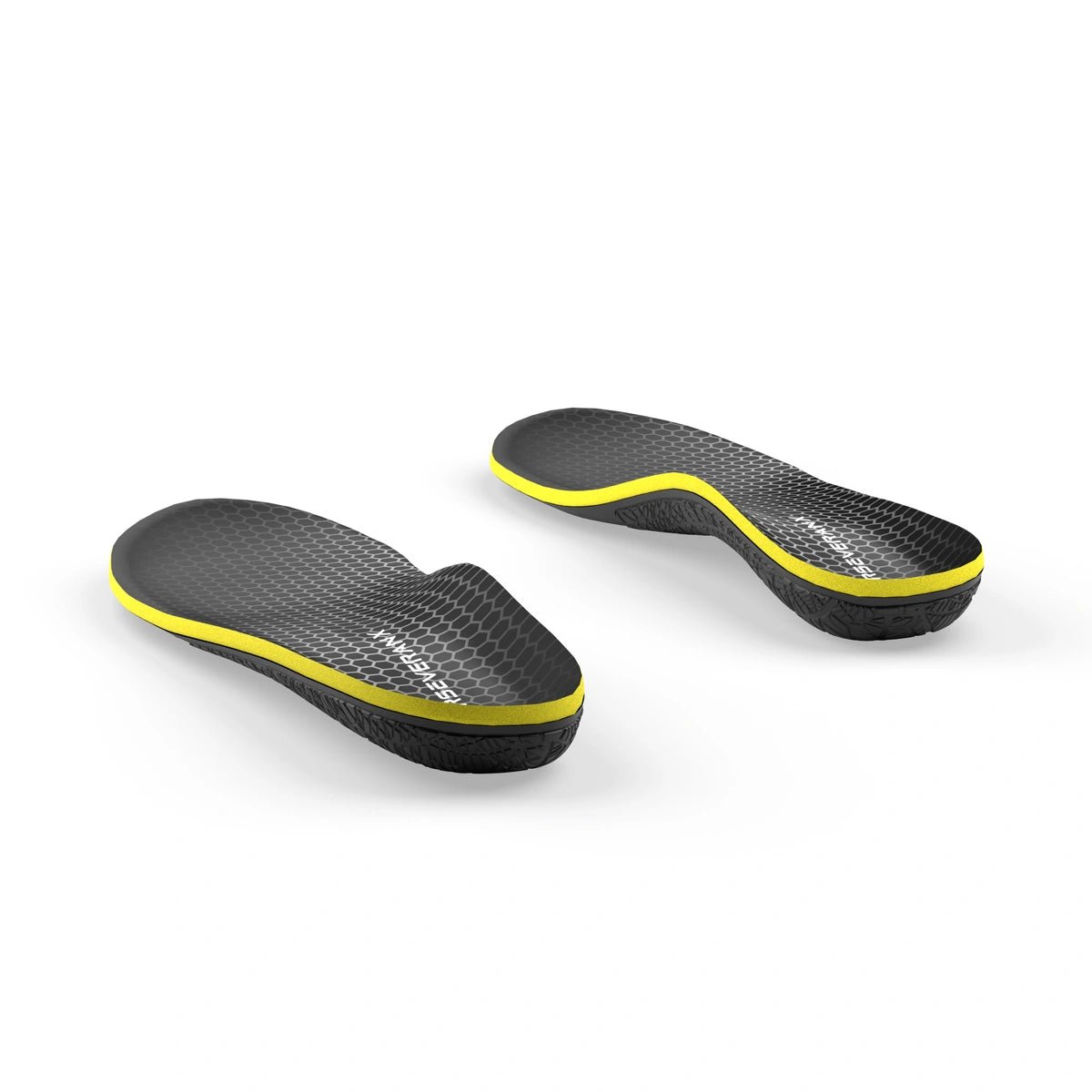
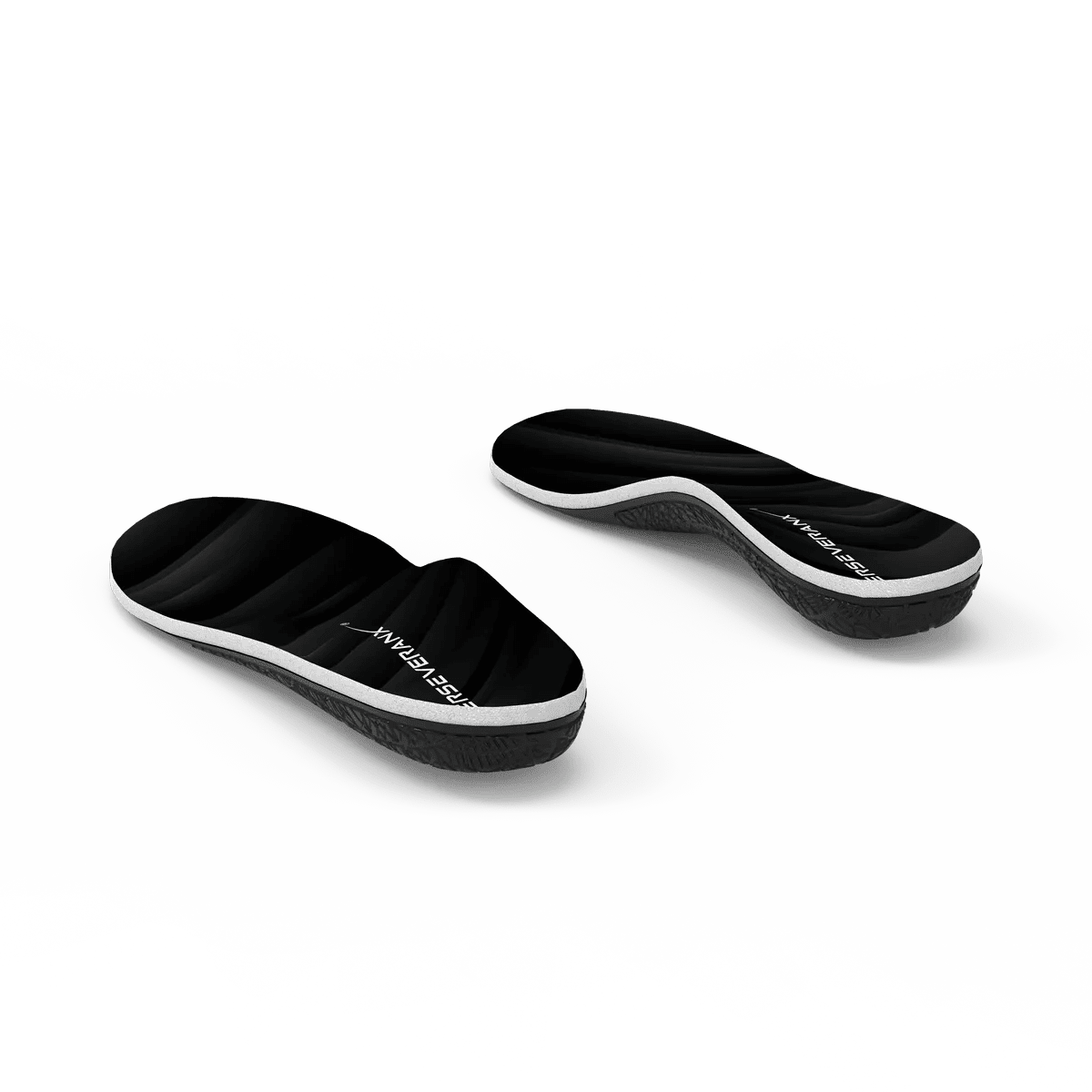
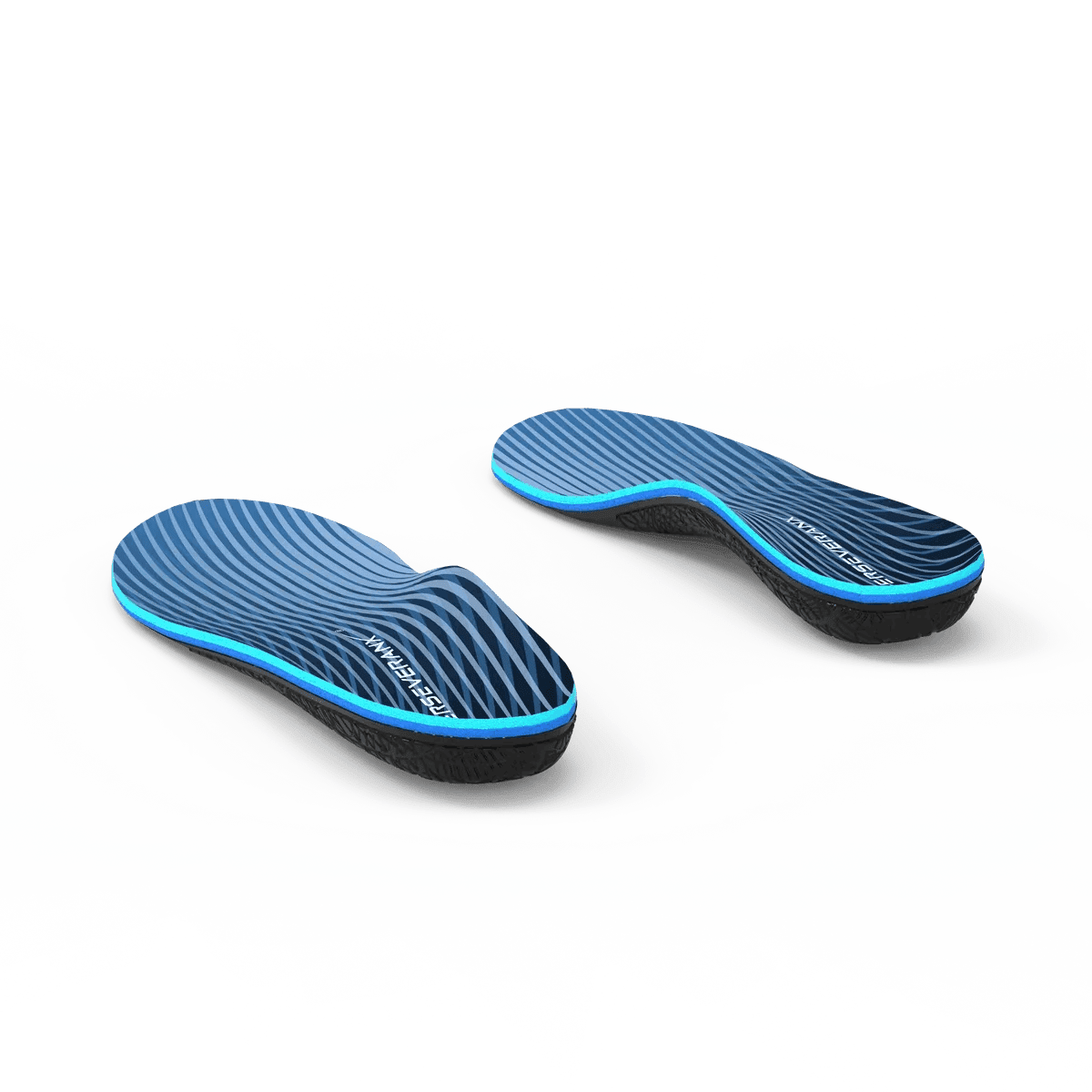
The short answer. Start with fit inside your running shoe, then compare cushioning response. The insert should sit flat, meet your arch comfortably and leave room for your foot. More bounce or a thicker-looking cushion does not automatically make it a better running setup.
Your running shoe already has a shape, a midsole and a fit you chose. A replacement insole changes the contact immediately beneath your foot. The goal is to find a combination you enjoy, rather than treating the insert as a shortcut around an unsuitable shoe.
Check the shoe before choosing a model
- Check whether the original liner is removable. A full-length replacement normally takes its place.
- Compare the original liner with the replacement for length and outline. Use our size guide before trimming.
- Fasten the shoe with your usual running socks. Check that the toes have room and the heel remains seated.
- Stand and walk first. A concentrated pressure point under the arch is a reason to reassess the fit.
The AAOS shoe-fit guide emphasizes appropriate shoe fit and trying shoes with the socks you use. For our collection, use the size and shoe-fit guide to check the actual replacement dimensions rather than relying only on your shoe-size label.
Match the response to your preference
Fusion availability: Fusion is temporarily unavailable and is not accepting orders. Restock timing is not yet confirmed. Request a notification for your size.
Compare side by side. Swipe across on smaller screens.
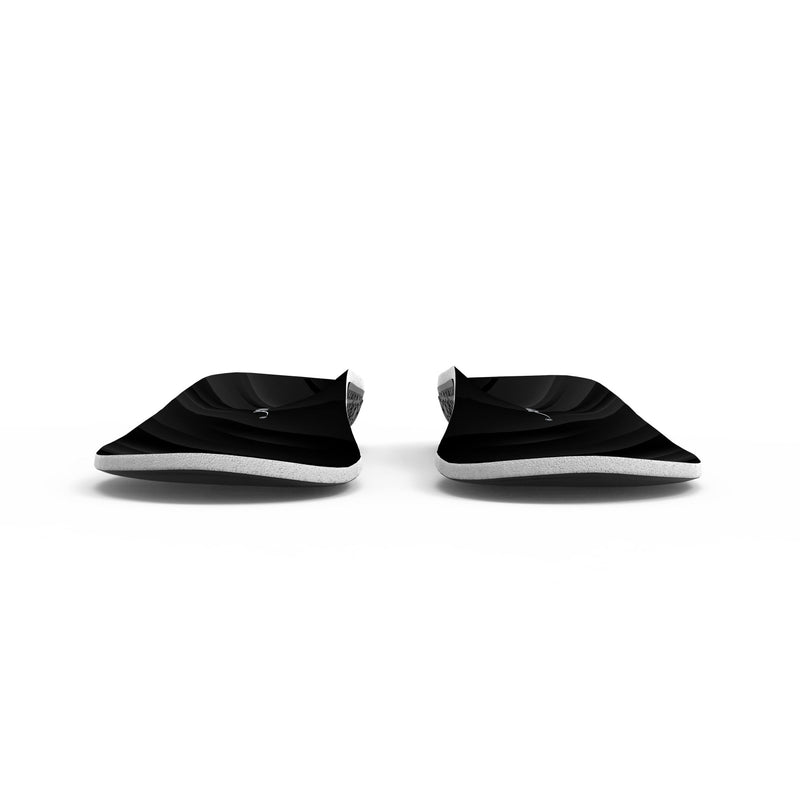
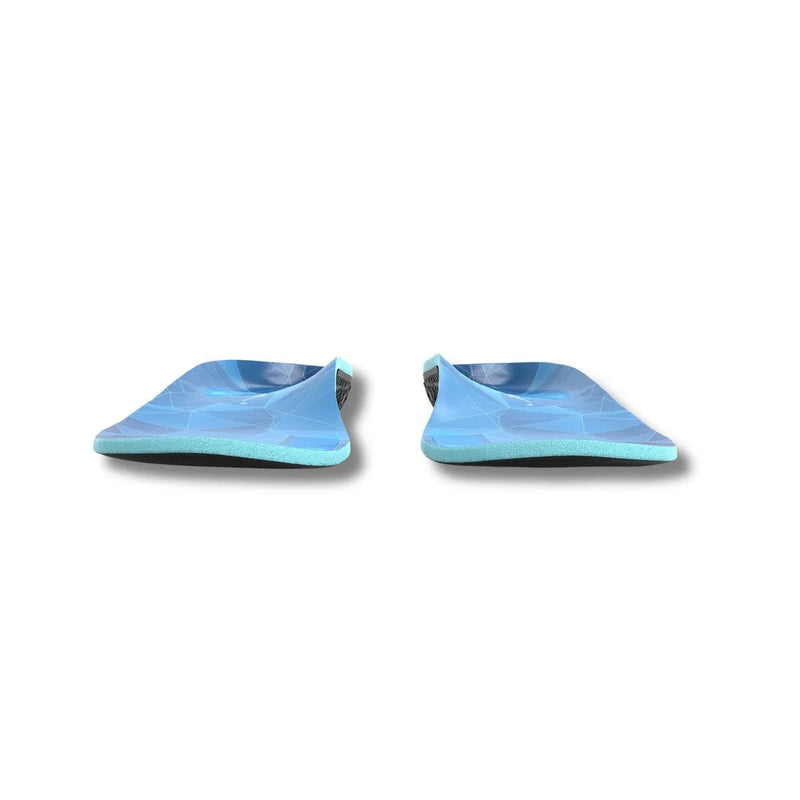
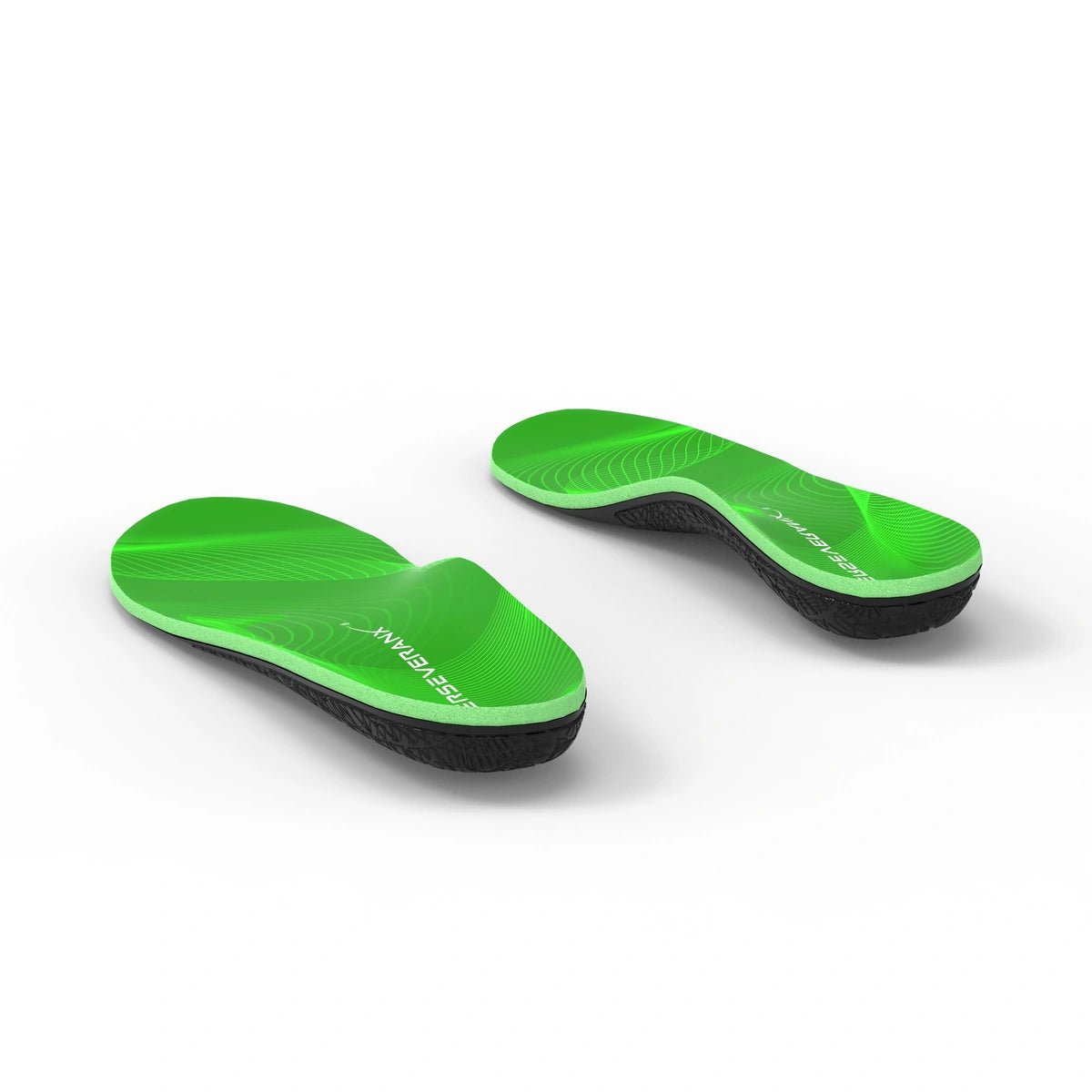
| Model | Cushioning character | A useful question |
|---|---|---|
| Bouncy | Pronounced rebound. | Do I enjoy a noticeably lively return beneath my foot? |
| Plush | Soft contact with spring-back. | Do I prefer a yielding surface with an elastic response? |
| HoneyComb | Flexible under ordinary pressure, firmer with rapid impact. | Am I interested in a response that changes with the impact? |
| Embrace | Softly contouring, low bounce. | Would I rather have a settled contact than pronounced spring? |
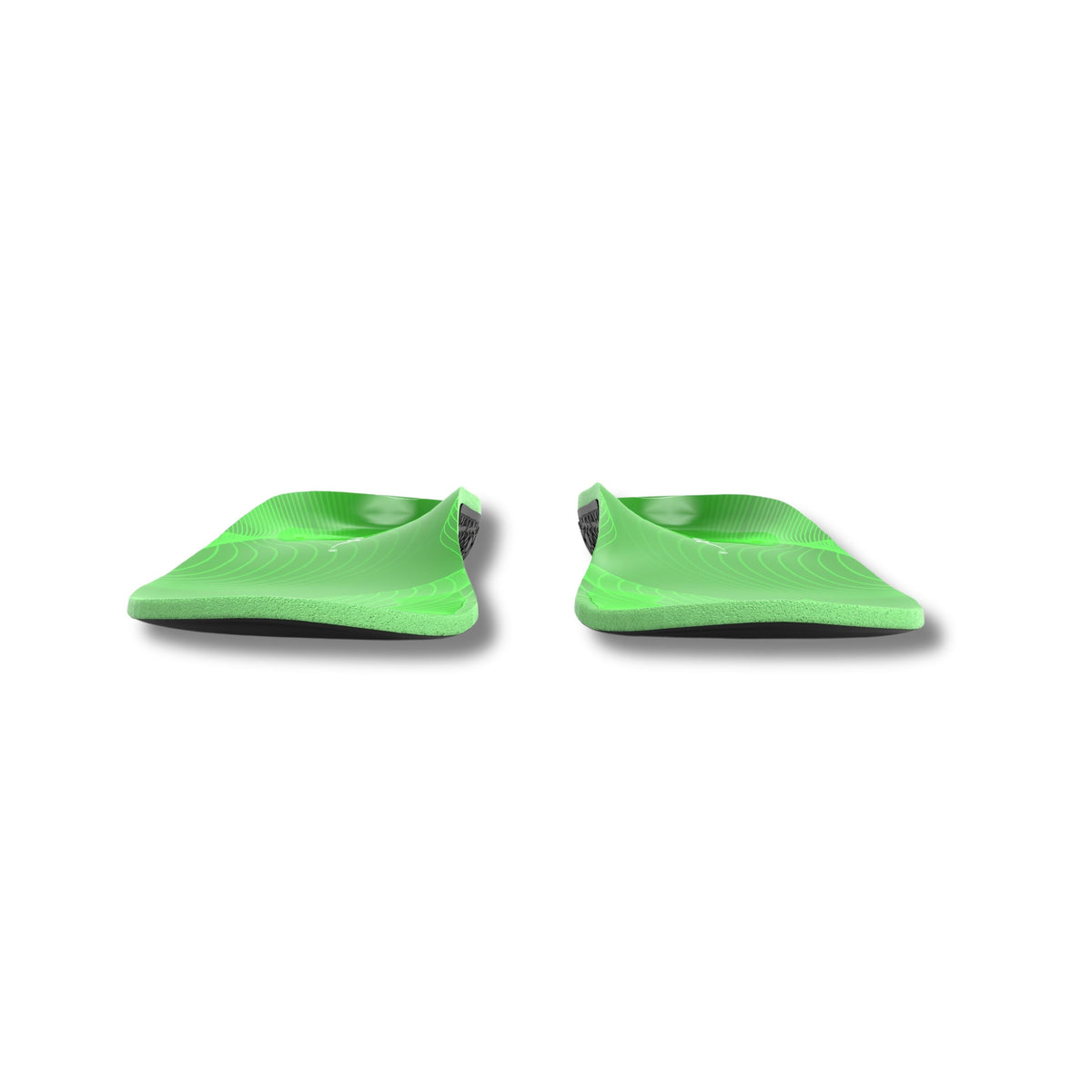
| Fusion | Firmer cushioning, low bounce. | Do I want more substantial contact with less easy sink? |
These are feel choices. They are not rankings of speed, energy savings or injury prevention. A product name or an activity label cannot tell you how a particular insert will fit your foot inside a particular running shoe.
Know which layer does which job
01
Cushioning
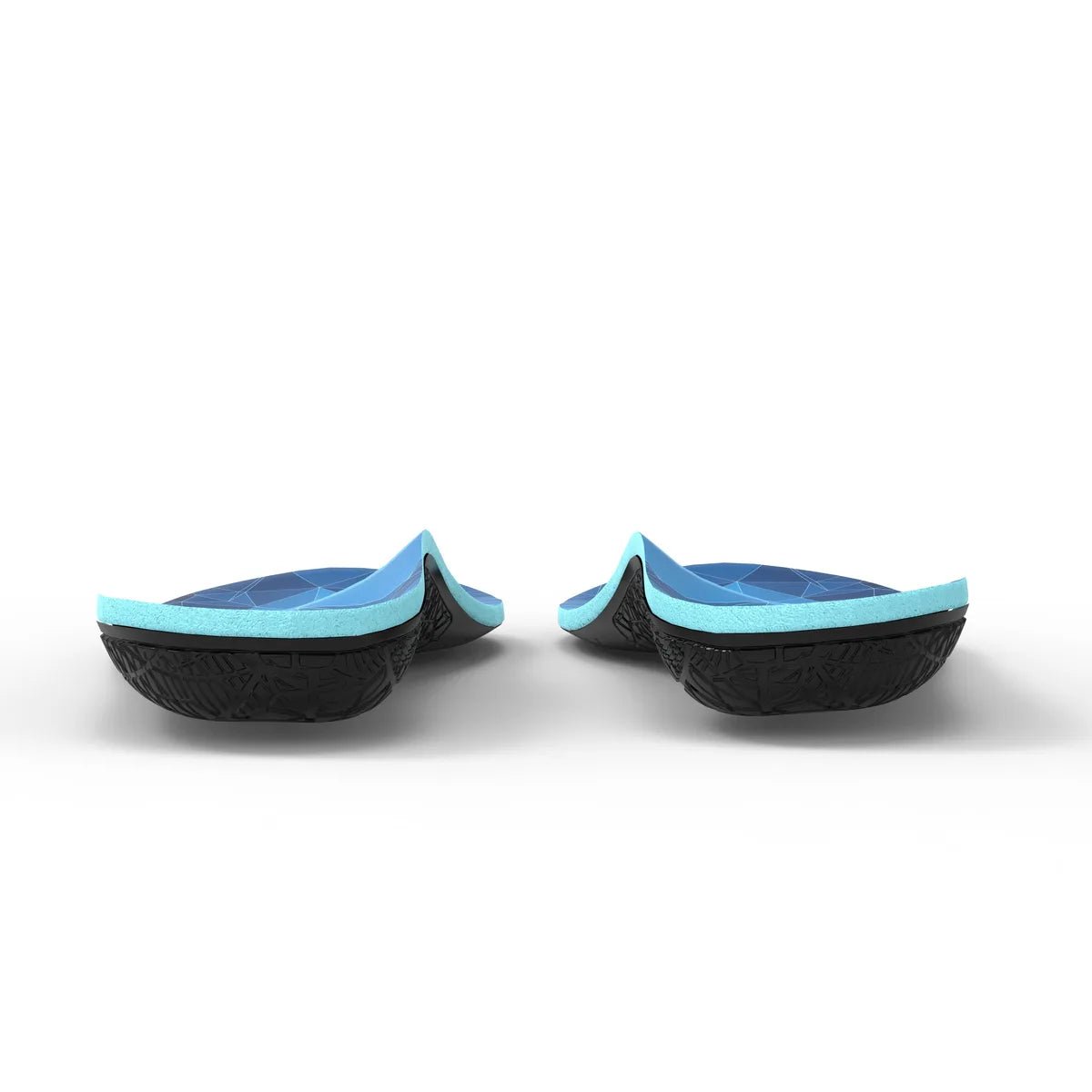
The open-cell PU layer gives each model its distinctive response.
02
Foundation
The contoured base and support frame provide shape beneath the cushion.
03
Shoe fit
The complete assembly still needs room inside the shoe.
Across the five models, the cushioning layer is approximately 0.16 in (4 mm). The EVA layer is approximately 0.04 in (1 mm) at the forefoot and thicker at the heel. These measurements do not describe the complete insole height. Fusion’s firmer feel does not make it a thin insert for a tight shoe.
Make the first trial a manageable one
Check the fit on a short, familiar outing before relying on a new setup for a long run or an event. Pay attention to heel hold, toe space and whether the arch contour meets your foot comfortably. Reassess a setup that creates pressure or discomfort rather than assuming discomfort proves that support is working.
For a diagnosed condition or an existing prescription orthotic, get individual guidance before changing the setup. Our high-arch guide explains selection considerations; it cannot diagnose the cause of pain.
A few practical questions
Will springier insoles make me run faster?
A springy feel is not evidence of a performance improvement. Choose it because you enjoy the response, not because a bounce demonstration promises a faster time.
Should I keep the original liner underneath?
For this type of full-length replacement, remove a removable original liner and fit the replacement in its place. Stacking can crowd the shoe or raise the heel.
Can I use the same model for walking?
Yes, if it fits the walking shoe comfortably and you enjoy the feel. Recheck any different shoe rather than assuming the outline and available space are identical.
Find your running feel.
Explore the response you enjoy, then check it inside the shoes you actually run in.
Find your feel