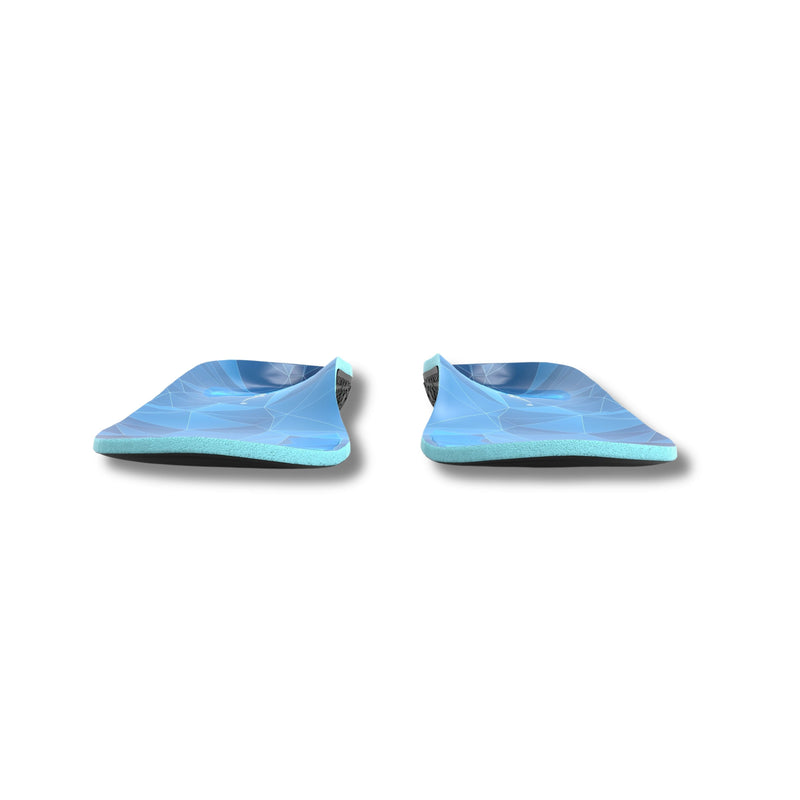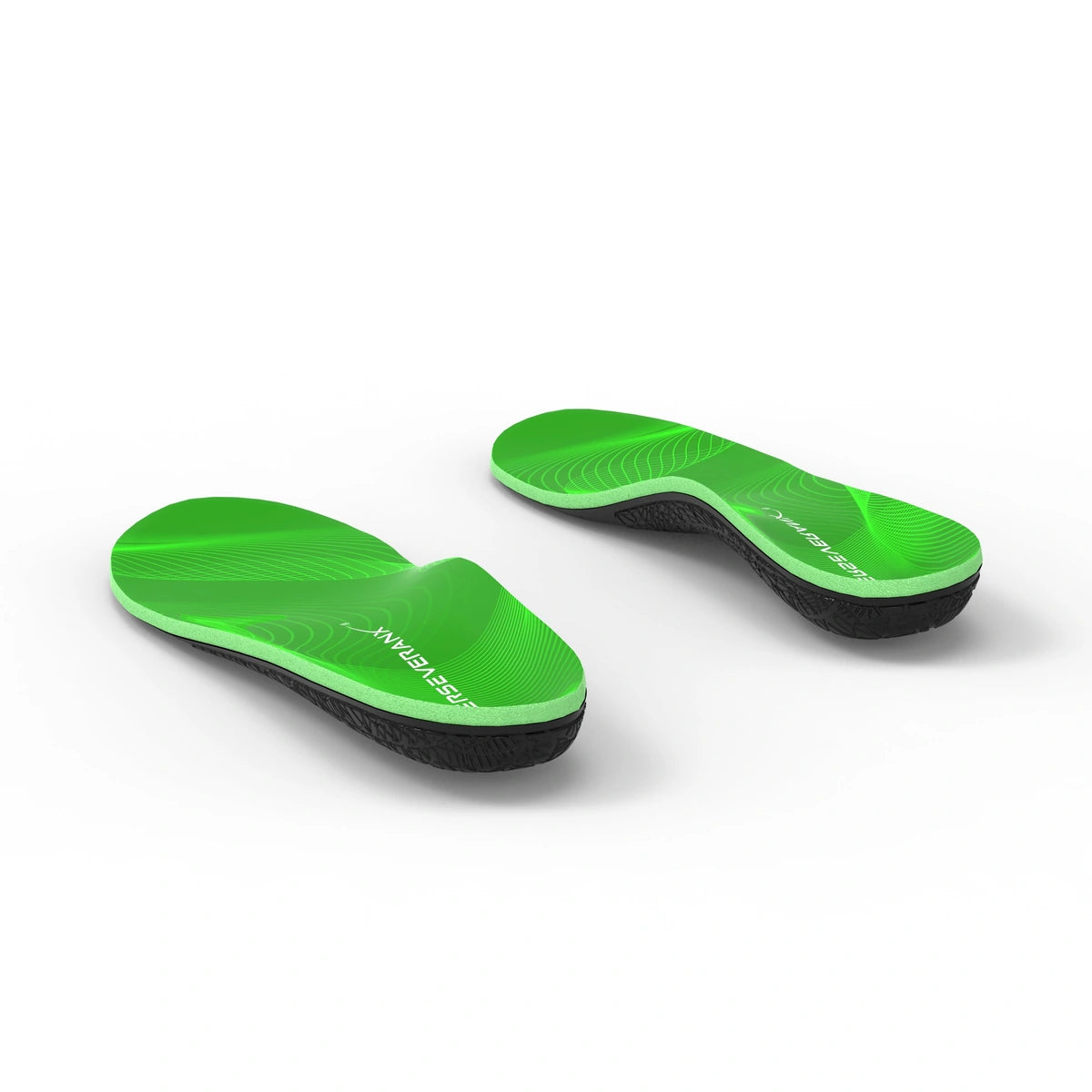
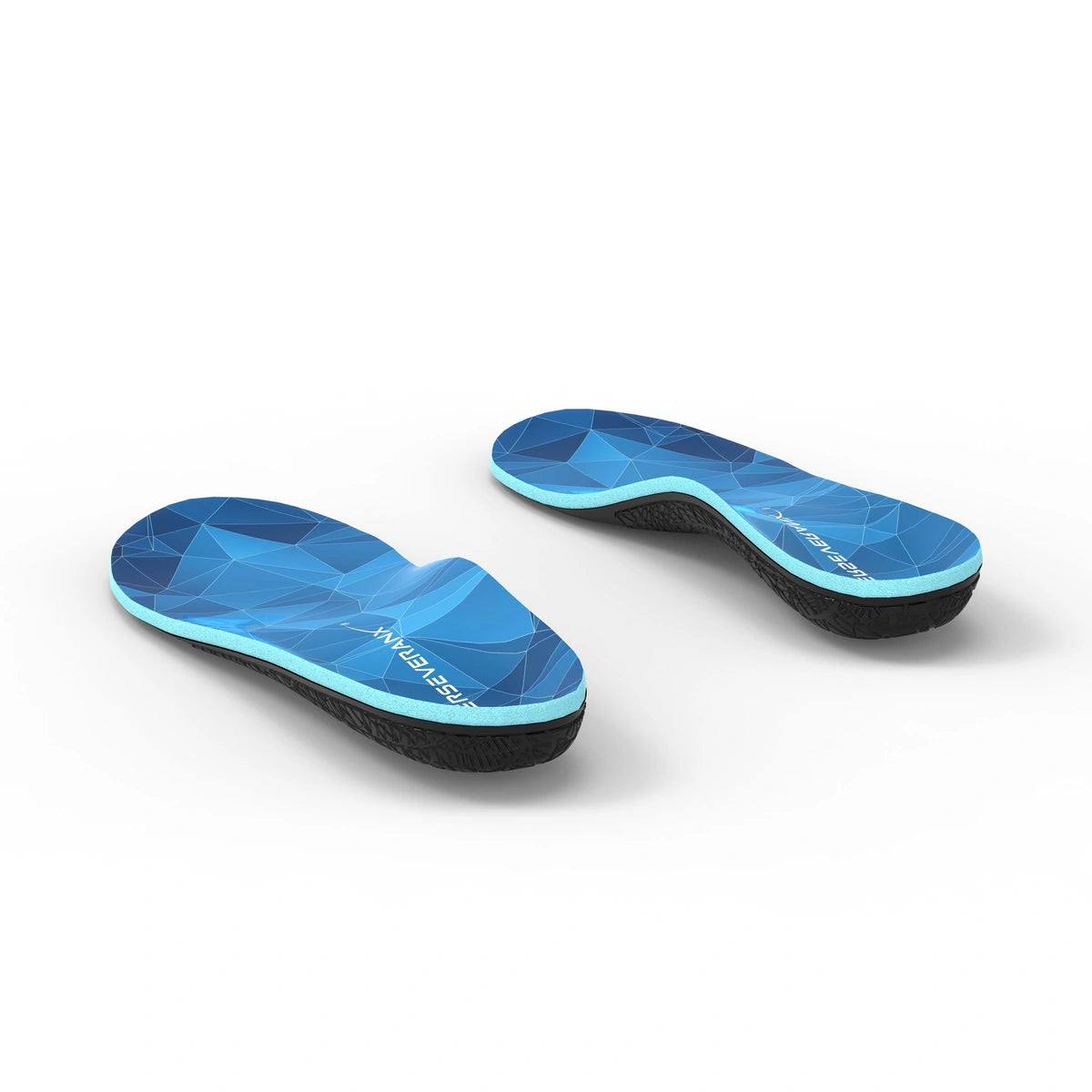
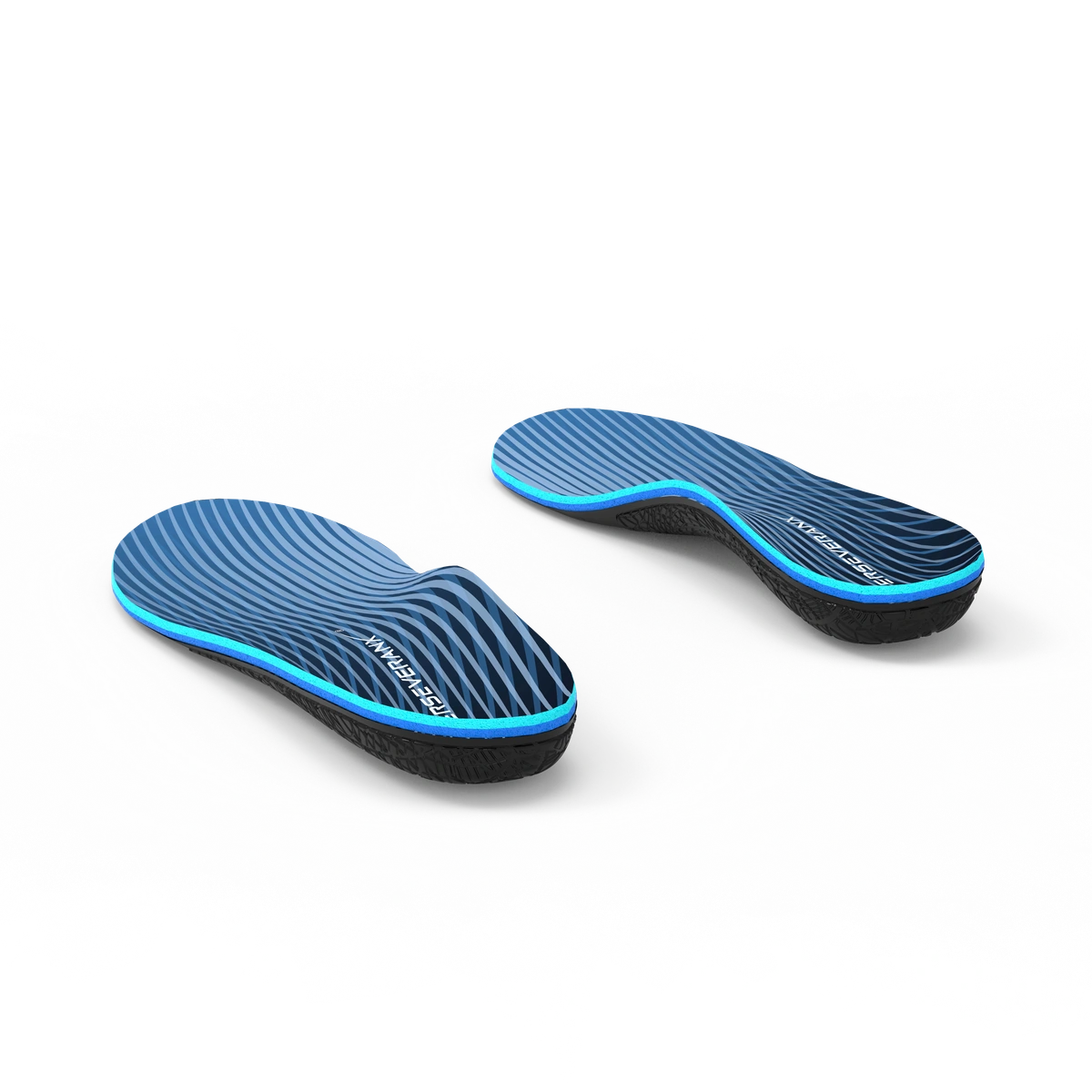
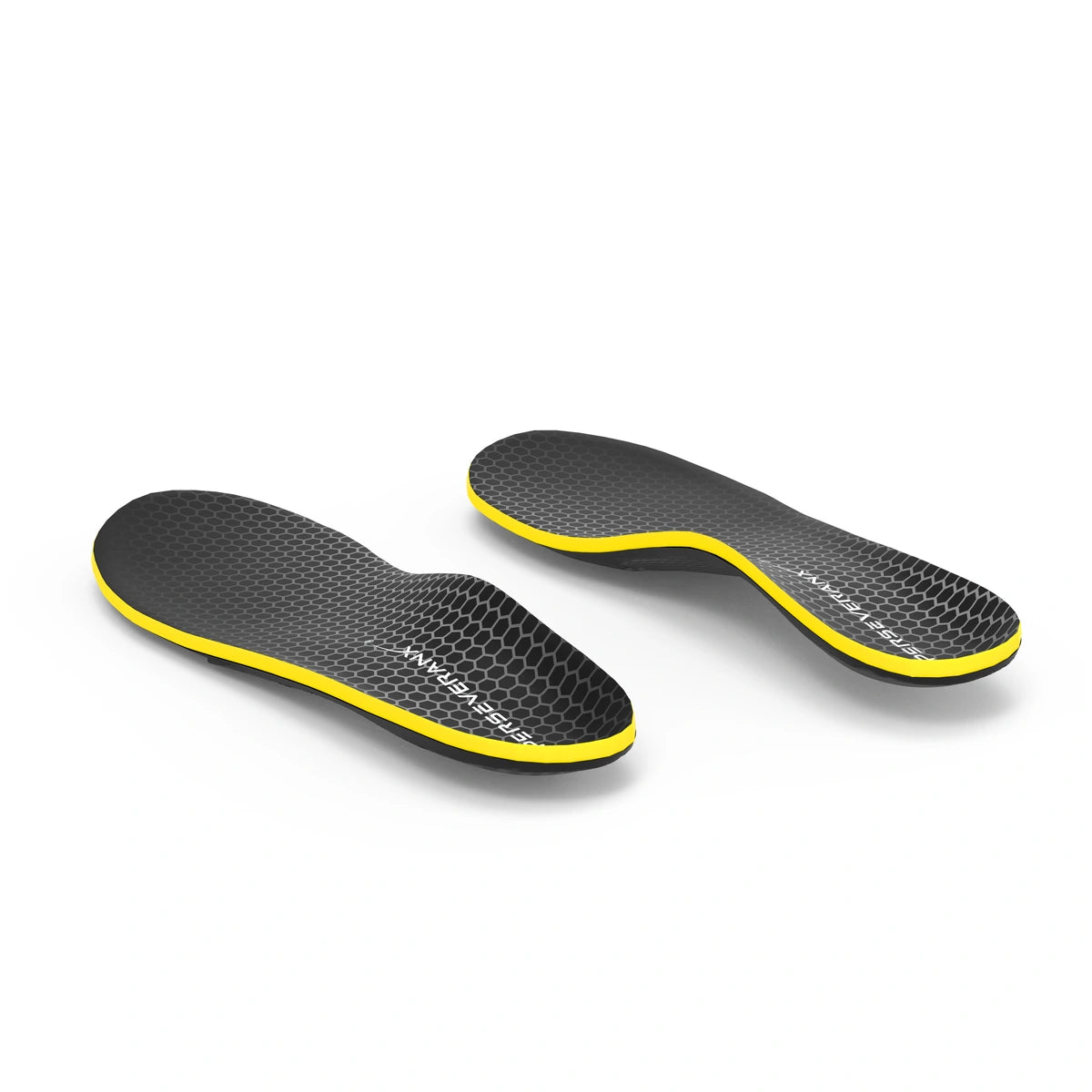
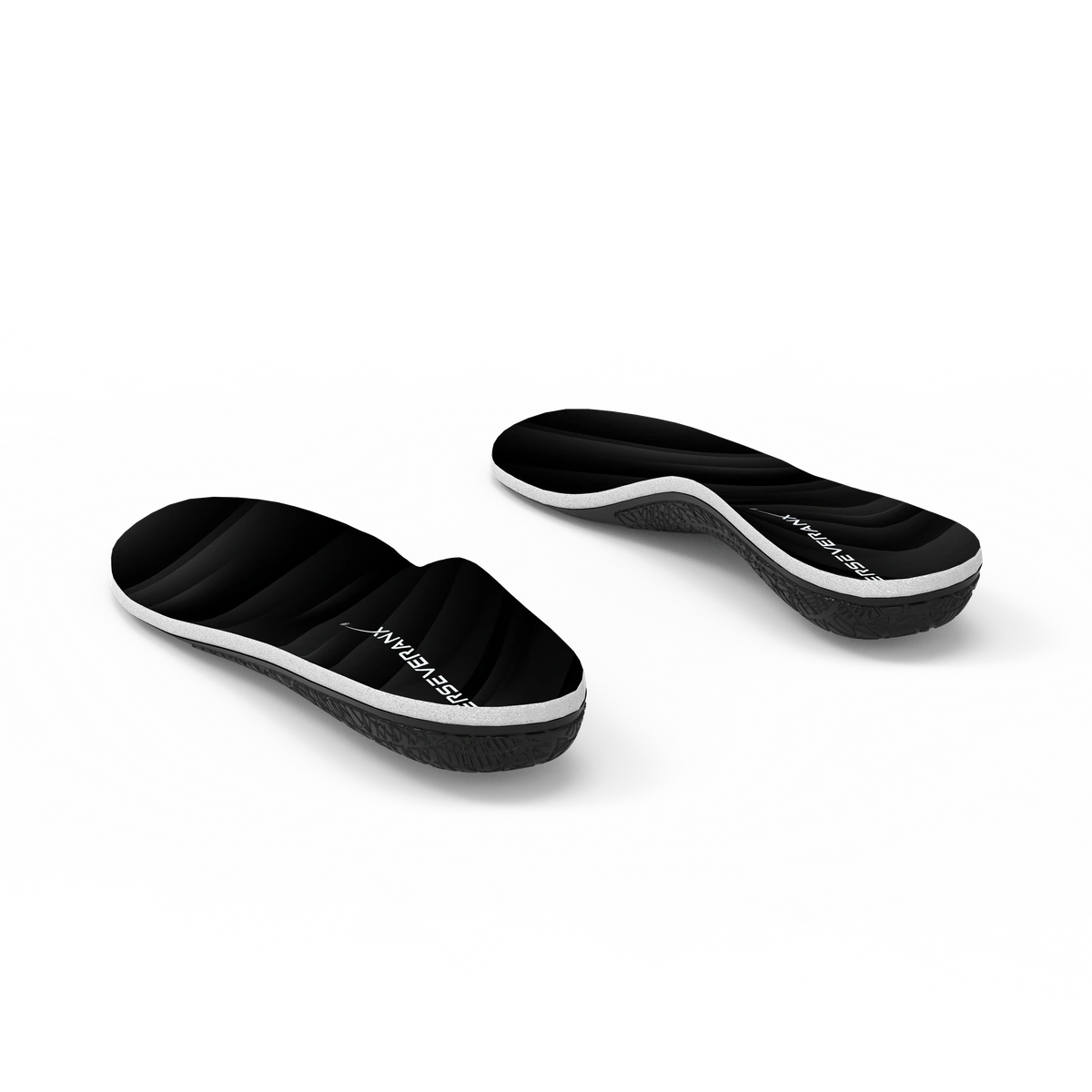

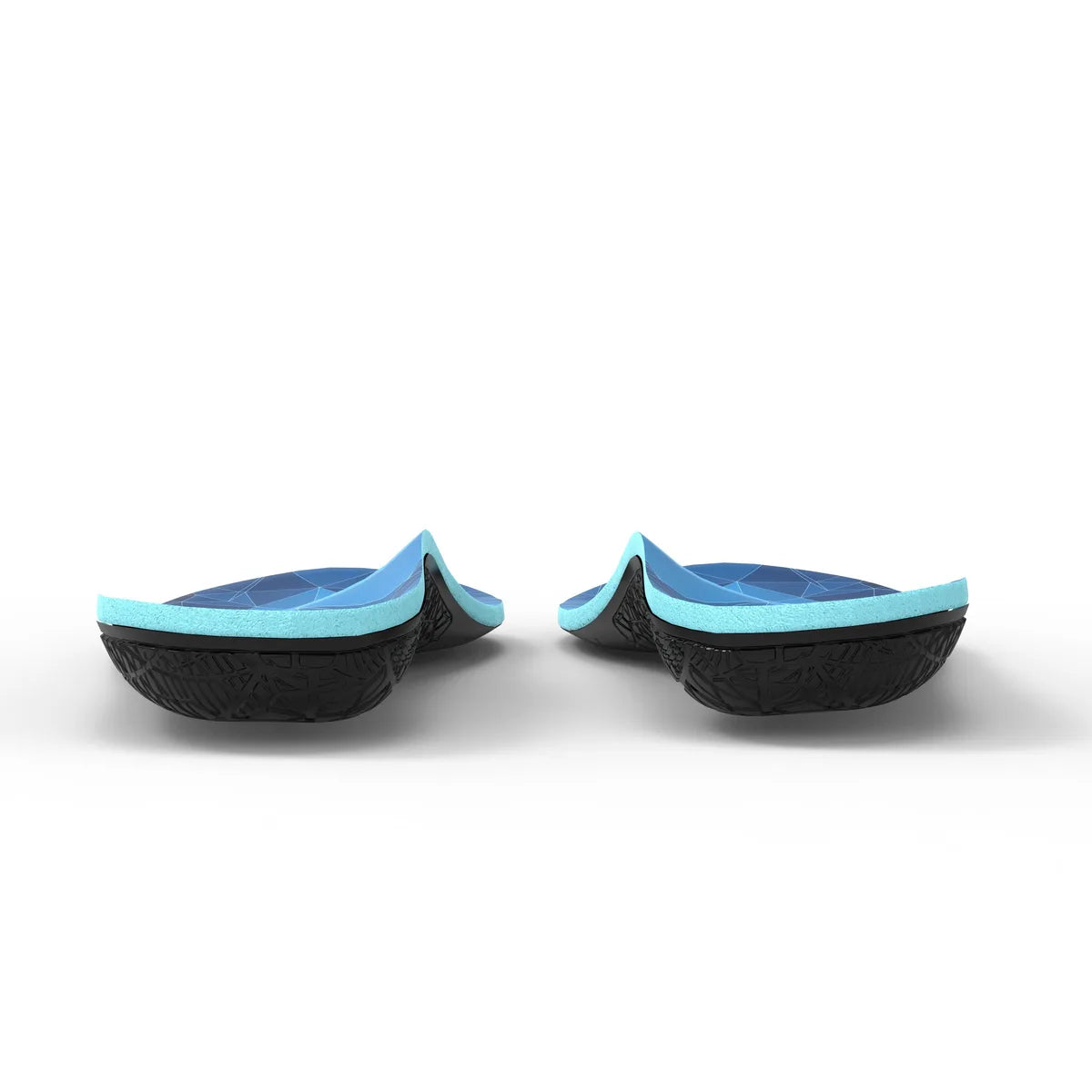
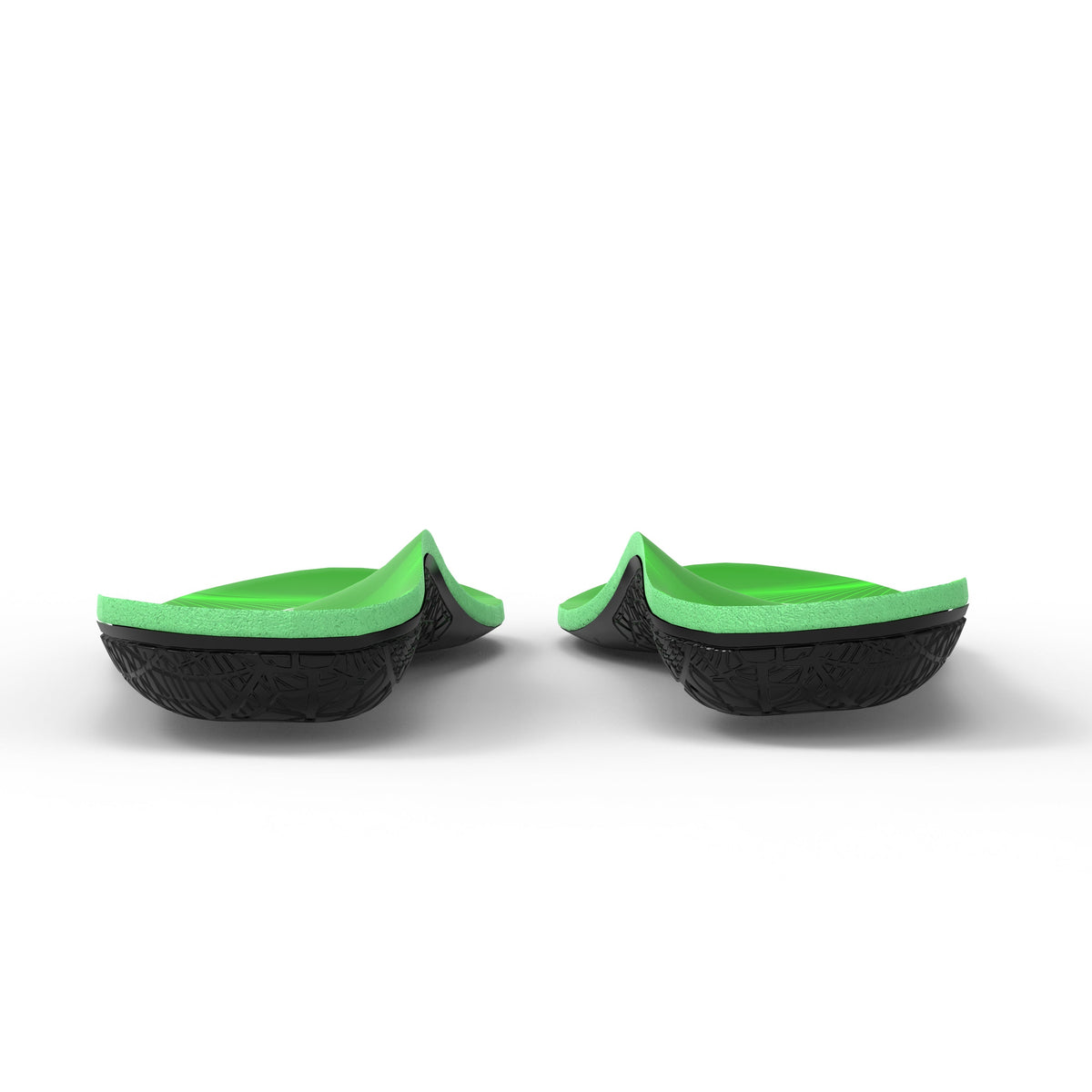
Product photography shows a previous-generation design. See each product page for current construction and availability.
The short answer. Cushioning changes the contact beneath your foot. Arch support provides a shaped surface beneath your arch. They are complementary features: a yielding cushion can sit above a firmer structure that also cradles your heel.
An insole can feel soft without having a shaped foundation. It can also have a firm frame without giving you the contact feel you enjoy. Looking at both features makes product comparisons more useful—and helps explain why two insoles labeled “supportive” can feel so different.
Separate the surface from the structure
01
Cushion the contact
The material beneath your heel and forefoot yields as you load it.
02
Support the shape
The contoured frame provides arch contact and a shaped seat for the heel.
03
Recover for the next step
Cushioning selected for recovery returns after pressure rather than simply holding an impression.
Those jobs are related, but one does not establish the others. A dramatic bounce demonstration does not tell you whether the arch contour fits your foot. A rigid shell does not tell you how the cushioning above it will feel.
Inside the PerseveranX construction
Compare side by side. Swipe across on smaller screens.
| Part | What it contributes | What the measurement means |
|---|---|---|
| Open-cell PU cushioning | The model’s distinctive contact and response. | Approx. 0.16 in (4 mm) of cushioning material. |
| Contoured EVA comfort base | The shaped transition beneath the cushioning. | Approx. 0.04 in (1 mm) at the forefoot; thicker at the heel. |
| Shaped support frame | A firmer foundation beneath the arch and around the heel. | These layer measurements are not the total finished insole height. |
The five models share this construction concept. The decision between Embrace and Fusion, for example, is primarily about cushioning feel: softer contouring versus a more substantial, low-bounce contact. It is not a promise that one fixes your arch better than the other.
What should you feel under your arch?
Look for comfortable contact in the right place. A useful fitting check is whether the contour seems to meet your arch naturally, while your heel sits securely and your toes retain room. A pronounced point of pressure is a reason to reassess the fit, not proof that the insole is working harder.
Our collection uses a high arch profile. That shape is a fit characteristic to check, not a diagnosis based on your arch label. If you have a prescribed orthotic or a condition that changes what your foot needs, follow individualized advice before replacing it with an off-the-shelf insert.
The size and shoe-fit guide helps with length, position and trimming. The five-model comparison helps with the cushioning response. Use them for their different jobs.
A better way to compare two insoles
- Check the shoe first: there must be room for the insert and your foot.
- Compare arch and heel contact. Set aside an option that creates a concentrated uncomfortable pressure point.
- Compare the cushioning: soft and settled, firmer with low bounce, or springy.
- Consider the repeated-wear story. Look for an explanation of shape recovery rather than judging only the first impression.
A few practical questions
Can a soft insole have firm support?
Yes. A soft cushioning layer can sit over a firmer contoured frame. That is the surface-and-foundation approach used across our five models.
Is more arch height always better?
No. The position and shape need to suit the foot and shoe. Buying the most prominent arch available is not a reliable fitting strategy.
Can I choose support by foam color?
No. In our collection the material colors identify different cushioning options. They are not a universal support scale across brands.
Choose both the feel and the fit.
Compare the cushioning you enjoy, then make sure the shape meets your foot comfortably.
Find your feel