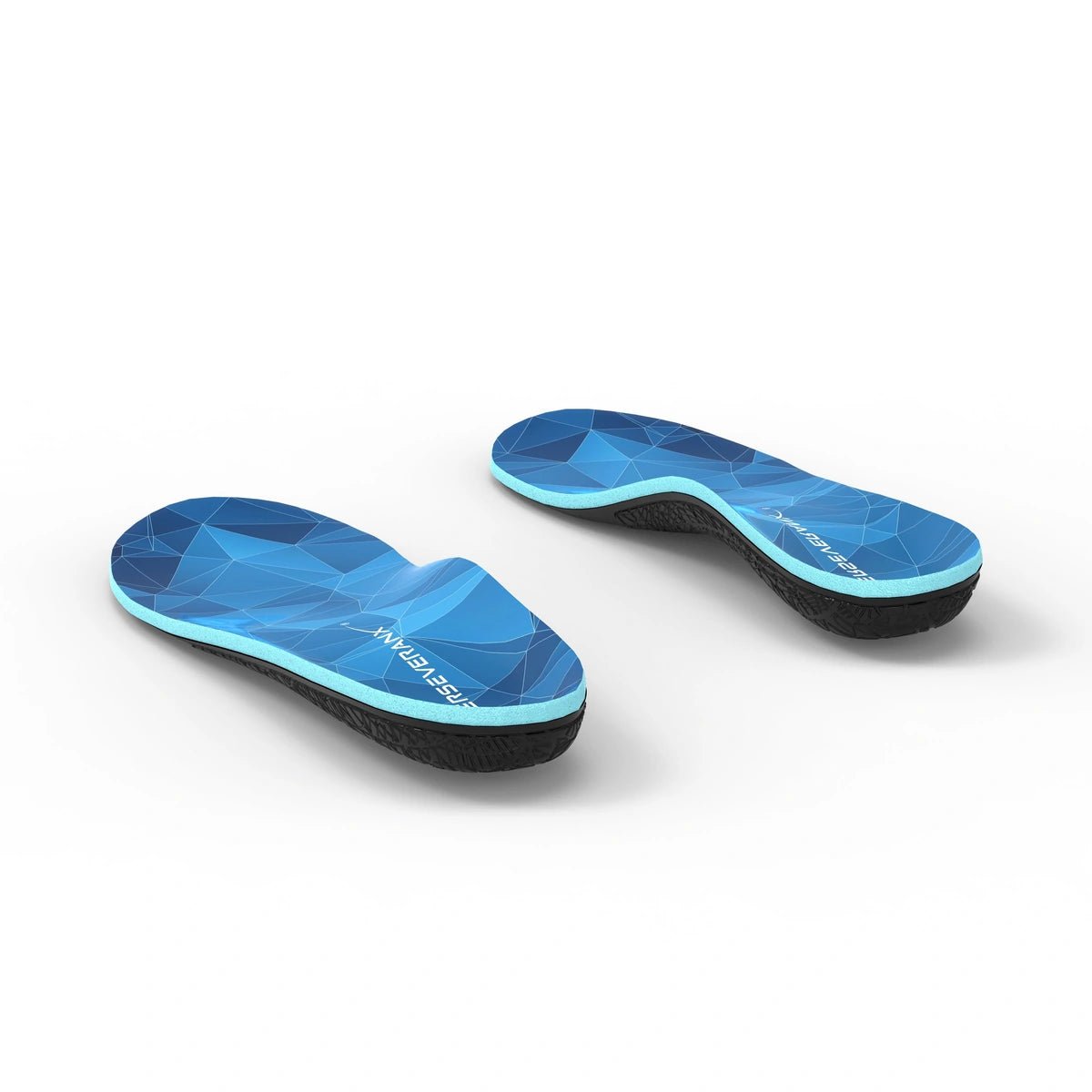
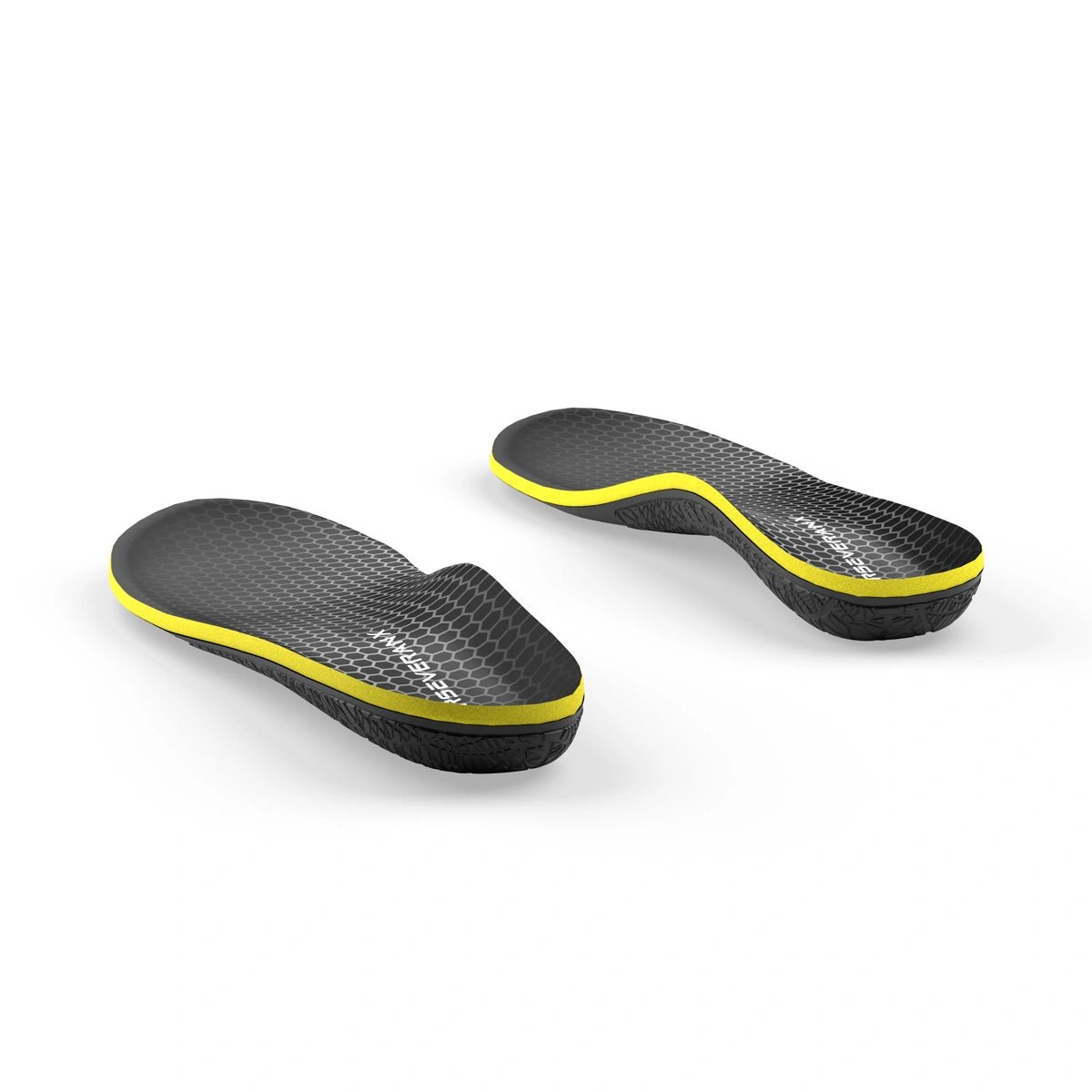
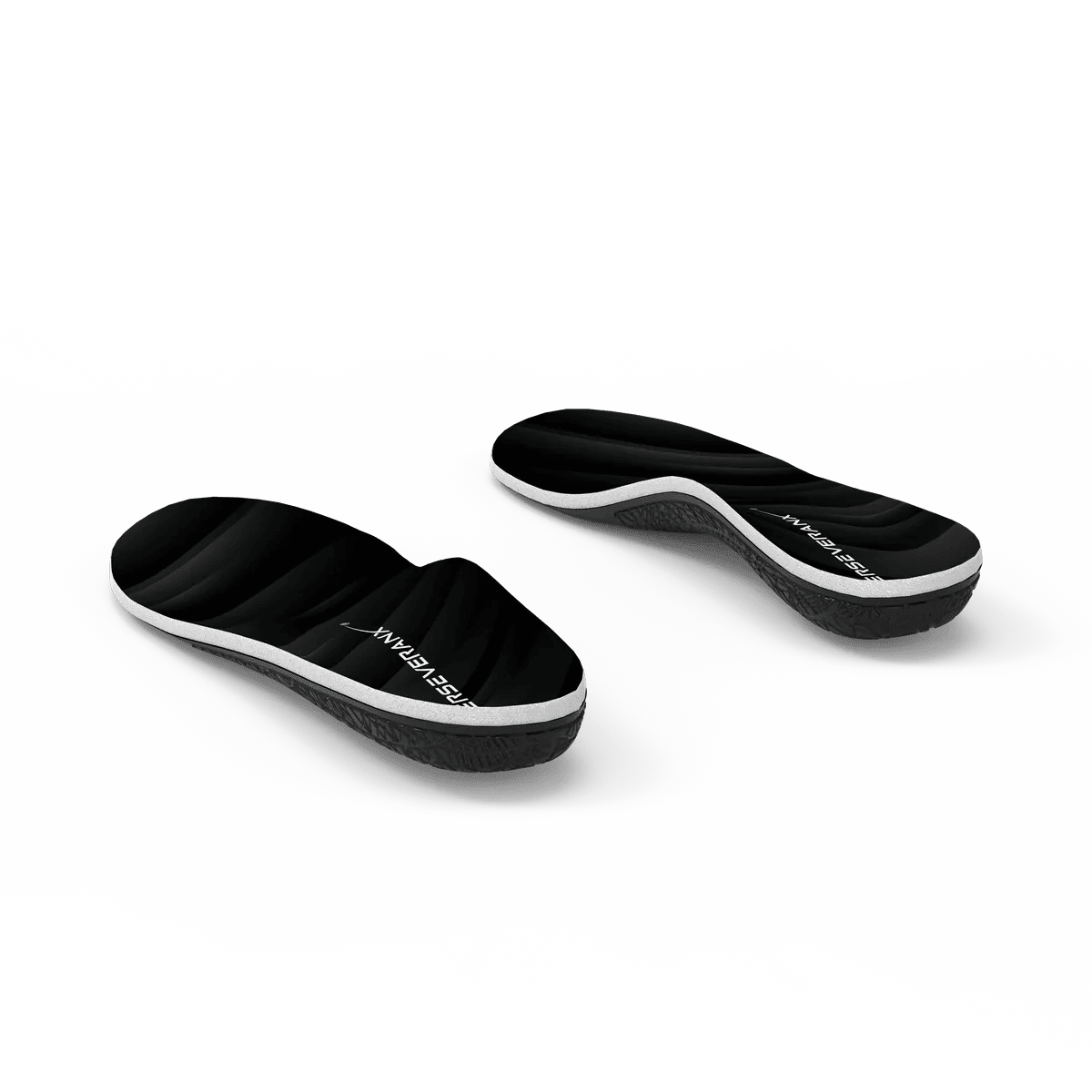
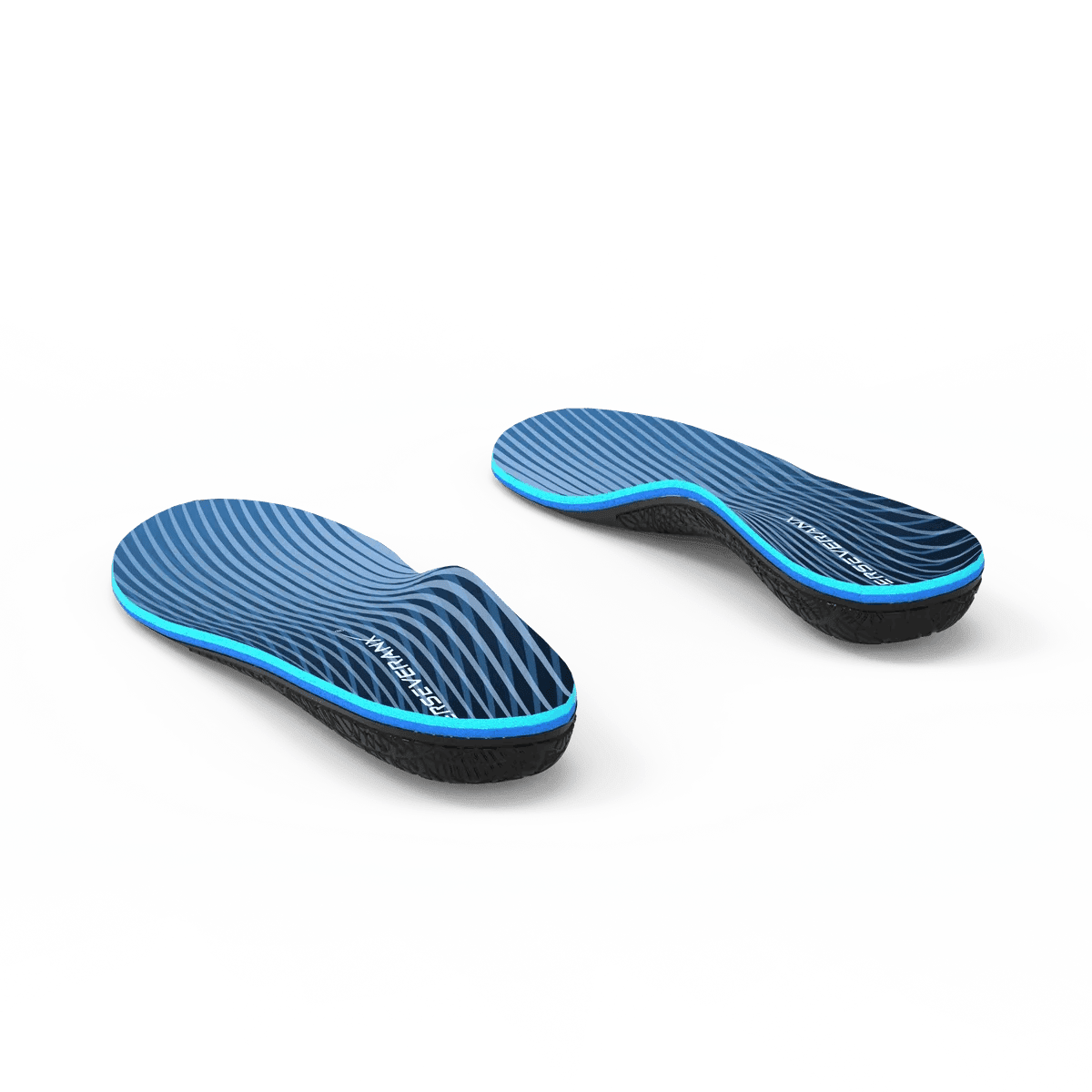

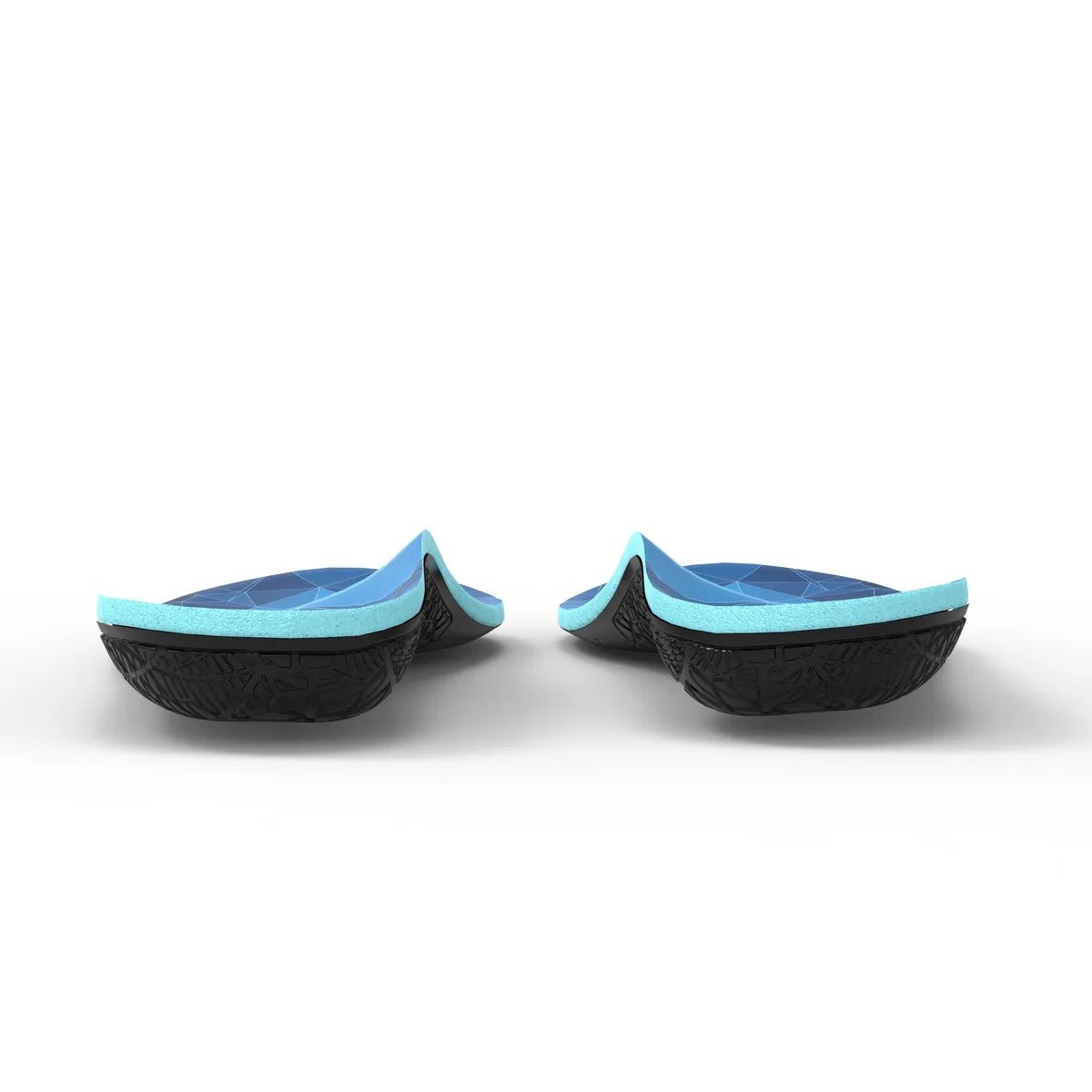
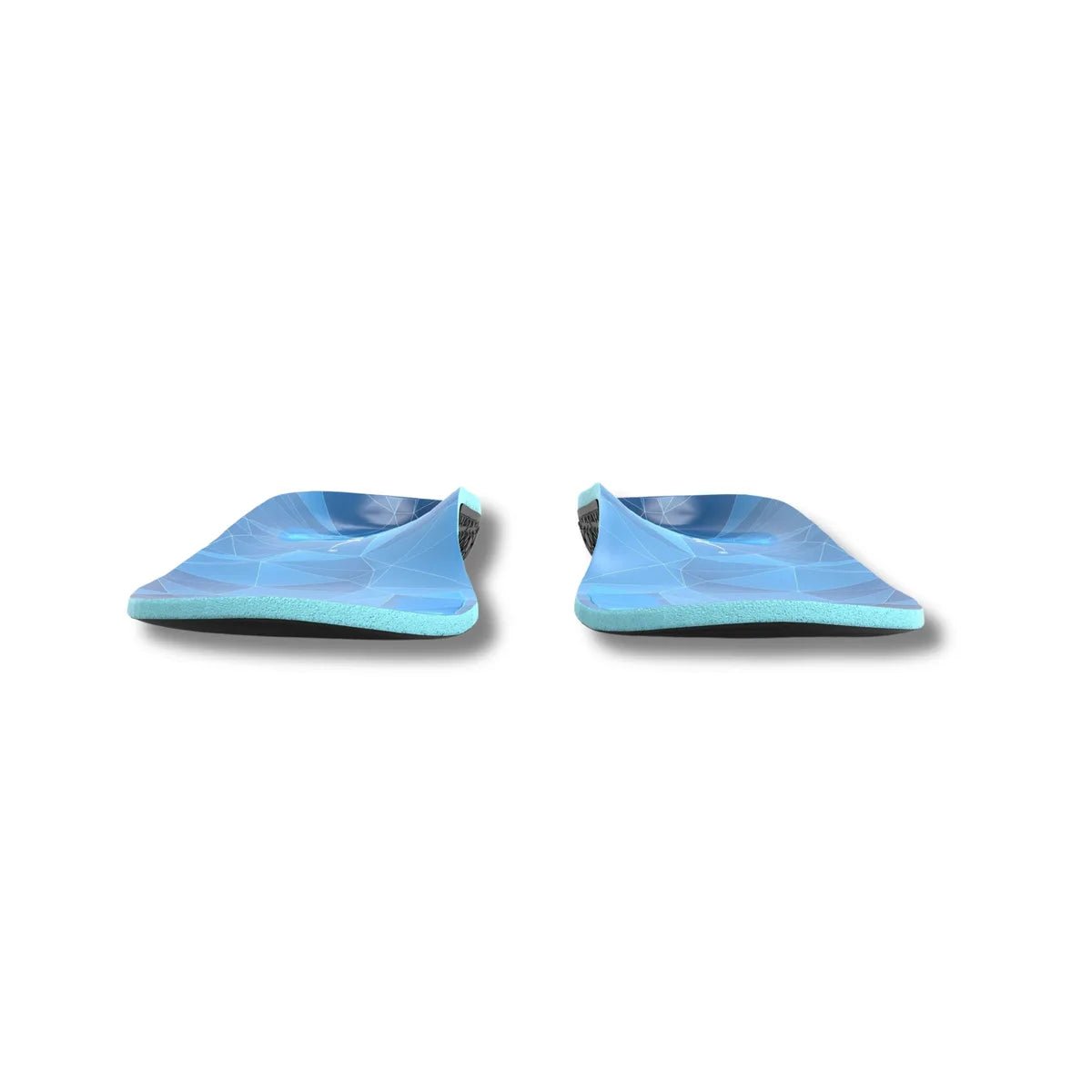
The short answer. Choose softness by how you want the surface beneath your foot to feel. Choose support by how the insole’s shape meets your arch and heel. A soft contact layer can sit above a firm support frame; you do not have to give up one to get the other.
Some people want to settle gently into their shoes. Others dislike that sinking sensation and want cushioning that feels more substantial. Both are reasonable preferences. The useful question is how the whole insole feels in the shoes you actually wear, after the first squeeze in your hand.
Softness and support answer different questions
Softness describes how readily the cushioning yields under pressure. Support comes from the shape and structure beneath that surface. A soft, flat insert and a soft layer over a contoured frame can feel quite different beneath your arch.
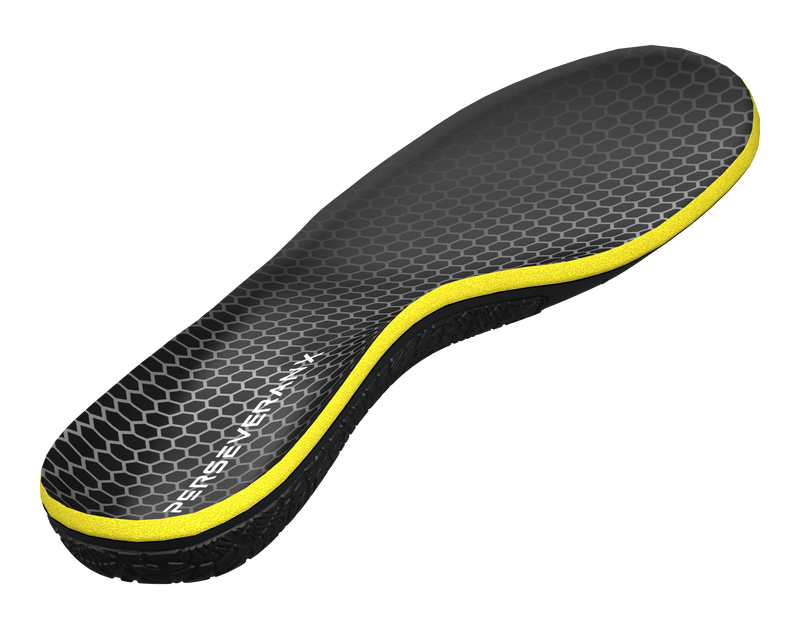
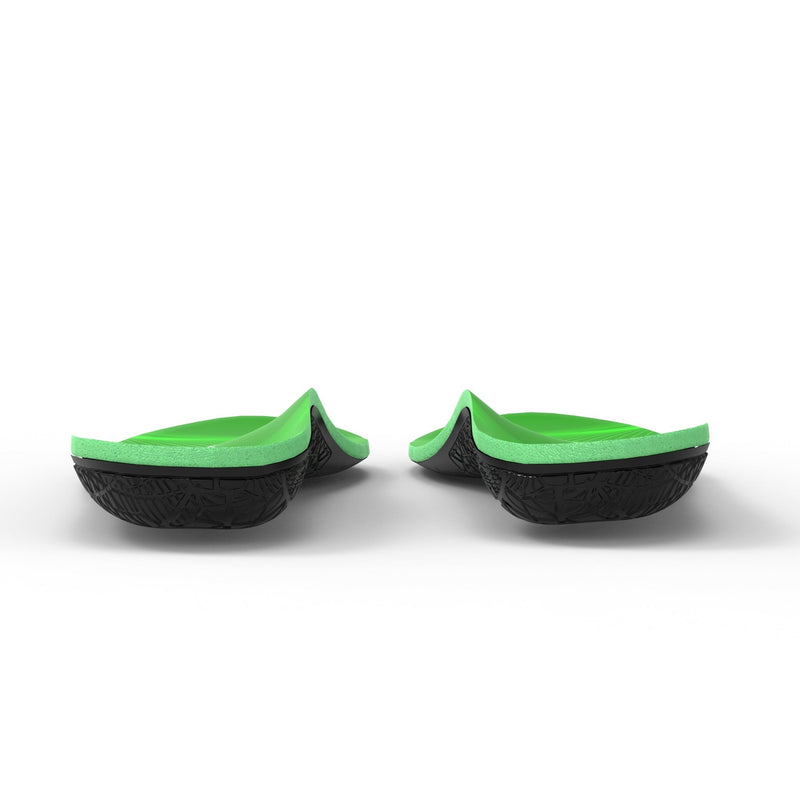
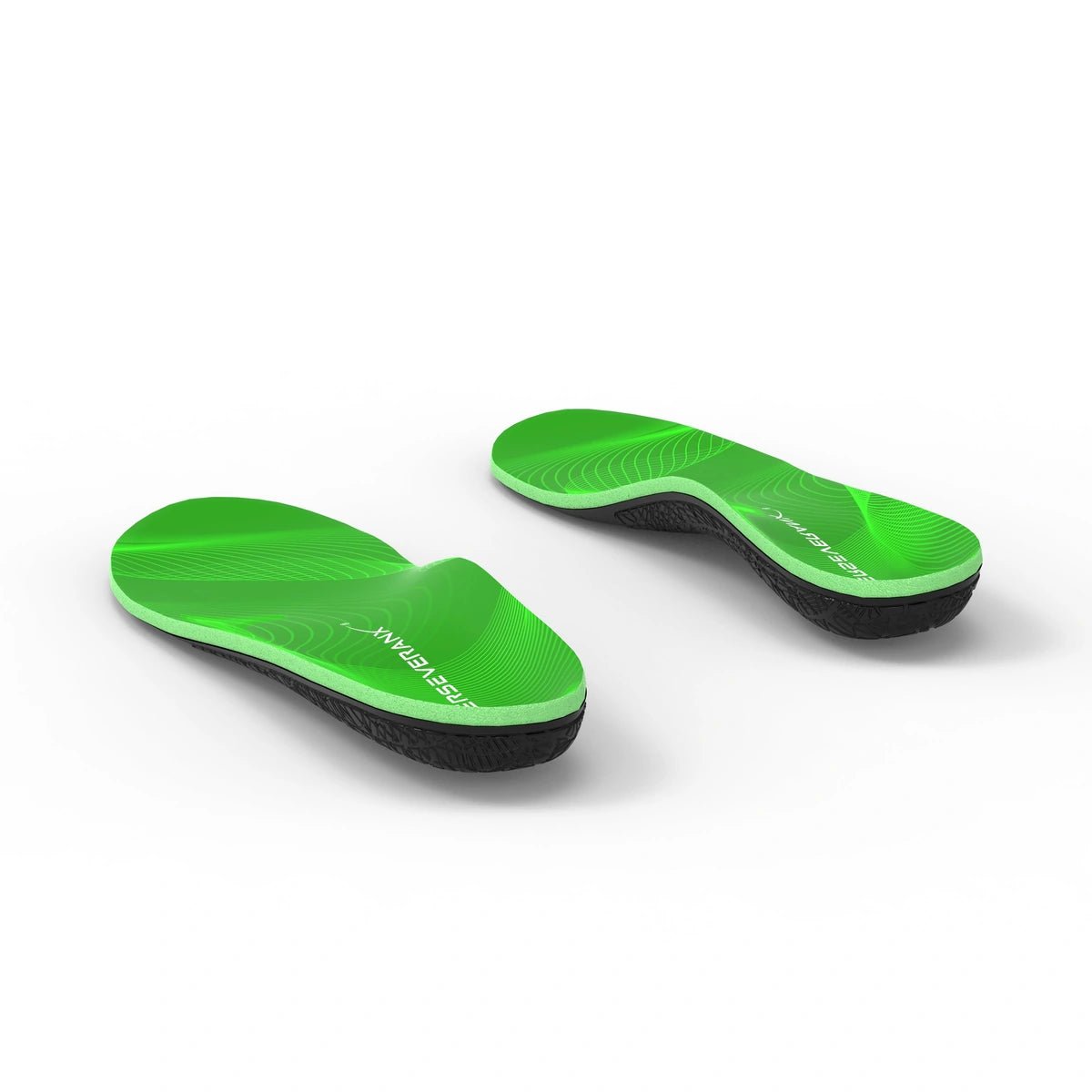
All five PerseveranX models combine open-cell PU cushioning with a contoured EVA base and a shaped high-arch support frame. The material against your foot changes the feel; the frame gives your arch a surface to meet and cups the heel. Choosing our softer model does not mean choosing a completely unstructured insert.
Less bounce: choose softer or firmer contact
Start with this pair if you prefer a more settled feel. Both have low bounce; the difference is how readily you settle into the cushion.

Embrace
Softly contouring.
A yielding surface for people who enjoy a softer, more settled contact feel.
Shop Embrace
Fusion
Firmer. Less sink.
A more substantial cushion for people who dislike sinking easily into softer foam.
Notify me about FusionFusion availability: Fusion is temporarily unavailable and is not accepting orders. Restock timing is not yet confirmed. Request a notification for your size.
More response: choose the kind you enjoy
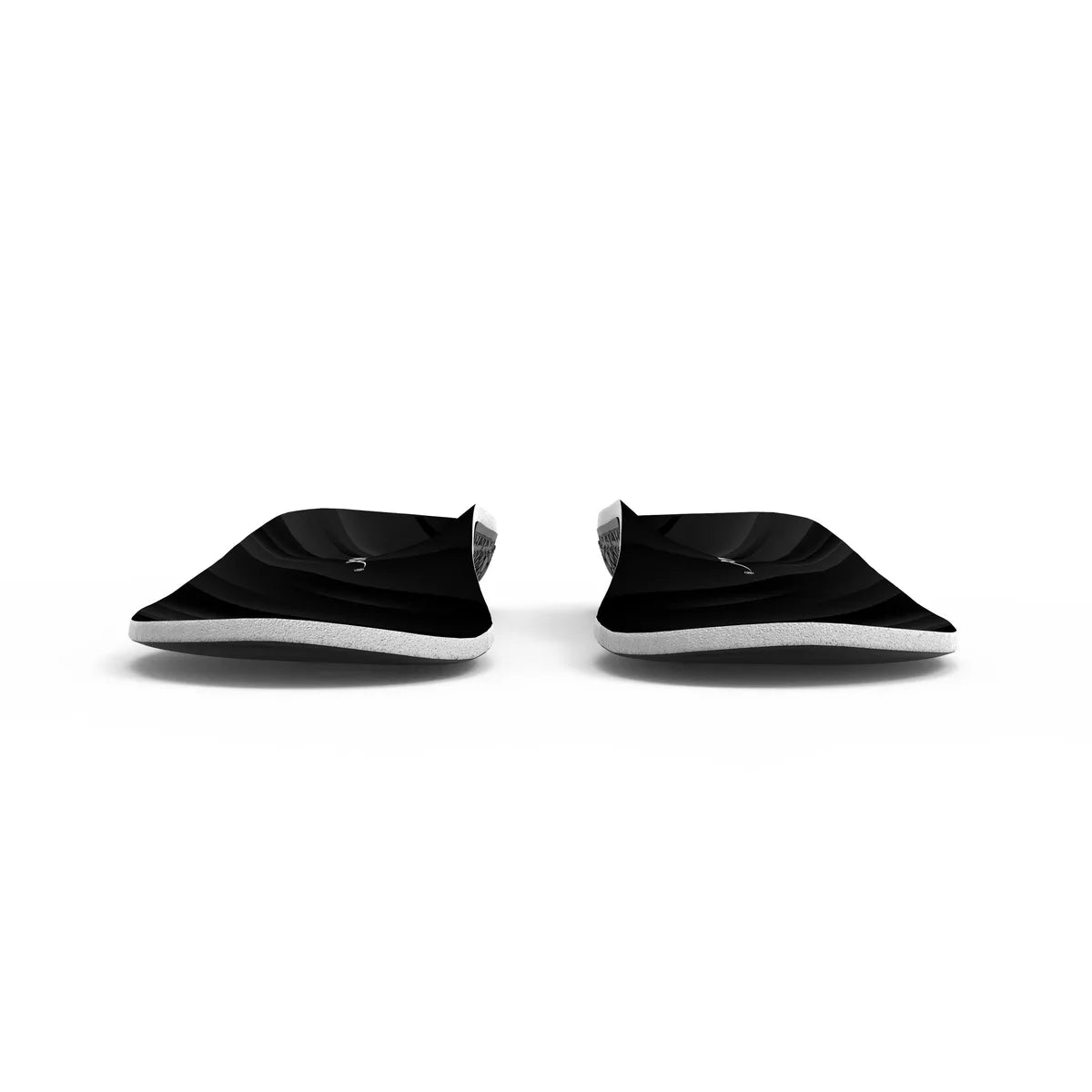

HoneyComb
Impact response.
Flexible under gradual pressure; a firmer response when impact arrives quickly.
Shop HoneyCombThese are descriptions of our models, not a universal softness scale. HoneyComb’s impact response, for example, is a different characteristic from how soft a material feels when pressed slowly.
Match the feel to the shoe and your day
For long periods on your feet, compare insoles for standing. For boots, begin with our work-boot options and check the boot maker’s guidance. A setting helps narrow your choice, but it does not determine one correct firmness for everyone.
Try the same shoe before drawing a conclusion
- Use the shoes and socks you intend to wear. Remove the original liner if it is removable and check the fit with the replacement seated flat.
- Stand, shift your weight and walk. Notice the contact under your heel, forefoot and arch separately.
- Ask whether the surface feels pleasantly yielding or too easy to sink into. Then notice whether you enjoy the spring as your foot lifts.
- Check that toes have room and the heel remains seated. A crowded shoe can undermine a cushioning feel you otherwise like.
For sizing, use our size and shoe-fit guide. Fusion has the same nominal cushioning-layer thickness as the other models; a firmer feel does not make it a thinner option for tight shoes.
A few practical questions
Are firmer insoles always more supportive?
No. Cushioning firmness and structural support are separate features. Look at the arch shape, heel containment and how the insert fits, as well as the material feel.
Does low bounce mean the foam stays flat?
No. A material can recover its shape without producing a pronounced springy sensation. Embrace and Fusion are low-bounce choices; their cushioning is selected for recovery and resistance to lasting flattening.
Should I choose the softest option for painful feet?
Pain does not identify a single suitable cushioning firmness. Persistent pain or a prescribed orthotic calls for individual advice. For everyday comfort, begin with shoe compatibility and your preferred contact feel.
Five feels. One shaped foundation.
Choose the cushioning response you want to wear. Then make sure the high-arch shape and the whole insole fit your foot and shoe.
Compare the five feelsWant a shorter path? Find your feel with the quiz.